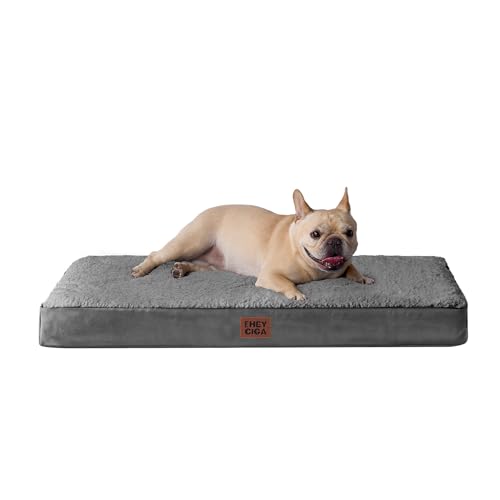
Memory Foam Dog Bed
What Heidi sleeps on — and why we chose a foam topper over a purpose-made dog bed.
Good For
- IVDD and post-surgery recovery — long rest periods demand supportive surfaces
- DM dogs who spend increasing amounts of time lying down as the condition progresses
- Any dog with hip, joint, or spinal issues where pressure on bony areas causes discomfort
Not Ideal For
- Without a waterproof cover for incontinent dogs — moisture ruins foam quickly
- Dogs who chew bedding (defeats the purpose and creates a hazard)
Memory foam became part of Heidi’s setup and honestly part of mine too, in the sense that once you see how differently a dog lies on proper foam versus a flat surface, you don’t go back. I switched to a 4-inch memory foam mat laid flat on the floor — no sides, no elevated frame, just foam at floor level — and the difference in how she settled into it was immediate.
The reason memory foam matters for disabled dogs is pressure distribution. A dog who spends a lot of time lying in one position concentrates weight on a small number of bony prominences — hips, hocks, elbows, sternum. On a hard floor or thin bed, that pressure is sustained and concentrated, which is how pressure sores begin. Memory foam spreads that weight across a larger surface area. It doesn’t eliminate pressure, but it reduces the peak pressure at any one point, which is what caregivers and rehab specialists point to when recommending it.
One thing I want to be direct about: “dog memory foam” is mostly a marketing category. The foam in a $200 orthopedic dog bed is chemically the same as the foam in a $50 piece of human mattress foam topper cut to the same dimensions. If you have the budget for a purpose-made dog bed, buy one — they often have better cover designs and washable surfaces. But if you don’t, a 3- to 4-inch memory foam mattress topper from a home goods store, with a waterproof cover and a washable outer, is functionally identical. Buy by foam density and thickness, not by whether it says “dog” on the label.
Flat on the floor is the right setup for dogs in IVDD recovery or with neurological issues. No bolsters they have to climb over, no elevated sides. Just a thick, supportive surface they can walk or scoot onto without effort. Keep a waterproof cover under the outer cover — accidents will happen, and foam that gets saturated is ruined.
Memory Foam Dog Bed
$23.99 USD In Stock
Price last checked September 14, 2026 — Amazon's listing is always the current price.
These are affiliate links. We earn a small commission if you buy through them, at no cost to you. Read more about how we choose →