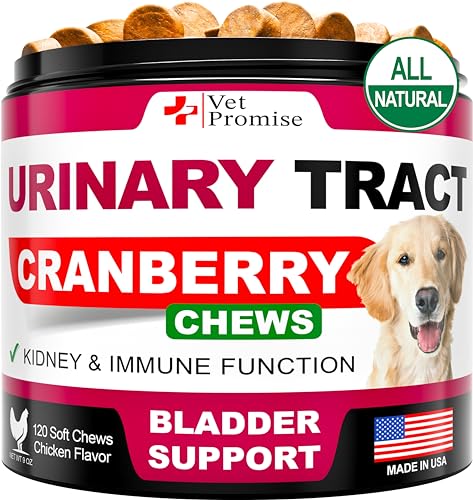
Cranberry Chews
What we give Heidi daily to reduce her UTI risk — always paired with a stool hardener.
Good For
- Long-term UTI prevention in dogs with chronic urinary incontinence
- Paired with a stool hardener as part of a complete incontinence management routine
Not Ideal For
- Treating an active UTI — that requires antibiotics from a vet
- Dogs without incontinence who don't have elevated UTI risk
- Use without a stool hardener if your dog also has fecal incontinence
Dogs with long-term urinary incontinence are at elevated risk for UTIs. The urine stays in contact with skin and the urinary opening longer than it would in a continent dog, and diapers, however well-managed, create a warm, moist environment. Cranberry supplements are used by many caregivers and some veterinarians as a preventive measure.
The general thinking is that compounds in cranberry reduce the ability of certain bacteria to adhere to the walls of the urinary tract — making it harder for an infection to take hold. I’ll be straightforward about the evidence here: the research in humans is mixed, and there’s limited formal research in dogs specifically. But many long-term disabled-dog caregivers use cranberry chews as part of their routine, UTI rates in my experience have been manageable, and the product has a very low risk profile. That’s where I land on it.
There is one important side effect to know: cranberry chews cause softer stools. This is noticeable within a few days of starting them. If your dog also has fecal incontinence, softer stools make that significantly harder to manage. This is why we always recommend pairing cranberry chews with a stool hardener — they work as a system. The cranberry chews help with UTI prevention, the stool hardener counteracts the stool-softening effect. See the stool hardener page for the other half of this.
When selecting: look for chews formulated specifically as cranberry supplements rather than generic treats with cranberry flavoring. The active compound concentration matters. Dosing guidance varies by product and your dog’s weight — follow the product label and check with your vet if you’re unsure.
Do not use cranberry chews to treat an active UTI. A confirmed UTI needs antibiotics prescribed by a veterinarian. Cranberry chews are a preventive supplement, not a treatment.
Cranberry Chews
$17.99 USD In Stock
Price last checked September 14, 2026 — Amazon's listing is always the current price.
These are affiliate links. We earn a small commission if you buy through them, at no cost to you. Read more about how we choose →