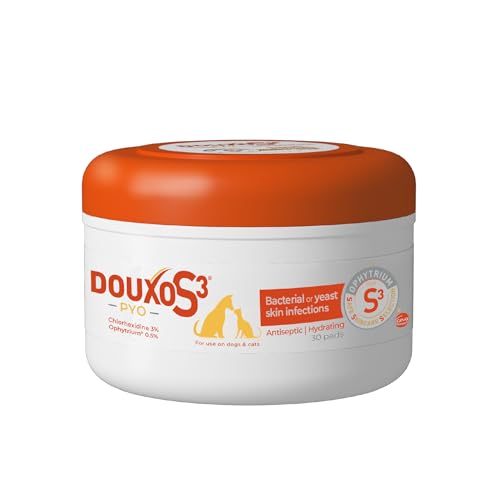
Chlorhexidine Antiseptic Pads
by Douxo S3
The cleaning step that comes before the ointment — same pads your vet uses, at a fraction of the cost.
Good For
- Cleaning minor wounds, pressure sores, and friction abrasions before applying ointment
- Routine antiseptic cleaning of areas prone to breakdown in paralyzed dogs
- Any caregiver who wants to keep the same supplies on hand that a vet would use
Not Ideal For
- Deep wounds, infected wounds, or anything with spreading redness — those need a vet
- Eyes, ears, or mucous membranes — topical chlorhexidine is for skin surfaces only
- A substitute for veterinary wound assessment when something isn't healing
Wound care has two steps: clean, then treat. Triple antibiotic ointment handles the treatment side. Chlorhexidine pads handle the cleaning — and doing that step properly makes everything that comes after it more effective.
Chlorhexidine is a broad-spectrum antiseptic that’s been a standard in veterinary and human wound care for decades. It kills bacteria on contact, reduces contamination in the wound bed, and is gentle enough for skin surface use without damaging healthy tissue the way harsher antiseptics can. When Heidi gets a scrape, a minor sore, or any break in the skin, a chlorhexidine pad is the first thing I reach for before applying anything else.
The specific pick here is Douxo S3 PYO Pads — these are the same pads that are commonly used and dispensed in veterinary clinics. The markup from a vet’s office versus buying them directly is significant, sometimes nearly double. The product is the same. If your vet hands you a packet after an appointment, look at the label — you can almost certainly buy the same thing at a much lower per-pad cost and keep a supply on hand.
The technique is simple: open a pad, wipe the wound and the surrounding skin in gentle outward strokes moving away from the wound center, and let it air dry for thirty seconds before applying anything else. Don’t scrub. The goal is to reduce bacterial load on the surface, not to debride the wound — for anything that needs actual debridement, that’s a veterinary task.
Keep these near your wound-care supplies alongside the triple antibiotic ointment. They work as a system: chlorhexidine pad to clean, ointment to treat, cone or muzzle to protect while it heals.
One practical note: individually wrapped pads stay sterile and are easier to use cleanly than a bottle of chlorhexidine solution with cotton. For the kind of wound management disabled-dog caregivers are doing at home — small sores, scrapes, friction wounds — pads are the right format.
Chlorhexidine Antiseptic Pads
$19.99 USD In Stock
Price last checked October 17, 2026 — Amazon's listing is always the current price.
These are affiliate links. We earn a small commission if you buy through them, at no cost to you. Read more about how we choose →