Yorkie IVDD: Small-Breed, Cervical-Heavy Risk
Yorkies get IVDD more often in the neck than the back — and the signs look different. What cervical IVDD means for small-breed owners, from harness choices to…
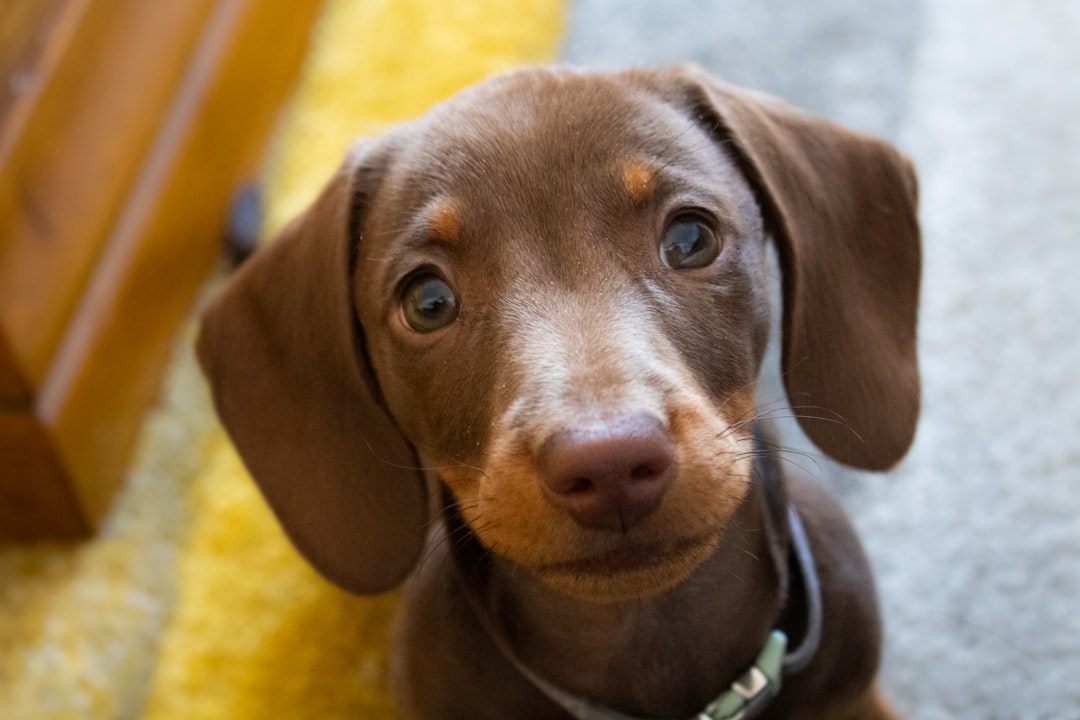
Photo by Aleksandr Isaev on Unsplash
Yorkshire Terriers are far more likely to develop IVDD in the neck than in the back — and most owners don’t realize that until their dog is already in crisis.
Why Are Yorkies Vulnerable to IVDD?
Yorkshire Terriers are chondrodystrophic — they carry a genetic variant (related to the FGF4 retrogene insertion) that causes the cartilage in their spinal discs to degenerate earlier than it should. In a healthy dog, disc material is gel-like and absorbs shock. In a chondrodystrophic dog, that material mineralizes and hardens over time, making it far more likely to rupture or bulge under normal pressure.
This is the same mechanism that puts Dachshunds, Beagles, and French Bulldogs at risk. The difference with Yorkies is where along the spine the disease tends to concentrate.
- Chondrodystrophic breeds carry a genetic mutation that speeds up disc degeneration
- Disc material becomes hard and brittle instead of staying gel-like
- Any disc along the spine can be affected, but breed-specific patterns exist
- Yorkies show a disproportionately high rate of cervical (neck) disc involvement compared to many other at-risk breeds
What Makes Yorkies Cervical-Heavy?
Yorkies have a notably higher proportion of cervical IVDD compared to breeds like the Dachshund, where thoracolumbar disc disease (mid-back to lower-back) tends to dominate. The cervical spine — the seven vertebrae that make up the neck — is a high-motion region. It flexes and rotates constantly, which puts repeated mechanical stress on the discs sitting between those vertebrae.
In small dogs with already-compromised disc material, that stress adds up. The discs most commonly affected in Yorkies are typically in the mid-to-lower cervical region (around C3–C7), though any cervical level can be involved.
This matters enormously for owners because cervical IVDD presents differently than the back-leg weakness most people picture when they hear “disc disease.” If you’re looking for a dog dragging its hind legs, you might completely miss the signs of a Yorkie in significant neck pain.
How Do I Know If My Yorkie Has Cervical IVDD?
Cervical IVDD in Yorkies most often shows up as neck pain, guarding, and sometimes front-limb involvement — not the hind-leg weakness associated with thoracolumbar IVDD. Recognizing these signs early gives your dog the best chance at a full recovery.
The signs to watch for include:
- Neck stiffness or guarding: Your Yorkie holds their head unusually still, resists turning to look at something, or keeps their neck in one position
- Crying or yelping when touched: Especially around the head, neck, or shoulders — sometimes seemingly unprovoked
- Reluctance to look up or down: Won’t reach for a treat held above their head or look down at a bowl on the floor
- Front-leg weakness or stumbling: In more advanced cases, the compressed cord affects the front limbs — you may see a wobbly, uncoordinated gait
- Changed posture: Head held low, hunched shoulders, reluctance to jump or go up stairs
- Sensitivity to being picked up: Yelps or flinches when you reach under the chest and neck
It’s worth noting that cervical IVDD can also affect all four limbs in severe cases, since a neck-level compression is above the point where nerves branch off to the back legs. This is covered in more depth in the cervical vs thoracolumbar IVDD comparison.
- Sudden inability to walk or severe incoordination in any legs
- Loss of bladder or bowel control
- Crying constantly and unable to find a comfortable position
- Rapid progression — went from mild stiffness to collapse in hours
Harness Choices for Yorkies With IVDD
For a Yorkie with known cervical IVDD — or even one who is just at risk — harness selection is one of the most practical things you can control at home. The neck should never bear the force of a leash pull.
A traditional flat collar routes all tension directly into the cervical spine. For a dog with vulnerable discs in that area, a sudden lunge or even routine leash pressure can aggravate existing inflammation or contribute to disc injury over time.
The right approach:
- Step-in harness or vest harness: These spread pressure across the chest and shoulders, completely bypassing the neck. Look for padding, a secure fit, and a back-clip leash attachment.
- No collar for ID tags either: Many owners switch to a harness-attached ID tag or a breakaway collar worn loosely only for identification — never attached to a leash.
- Front-clip harnesses with caution: Front-clip harnesses can help with pulling, but make sure the attachment point doesn’t create pressure that rides up toward the throat.
For Yorkies already showing neurological symptoms or recovering from a disc episode, a harness that also offers some chest support can help with the front-leg weakness that sometimes accompanies cervical IVDD.
Conservative Management vs. Surgery for Yorkies
The treatment decision for cervical IVDD follows similar logic to IVDD elsewhere in the spine, but there are some nuances worth knowing. The full framework for thinking through this decision is covered in the IVDD surgery vs. conservative care guide.
For Yorkies specifically:
- Mild cases (Grade 1–2): Strict rest, anti-inflammatory medication, and pain management are typically the first approach. Many dogs improve significantly within four to eight weeks, though timelines vary considerably.
- Moderate to severe cases (Grade 3–5): Dogs showing meaningful weakness, significant incoordination, or neurological deficits are typically referred to a veterinary neurologist for imaging. Surgery to decompress the spinal cord is often recommended when conservative management isn’t improving the dog within a reasonable window.
- Surgical approach for cervical IVDD: Neck surgery (typically a ventral slot procedure, which accesses the disc from below the neck) is technically demanding but has good outcomes in appropriate candidates. This is not the same surgery as a hemilaminectomy performed for thoracolumbar IVDD.
Because Yorkies are small, they often recover quickly — but small size also means small margins for error if the cord is significantly compressed. Prompt veterinary evaluation matters.
- Switch your Yorkie from a collar to a well-fitted chest harness today
- Limit jumping onto furniture and stairs if your dog is showing any neck pain
- Keep a note of specific behaviors — what triggered yelping, how long it lasted, what position made it worse — to share with your vet
- Ask your vet specifically about cervical IVDD if your Yorkie is showing neck stiffness or front-leg changes
Weight, Lifestyle, and Reducing Risk
Yorkies are naturally small — most adults weigh between four and seven pounds. That’s actually a meaningful advantage in IVDD management, because keeping a tiny dog at an ideal weight is easier than managing a heavier chondrodystrophic breed.
Weight management reduces the mechanical load on already-vulnerable discs, and it’s one of the few genuinely modifiable risk factors owners can control. Beyond weight, the main lifestyle adjustments that many rehab specialists and neurologists recommend for Yorkie IVDD prevention and management include:
- Ramp access to furniture: If your Yorkie insists on joining you on the sofa or bed, a gentle ramp reduces the jarring impact of jumping. Impact on landing is a real concern for cervical discs.
- Avoiding rough play: Neck-twisting games of tug, or play that involves another dog grabbing your Yorkie by the scruff, are worth managing carefully.
- Harness always on leash: Covered above, but worth repeating — no collar pressure on the neck, ever.
The IVDD recurrence guide covers the broader prevention framework in more detail, and most of it applies directly to Yorkies managing cervical IVDD.
Getting a Diagnosis
If you suspect your Yorkie may have cervical IVDD, the diagnostic path typically starts with a neurological examination by your vet or a veterinary neurologist. The American College of Veterinary Surgeons notes that MRI is the gold-standard imaging for confirming disc disease location and severity, though CT myelogram is sometimes used as an alternative.
X-rays alone can’t confirm IVDD — they can show mineralized disc material or narrowed disc spaces, which are supportive findings, but they won’t show the full picture of spinal cord compression. Pushing for advanced imaging when your Yorkie is showing neurological signs is worth the conversation with your vet.
Related Reading
- Cervical IVDD: The Neck-Disc Disease Owners Underestimate
- Cervical vs Thoracolumbar IVDD: Why Location on the Spine Matters
- Which Dog Breeds Get IVDD Most? The At-Risk Breed List
Yorkies are often overlooked in IVDD conversations because the discussion so often centers on Dachshunds and French Bulldogs. But if you share your life with one of these small, spirited dogs, knowing that neck pain is a red flag — and that a harness swap is something you can do today — might be the thing that catches a problem early enough to make a real difference.
Frequently Asked Questions
Are Yorkies prone to IVDD?
Yes. Yorkshire Terriers are a chondrodystrophic breed, meaning they carry a genetic mutation that causes premature disc degeneration. IVDD is a recognized health concern in the breed, with a higher-than-average rate compared to non-chondrodystrophic dogs.
What makes Yorkie IVDD different from Dachshund IVDD?
The biggest difference is where disc disease tends to strike. Dachshunds most commonly develop thoracolumbar (mid-to-lower back) IVDD, while Yorkies show a notably higher proportion of cervical (neck) disc disease. This means the warning signs, surgical approach, and recovery look different.
Can a Yorkie with cervical IVDD recover without surgery?
Many Yorkies with mild to moderate cervical IVDD do respond to conservative management — strict rest, pain medication, and anti-inflammatories. However, dogs showing significant neurological deficits or rapid deterioration are generally considered surgical candidates. Your veterinary neurologist is the right person to make that call.
What harness should a Yorkie with IVDD wear?
For any dog with known or suspected cervical IVDD, a traditional collar should be avoided entirely. A well-fitted, padded step-in harness or vest-style harness that distributes pressure across the chest and shoulders is the standard recommendation, keeping all tension away from the neck.
This guide is based on real experience and should be used alongside professional veterinary care. Always consult your veterinarian before starting any new treatment or making changes to your dog’s care plan.