Which Dog Breeds Get IVDD Most? The At-Risk Breed List
Dachshunds carry roughly 10x the general dog population's IVDD risk. See the full breed-by-breed breakdown, including which large breeds owners miss.
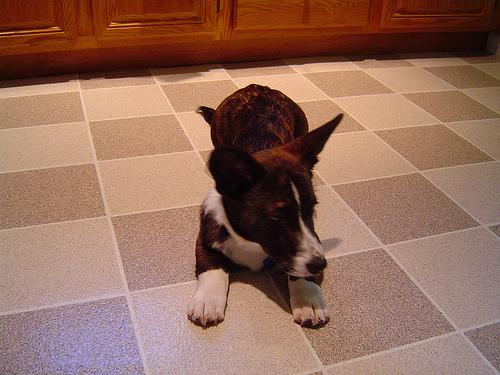
Dachshunds carry roughly 10 times the general dog population’s lifetime IVDD risk, but eight other breeds carry meaningful risk that owners consistently underestimate, and five large breeds develop a slower form of IVDD that often gets misread as arthritis.
New to IVDD? Start with What Is IVDD in Dogs? — this page covers breed risk specifically.
Why Does Breed Matter So Much With IVDD?
Breed matters because IVDD has a strong genetic component. The condition isn’t just about bad luck or a single jump gone wrong — the underlying vulnerability is baked into a dog’s biology from birth.
IVDD (intervertebral disc disease) happens when the cushioning discs between the vertebrae degenerate, bulge, or rupture and press on the spinal cord. But why a disc fails — and at what age — depends heavily on what those discs are made of genetically.
What Is a Chondrodystrophic Breed?
Chondrodystrophic breeds carry a specific genetic mutation that shapes their bodies and, unfortunately, their spinal health at the same time. In 2017, researchers at UC Davis (Brown et al.) identified an FGF4 retrogene insertion on canine chromosome 12 (CFA12) as the mutation responsible for both the chondrodystrophic body plan (short legs, long body) and susceptibility to Hansen’s Type I IVDD across breeds. The finding was significant: dogs carrying the mutation had an odds ratio of 51.23 for IVDD compared to non-carriers, which is one of the strongest single-gene disease associations known in canine genetics.
The mutation causes two things at once. It disrupts normal cartilage development, which is what produces the distinctive short-legged shape of dachshunds, corgis, and beagles. It also causes intervertebral discs to age and mineralize far faster than normal. In most dogs, disc degeneration is a slow process that plays out over many years. In chondrodystrophic breeds, that same degeneration can happen in the first two to three years of life, leaving the discs brittle and vulnerable to a sudden, explosive rupture (Type I IVDD) at a young age.
Breeds identified as carrying the CFA12 FGF4 insertion include the dachshund, beagle, French bulldog, American cocker spaniel, and Nova Scotia duck tolling retriever. Veterinary hospital population studies have identified a broader group of chondrodystrophic breeds with significantly elevated IVDD risk: beagle, cocker spaniel, dachshund, French bulldog, Lhasa apso, Pekingese, Pembroke Welsh corgi, and shih tzu.
Non-chondrodystrophic breeds don’t carry this mutation, but larger breeds can still develop disc disease through Hansen’s Type II process (Hansen 1952), where discs gradually protrude rather than rupturing suddenly. Type II IVDD tends to appear later in life and progress over months instead of hours.
Understanding which category your dog falls into shapes everything, from how urgently you act on symptoms to what treatment path is likely right.
The High-Risk Chondrodystrophic Breeds
These breeds carry the FGF4 mutation and face the highest lifetime risk of Type I IVDD. Many will experience a disc event before age 7.
1. Dachshund
If one breed defines IVDD, it’s the dachshund. Their famously long spine and dramatically short legs create constant biomechanical stress on every disc in the thoracolumbar (mid-back) region. Lifetime IVDD prevalence in dachshunds is estimated at 19-24% across older hospital data (Ball et al. 1982; Priester 1976), with a relative risk 9.9 to 12.6 times that of the general dog population. The DachsLife 2015 survey of 2,031 dogs found overall prevalence of 15.7% across all varieties, with Standard Smooth-Haired highest at 24.4%. Dachshunds have historically been reported to make up 45 to 84.6% of acute IVDD cases seen in veterinary hospitals.
Heidi is a dachshund, and I want to be honest with you: when I brought her home, I knew the breed had a “back problem” reputation. What I did not know was how quickly it could escalate, how much it would cost, or what daily life would look like on the other side of surgery. If you have a dachshund, read the complete dachshund IVDD guide — all of it — before you need it.
Highest-risk areas: thoracolumbar junction (T11–L3) Typical age of first episode: 3–7 years
2. French Bulldog
French bulldogs have surged in popularity, and unfortunately their IVDD rates have followed. A 2025 Dog Aging Project analysis of 43,517 companion dogs found French bulldogs had the highest adjusted odds of owner-reported IVDD among all purebred dogs studied (odds ratio 21.1, 95% CI 12.5-35.8). Their compact, heavily muscled body and screw tail mean the entire spine is under structural stress. Frenchies also commonly develop cervical (neck) disc disease in addition to thoracolumbar issues, which can present differently than what most owners expect.
If your Frenchie is acting stiff, reluctant to turn their head, or yelping when you pick them up, neck disc involvement is worth discussing with your vet immediately. Read more in the French Bulldog IVDD guide.
Highest-risk areas: cervical and thoracolumbar Typical age of first episode: 2–6 years
3. Corgi (Pembroke and Cardigan)
Corgis have the same long-back, short-leg body plan as dachshunds, though they’re built more solidly. Their herding history means they’re often active and athletic — which is wonderful, but it also means a disc event can happen during what looks like totally normal activity.
Both Pembroke and Cardigan Welsh Corgis carry meaningful IVDD risk, and owners often underestimate it because corgis look sturdier than dachshunds. The corgi IVDD guide goes deep on what to watch for.
Highest-risk areas: thoracolumbar Typical age of first episode: 3–8 years
4. Basset Hound
Basset hounds carry both the long back of a dachshund and heavy, low-slung body weight — a combination that puts significant load on every disc, all day long. Their neck is also at risk, since the weight of that broad head on a long neck creates its own vulnerabilities.
The basset hound IVDD guide covers both the back and neck risk in detail, which is important because neck IVDD can look very different from the more commonly discussed back disc events.
Highest-risk areas: thoracolumbar and cervical Typical age of first episode: 4–8 years
5. Beagle
Beagles are often overlooked in IVDD conversations because they look proportionally normal compared to dachshunds or corgis. But beagles are classified as chondrodystrophic and do carry elevated IVDD risk. In fact, beagles were among the specific breeds identified in the Brown 2017 UC Davis study as carrying the CFA12 FGF4 retrogene, the same mutation driving IVDD in dachshunds and French bulldogs. Their typically high energy level means they’re often jumping, roughhousing, and running, activities that increase disc stress.
The beagle IVDD guide is specifically written for an active breed where prevention is especially important.
Highest-risk areas: thoracolumbar Typical age of first episode: 4–8 years
6. Cocker Spaniel
Cocker spaniels have a moderate but real IVDD risk, particularly in the cervical region. Neck disc problems in cockers can present as reluctance to lower the head, stiffness turning corners, or sudden yelping — symptoms that can be confusing for owners who aren’t expecting a disc problem in a breed this size.
See the cocker spaniel IVDD guide for a full breakdown of what to watch for.
Highest-risk areas: cervical (neck) Typical age of first episode: 4–9 years
7. Shih Tzu and Pekingese
These two small brachycephalic (flat-faced) breeds share a particular vulnerability to cervical IVDD. Neck disc problems are proportionally more common in shih tzus and Pekingese than thoracolumbar issues, which sets them apart from most other at-risk breeds.
Because neck disc disease often presents as pain and stiffness rather than leg weakness, it’s easy to miss or misattribute to other causes. The shih tzu and Pekingese IVDD guide covers the neck-specific risk these breeds face.
Highest-risk areas: cervical (neck) Typical age of first episode: 4–8 years
- Lhasa Apso: Cervical and thoracolumbar risk; often underdiagnosed because of small size
- Miniature and Toy Poodles: Lower overall risk than the breeds above, but still chondrodystrophic
- Maltese: Mild chondrodystrophic features; cervical disc disease occasionally seen
- Skye Terrier: Rare breed but carries meaningful IVDD risk due to body proportions
Which Large Breeds Are at Risk for IVDD?
Large breeds do not carry the chondrodystrophic mutation, but they are not immune to IVDD. They develop Type II disc disease, where the disc gradually hardens and bulges over time rather than rupturing suddenly. Symptoms tend to come on slowly — progressive weakness, wobbliness in the back end, reluctance to climb stairs — which is why Type II IVDD is easy for owners to miss or attribute to aging or arthritis. The large breed IVDD guide covers this in detail.
German Shepherd: One of the most commonly affected large breeds. Type II IVDD often appears alongside other degenerative spinal conditions. Symptoms may overlap with degenerative myelopathy, making diagnosis important.
Doberman Pinscher: Prone to cervical spondylomyelopathy (Wobbler syndrome) as well as thoracolumbar Type II IVDD. Any progressive neck or back weakness in a Doberman warrants a full neurological workup.
Labrador Retriever: One of the most popular breeds in the world, and large enough that Type II disc degeneration does occur, particularly in older dogs. Weight management is especially important in Labs given how much it reduces spinal load.
Rottweiler: Large, heavy-bodied dogs with documented thoracolumbar IVDD risk. Gradual hindlimb weakness in an older Rottweiler should prompt a vet conversation about disc disease.
Great Dane: Prone to cervical disc disease and Wobbler syndrome. Any stumbling or neck stiffness in a Great Dane is worth investigating promptly.
- Sudden hind-leg weakness, stumbling, or knuckling of paws
- Yelping or crying when touched along the spine or neck
- Reluctance to jump, climb stairs, or lower the head to eat
- Loss of bladder or bowel control
- Complete inability to stand or walk
A Side-by-Side Breed Risk Summary
| Breed | IVDD Type | Primary Region | Typical Onset Age |
|---|---|---|---|
| Dachshund | Type I | Thoracolumbar | 3–7 years |
| French Bulldog | Type I | Cervical + thoracolumbar | 2–6 years |
| Corgi | Type I | Thoracolumbar | 3–8 years |
| Basset Hound | Type I | Thoracolumbar + cervical | 4–8 years |
| Beagle | Type I | Thoracolumbar | 4–8 years |
| Cocker Spaniel | Type I | Cervical | 4–9 years |
| Shih Tzu / Pekingese | Type I | Cervical | 4–8 years |
| German Shepherd | Type II | Thoracolumbar | 6–10 years |
| Doberman Pinscher | Type II | Cervical + thoracolumbar | 6–10 years |
| Labrador Retriever | Type II | Thoracolumbar | 7–11 years |
| Rottweiler | Type II | Thoracolumbar | 7–11 years |
| Great Dane | Type II | Cervical | 5–9 years |
 disableddogcare.com
What Should You Do If Your Dog Is on This List?
If your dog’s breed appears above, the most useful thing you can do today is learn the early warning signs so you recognize them before a mild episode becomes a crisis. Early-stage IVDD is far more manageable than late-stage — and the difference between Grade 1 (pain only) and Grade 4 (paralysis) can sometimes be a matter of days. The 5 IVDD stages explained is a good starting point for understanding what you’re watching for.
Beyond symptom recognition, practical prevention matters. Keeping your dog lean reduces spinal load. Ramps and steps instead of jumping on and off furniture removes one of the most common triggers for a disc event. Non-slip flooring throughout the home protects against the sudden slipping that stresses an already-vulnerable spine. These aren’t dramatic interventions — they’re daily habits that add up.
And if your dog has already had a disc event, knowing your breed’s risk profile helps you take prevention seriously going forward. Preventing IVDD relapse is a real possibility, and the steps are manageable.
- Learn the IVDD warning signs specific to your breed’s highest-risk region (neck vs back)
- Install ramps or pet stairs anywhere your dog currently jumps up or down
- Keep your dog at a lean, healthy body weight
- Use non-slip rugs or runners on hard floors
- Know your nearest emergency vet’s location and hours before you need them
Related Reading
- Dachshund IVDD: The Complete Owner’s Guide
- Slipped Disc in Dogs: Symptoms, Treatment, and Recovery
- IVDD in Large Breeds: The Slow-Onset Type II Most Owners Miss
- IVDD Medications: Prednisone, Gabapentin & Safe Combos
- The 5 IVDD Stages Explained: Symptoms & Recovery Odds
Frequently Asked Questions
Which dog breed gets IVDD the most?
Dachshunds are the breed most associated with IVDD, with some studies suggesting they account for a significant proportion of all IVDD cases. Their extremely long spine combined with short, cartilage-altered legs puts nearly every disc under stress. Most dachshund owners should treat IVDD not as an “if” but a “when” and plan accordingly.
Can large breed dogs get IVDD?
Yes. Large breeds like German Shepherds, Doberman Pinschers, and Labrador Retrievers can develop IVDD, but they typically develop Type II (slow-onset) rather than the explosive Type I seen in small breeds. The disc degenerates gradually over years rather than herniating suddenly, which means symptoms often sneak up on owners.
What makes a breed chondrodystrophic?
Chondrodystrophic breeds carry a genetic mutation that causes abnormal cartilage development, which leads to the short-legged body shape and also causes spinal discs to age and mineralize faster than normal. This premature disc aging is what makes these breeds so vulnerable to IVDD, often before age 5.
Does a dog’s body shape predict IVDD risk?
Body shape is a strong clue but not the only factor. Long-backed, short-legged dogs face the highest risk due to biomechanical stress on the spine. However, even breeds without these proportions can develop IVDD if they carry certain genetic predispositions or are large enough for Type II disc degeneration to occur over time.
Knowing your dog’s breed risk isn’t meant to scare you — it’s meant to put you a step ahead. The owners who catch IVDD early, who already know their vet’s after-hours number, who’ve already installed the ramp, are the ones whose dogs tend to do best. Use this list as your starting point, then dig into the breed-specific guides to build a prevention and response plan that actually fits your dog.
This guide is based on real experience and should be used alongside professional veterinary care. Always consult your veterinarian before starting any new treatment or making changes to your dog’s care plan.