When Can My IVDD Dog Actually Run Again?
Walking back to running after IVDD isn't a single milestone — it's a ladder. Here's what caregivers need to know about each rung, and what to skip forever.
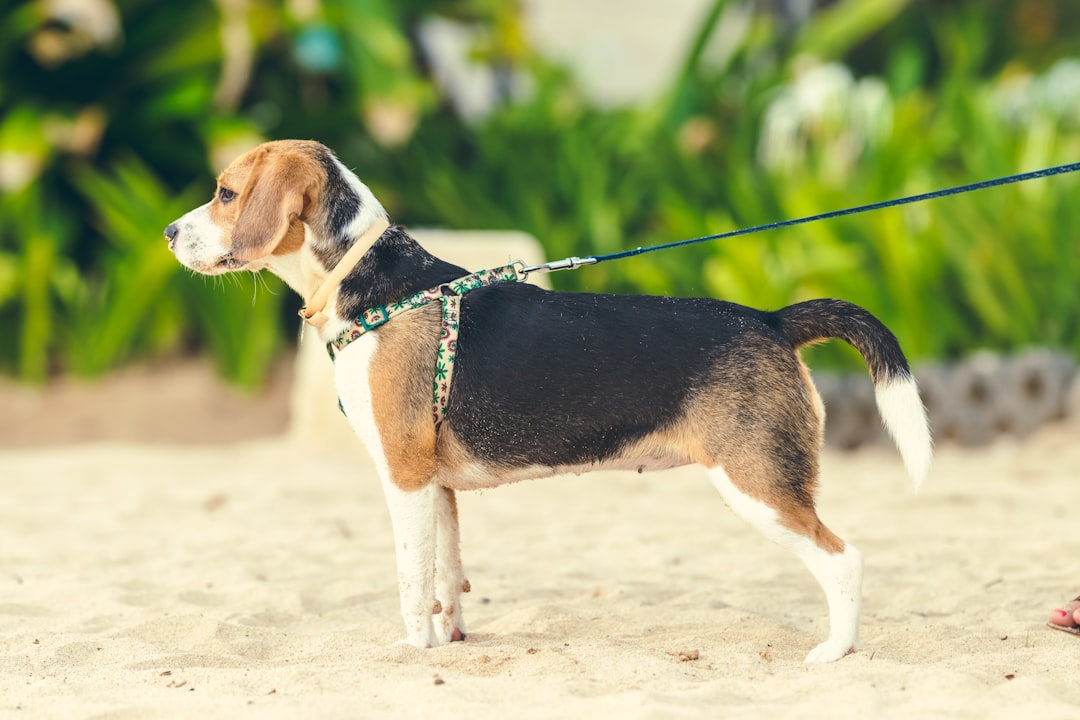
Photo by Artem Beliaikin on Unsplash
Running is not the finish line of IVDD recovery — it’s a milestone many dogs reach, but only after a careful, graduated return to activity that most owners rush.
When Heidi finally started trotting on her own again, my first instinct was to let her go. She was so happy. But her neurologist had been clear: that trot had to stay on a leash, in a straight line, for weeks longer than I wanted. That discipline — honestly, it was hard to hold — is what kept her from going right back to square one.
Here’s what I’ve learned about the difference between walking, trotting, running, and play for an IVDD dog, and why each one requires its own green light.
Walking vs. Trotting vs. Running: Why the Distinction Matters
These three gaits are not just faster versions of each other — they put fundamentally different loads on the spine. Walking keeps at least one paw on the ground at all times, meaning spinal compression is relatively low and controlled. Trotting introduces a brief moment of suspension and more rotational movement through the back. Running — especially sprinting — involves full suspension phases, rapid deceleration, and significant spinal flexion and extension. For a dog whose disc material has herniated and whose surrounding tissue is still healing, that difference is enormous.
The graduated activity model used by most veterinary rehabilitation specialists moves through four distinct phases:
- Strict rest (weeks 0–2): Crate rest with bathroom-only leash trips. No trotting, no excitement.
- Controlled leash walks (weeks 2–6): Short, slow, on-leash only. Flat surfaces, no hills.
- Extended leash walks and light trotting (weeks 6–12): Gradual distance and pace increase, still always on leash.
- Supervised off-leash time and return to normal activity (week 12+): Only after a passed recheck exam.
This timeline applies roughly to post-surgical Grade 3–4 cases. Milder cases (Grade 1–2) on conservative management may move faster in some phases and slower in others — your vet’s guidance for your dog’s specific grade matters more than any general timeline. For a detailed breakdown of recovery expectations by severity, the IVDD Stages 1–5 guide is worth bookmarking.
How Do I Know When My Dog Is Ready to Trot Off-Leash?
Your dog is likely ready for supervised off-leash trotting when three things are true: they have passed their recheck neurological exam, they have been walking steadily on leash for at least 4 weeks without any wobbling or pain signs, and their vet or neurologist has explicitly cleared the next phase. None of those three things alone is enough.
The recheck exam matters because what looks like solid recovery on the outside doesn’t always reflect what’s happening at the disc level. A dog can look completely normal and still have vulnerable disc tissue that hasn’t had time to scar and stabilize. That’s why the exam, not your dog’s enthusiasm, drives the timeline.
Signs that your dog may not be ready yet — even if they’re begging to run:
- Occasional stumbling or knuckling during walks, even mild
- Any yelping or stiffening when picked up or repositioned
- Asymmetric gait (favoring one side)
- Visible fatigue after short walks
If any of these are present, that’s a conversation for your vet before moving to the next phase — not something to wait out at home. The IVDD recovery setbacks guide has a solid rundown of what’s worth a call versus what’s normal fluctuation.
- Weeks 0–2: Strict crate rest, bathroom trips only
- Weeks 2–6: Short leashed walks on flat ground, slow pace
- Weeks 6–12: Gradual leash-walk distance increase, light trotting on leash
- Week 12+: Off-leash in a controlled space, only after recheck clearance
Leashed vs. Off-Leash: Not Just a Safety Rule
A lot of owners think the leash restriction is about controlling how far their dog wanders. It’s actually about controlling pace and excitement. A dog who is off-leash — even in a fenced yard — can go from a walk to a full sprint in about one second when a squirrel shows up, a door opens, or another dog looks at them. That unpredictable burst of speed and the sudden twisting and stopping that comes with it is exactly what a healing disc cannot handle.
The leash keeps you in control of the activity level, not just the location. That’s why even when your dog is “allowed to be in the yard,” that doesn’t automatically mean off-leash yard time. Many rehab vets recommend a long leash (6–8 feet) for outdoor time well into the recovery period, specifically to catch the moment before the sprint happens.
- A fenced yard is not the same as supervised, controlled activity
- One sudden sprint or twist can re-herniate a healing disc
- Excitement from visitors, other pets, or outdoor stimuli is enough to trigger dangerous movement
- Off-leash freedom should only follow explicit veterinary clearance, not just the passage of time
What About Playing With Other Dogs?
Controlled social interaction with calm dogs can resume once your dog has cleared the leash-walking phase and gotten veterinary approval. But “playing with other dogs” covers an enormous range of activities — from sniffing side by side to full-contact wrestling — and most of that range is off the table for life.
What’s generally considered reasonable long-term:
- Calm sniff-and-greet interactions with a familiar, low-energy dog
- Side-by-side walking with a canine companion
- Supervised yard time with a mellow dog who won’t initiate roughhousing
What carries a lifetime restriction for most IVDD dogs:
- Wrestling or body-slamming play
- Chase games at full speed
- Play with high-energy or much-larger dogs who may knock them sideways
The guide to managing an IVDD dog with a rowdy sibling dog goes deep on this if you have a multi-dog household — it’s one of the trickiest parts of long-term IVDD management.
Fetch and Tug: The Lifetime Rules
This is the part that surprises most owners. A dog who looks completely recovered, runs well on leash, passes every recheck — and still can’t play fetch. Here’s why.
Fetch requires a dog to explode off their back legs, accelerate to full speed, then plant and twist to grab a moving object, often while decelerating hard. That sequence of movements creates massive compressive and torsional load on the lumbar disc spaces. It’s not the distance or the speed alone — it’s the launch, the deceleration, and the twist. Those are the exact mechanics that cause disc material to herniate in the first place.
Tug has a different but equally problematic profile. The pulling motion against resistance creates sustained axial traction and rotation through the cervical and thoracolumbar spine simultaneously. Even a “gentle” game of tug involves forces that are disproportionately risky for a dog with IVDD history.
Dodgerslist, the longest-running IVDD-specific resource for dog owners, consistently recommends against fetch and tug for the lifetime of an IVDD dog — not just during recovery.
Alternatives that scratch the same itch without the spinal risk:
- Slow sniff walks with a snuffle mat at the end
- Puzzle feeders and Kong-style enrichment for mental stimulation
- “Find it” nose games where treats are hidden on the ground (no launching required)
- Gentle training sessions — short, low-impact, hugely satisfying for a dog who wants to work
- Short, structured leash walks with sniff breaks
- Puzzle feeders and snuffle mats for mental enrichment
- Slow “find it” nose games on flat ground
- Calm supervised yard time with a low-energy companion
- Gentle trick training (sit, stay, touch — no jumping)
Preventing Recurrence Is the Long Game
Every sprint, every game of fetch, every tumble with the neighbor’s dog is a roll of the dice for a dog with IVDD history. That doesn’t mean your dog can’t have joy and movement — it means the goal shifts from “no restrictions” to “smart restrictions.” A dog who walks daily, plays nose games, and occasionally trots in the yard on a long leash can have a genuinely full life.
The post-recovery IVDD exercise plan is the best place to build out a concrete routine once your dog has cleared the recovery phase. And if you’re still in the middle of crate rest or early walks, the week-by-week IVDD surgery recovery timeline maps out the specific milestones to watch for.
For a supportive harness during those early returning-to-movement weeks, the Help ‘Em Up Harness gave us control over Heidi’s pace and prevented any stumble from becoming a fall — something I’d recommend having on hand before you even start the leash-walk phase.
- Fetch (launching, twisting, sudden stops)
- Tug-of-war (rotational spinal stress)
- Off-leash sprinting or zoomies
- Wrestling or rough play with other dogs
- Jumping on or off furniture without a ramp
Related Reading
- When Will My IVDD Dog Walk Again? Realistic Timelines
- IVDD Recurrence: The Odds & How to Prevent a Second Episode
- Post-Recovery IVDD Exercise Plan: A Rebuild Guide
Frequently Asked Questions
When can my IVDD dog start running again after surgery?
Most neurologists recommend waiting until at least 8–12 weeks post-op before allowing any off-leash trotting or running, and only after your dog has passed a recheck exam showing stable neurological function. Running before that point risks re-injury to a disc that hasn’t fully healed. Every dog’s timeline depends on their grade and how recovery is progressing.
Is running ever completely off-limits for an IVDD dog?
Not always — but fetch, frenzied zoomies, and off-leash sprinting are typically restricted for life in dogs who’ve had a disc herniation. Controlled trotting on leash and supervised yard time are usually approved eventually. The goal is managed activity, not total confinement forever.
Can my IVDD dog play with other dogs again?
Yes, but structured play with calm dogs is very different from rough tumbling or wrestling. Most rehab vets recommend reintroducing dog-to-dog interaction only after full leash-walk clearance, and always with supervision. High-energy play partners are a long-term risk factor for reinjury.
Why are fetch and tug dangerous for IVDD dogs?
Fetch involves explosive launching, sudden stops, and twisting — all of which put severe compressive load on the disc spaces. Tug creates torsional (twisting) spinal stress. Both activities are widely recommended against for the lifetime of a dog who has had IVDD, regardless of how well they’ve recovered.
This guide is based on real experience and should be used alongside professional veterinary care. Always consult your veterinarian before starting any new treatment or making changes to your dog’s care plan.