What Causes IVDD in Dogs?
IVDD isn't caused by one bad jump — it's a genetic disease most at-risk dogs are born with. Here's what actually drives disc degeneration, and what owners can…
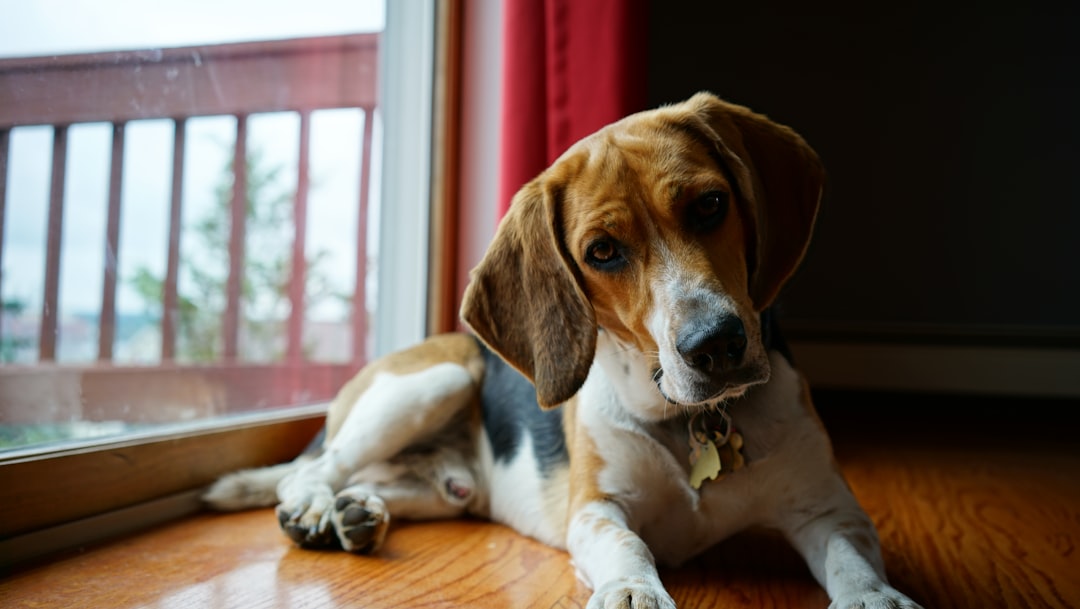
Photo by Nathan Sousa on Unsplash
IVDD is not caused by one unlucky jump — it’s a genetic disease that most at-risk dogs are born with, and understanding that distinction changes everything about how you manage it.
If you’ve just been through an IVDD diagnosis, you’ve probably replayed the moment it happened — the jump off the couch, the sprint across the yard. I did the same thing when Heidi was diagnosed. But after living inside this condition for years, the clearest thing I can tell you is this: the trigger moment gets too much blame, and the underlying genetics get almost none.
What Actually Causes IVDD? The Genetics Explained
IVDD is rooted in a genetic abnormality that causes the intervertebral discs — the shock-absorbing pads between the bones of the spine — to lose their normal structure far earlier than they should. The condition responsible for this is called chondrodystrophy.
In a healthy disc, the inner core (called the nucleus pulposus) stays gelatinous and pliable throughout a dog’s life. In a chondrodystrophic dog, that core begins mineralizing — hardening into a chalk-like material — sometimes before the dog is even two years old. A mineralized disc can’t absorb shock. It becomes brittle. And a brittle disc under pressure will eventually crack, bulge, or rupture into the spinal canal.
What Is the CDDY Mutation and What Does FGF4 Mean?
The CDDY mutation (chondrodystrophy with calcified disc disease) is caused by the insertion of a retrogene copy of FGF4 — a gene that influences skeletal development — into the dog’s genome. This extra copy essentially keeps a “puppy bone growth” signal switched on permanently, which is why chondrodystrophic breeds have shortened legs and curved long bones. That same signal is what causes premature disc calcification.
The Merck Veterinary Manual describes chondrodystrophic breeds as having accelerated disc aging due to this abnormal cartilage maturation process. Dogs carrying even one copy of the CDDY mutation can be affected, and the mutation is present at very high frequency in breeds like dachshunds, French bulldogs, beagles, Shih Tzus, and corgis.
For a deeper look at the genetics, including what DNA test results actually mean for your dog, the article on IVDD genetic testing: CDDY, FGF4, and what the results mean covers the testing side in detail. And if you’re still getting oriented to what IVDD is as a disease, What Is IVDD in Dogs? is a good starting point.
- Dachshunds (miniature and standard)
- French bulldogs and bulldogs
- Beagles and basset hounds
- Pembroke and Cardigan Welsh corgis
- Shih Tzus, Pekingese, and Lhasa Apsos
- Cocker spaniels and cavalier King Charles spaniels
How Do Discs Actually Fail? The Mechanics of a Rupture
Chondrodystrophy explains why the disc is vulnerable. But how does it actually fail?
A degenerating disc loses two things: flexibility and containment. The outer fibrous ring (the annulus fibrosus) becomes progressively weaker as the inner core hardens. Over time, the ring develops micro-tears. Then, under sufficient mechanical load, it gives way — the hardened inner material pushes through and compresses the spinal cord or nerve roots running just above it.
That compression is what causes the symptoms owners see: pain, weakness, wobbly walking, paralysis, and loss of bladder control. The severity depends on how much material was extruded and how quickly it happened.
Hansen Type I vs. Type II: Two Different Failure Modes
Not all IVDD disc failures look the same:
- Hansen Type I: Rapid, explosive rupture. The hardened disc material is forcefully ejected into the spinal canal. Typical in chondrodystrophic breeds, often in dogs under 7 years old. Symptoms appear suddenly and can escalate within hours.
- Hansen Type II: Slow, gradual bulge. The disc protrudes over time rather than rupturing acutely. More common in large breeds (Labrador retrievers, German shepherds) and older dogs. Symptoms tend to develop gradually over weeks or months.
The genetic underpinning differs too — Type II is less tightly linked to CDDY and more associated with general aging and repetitive spinal loading.
What Role Do Age, Weight, and Activity Play?
Age, weight, and activity level don’t cause IVDD on their own, but they meaningfully influence when a vulnerable disc fails and how severely.
Age: Even in dogs without genetic risk factors, disc tissue degrades with time. In chondrodystrophic dogs, aging compounds an already-compromised disc. Most Hansen Type I episodes occur in dogs between 3 and 7 years old — the disc has had time to calcify, but the dog is still active enough to load it heavily.
Body weight: Excess weight increases the compressive force on every spinal disc with every step. Weight management doesn’t undo the genetic degeneration, but it reduces the mechanical load on discs that are already close to failing. It’s one of the most direct things an owner can control.
High-impact activity: Jumping on and off furniture, flying down stairs, and explosive changes in direction all spike spinal loading acutely. These aren’t the cause of IVDD, but they can be the mechanical straw that finally ruptures a disc that was already structurally compromised. This is why ramps, gates, and ground-level sleeping arrangements are standard IVDD prevention advice.
- The jump off the couch was not the cause of your dog’s IVDD
- Disc degeneration in at-risk breeds begins years before any episode
- Reducing high-impact activity lowers rupture risk but cannot fully prevent it in genetically predisposed dogs
- Guilt about “letting it happen” is common and almost always misplaced
Does Conformation (Body Shape) Add to the Risk?
Yes, and it’s worth understanding separately from the genetic mutation itself. Chondrodystrophic breeds typically have long spines relative to their leg length — dachshunds being the most obvious example. That long spine, supported by short legs, concentrates mechanical stress on the thoracolumbar (mid-back) region of the spine in ways that a more proportionate dog doesn’t experience.
This is why the thoracolumbar junction — roughly where the ribcage ends — is the most common site for IVDD disc herniations in dachshunds and similar breeds. It’s the anatomical intersection of most spinal movement and most spinal load.
- Keep your dog at a lean, healthy body weight
- Install ramps or steps to every elevated surface your dog uses
- Use baby gates to block unsupervised stair access
- Avoid repetitive high-impact jumping — fetch off the ground is safer than leaping for frisbees
- Ask your vet about DNA testing if you have a breeding dog or want early clarity on your puppy’s risk level
Is a Second Episode Caused by the Same Thing?
When dogs have a second IVDD episode, owners often wonder if they did something wrong during recovery. Usually, the answer is no. The reason recurrence happens is that a dog with CDDY doesn’t just have one vulnerable disc — they often have multiple discs in various stages of degeneration simultaneously. Treating one ruptured disc doesn’t restore the others. This is why long-term lifestyle modification matters even after a full recovery.
The article on IVDD recurrence goes into the recurrence odds in detail and is worth reading once you’re past the acute phase.
Related Reading
- Genetics of IVDD: CDDY, FGF4, and Chondrodystrophy Explained
- Hansen Type I vs Type II IVDD: The Two Very Different Diseases
- Which Dog Breeds Get IVDD Most? The At-Risk Breed List
Frequently Asked Questions
Is IVDD caused by jumping or rough play?
Not exactly. The jump or rough play is usually the trigger, not the underlying cause. Most dogs who develop IVDD already have abnormal, degenerating discs due to a genetic condition called chondrodystrophy. A sudden movement may cause the disc to rupture, but the disc was vulnerable long before that moment.
Are all breeds equally at risk for IVDD?
No. Chondrodystrophic breeds — dachshunds, French bulldogs, beagles, corgis, and similar dogs — carry a genetic mutation that causes premature disc degeneration and face a significantly higher lifetime risk. Large-breed dogs can also develop IVDD, but it typically follows a different, slower pattern (Hansen Type II).
Does being overweight cause IVDD?
Excess weight doesn’t directly cause the genetic disc degeneration that underlies IVDD, but it adds mechanical load to an already-compromised spine and is widely thought to accelerate disc deterioration. Keeping an at-risk dog lean is one of the most actionable things an owner can do.
Can IVDD be prevented if a dog carries the CDDY mutation?
Not fully — you can’t undo a dog’s genetics. But you can reduce risk by keeping weight lean, using ramps instead of stairs, avoiding high-impact jumping, and monitoring for early symptoms. DNA testing can identify carriers before symptoms appear, which is especially useful for breeders.
If your dog has been diagnosed with IVDD and you’re sitting with some guilt about how it happened, I want you to hear this clearly: in most cases, you didn’t cause this. Your dog’s genetics were set long before they ever took that leap. What you do now — the ramps, the weight management, the careful recovery — that’s where you actually have real power.
This guide is based on real experience and should be used alongside professional veterinary care. Always consult your veterinarian before starting any new treatment or making changes to your dog’s care plan.