Steroids for IVDD: Why Vets Disagree (and What Changed)
Steroids for IVDD used to be standard care — then the evidence shifted. What caregivers wish they'd known about the risks and the NSAID switch instead.
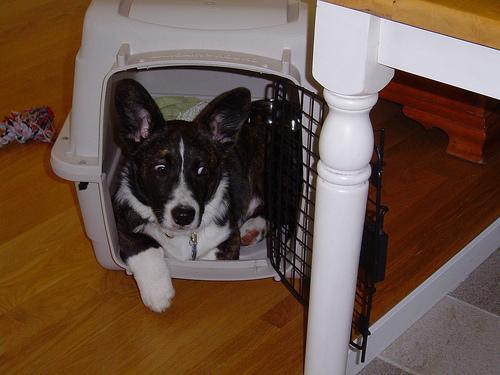
If your vet just handed you a steroid prescription for your dog’s IVDD and you’re wondering whether that’s still the right call, you’re asking exactly the right question.
When Heidi was diagnosed, I found myself staring at a bottle of prednisone wondering why I’d read so many conflicting things online. Some sources treated steroids like the obvious answer. Others said neurologists had moved away from them entirely. I couldn’t figure out who was right. The honest answer is that both sides have a point, and understanding why helps you have a much better conversation with your vet.
Why Were Steroids the Default Treatment for So Long?
Steroids were the go-to for IVDD for decades because the logic seemed airtight. When a disc herniates, the spinal cord becomes inflamed. Corticosteroids are powerful anti-inflammatories. Therefore, reduce inflammation, reduce damage. That reasoning made steroids standard care in veterinary medicine for much of the late 20th century.
Drugs like dexamethasone and methylprednisolone sodium succinate (MPSS) were widely prescribed, and high-dose MPSS was also borrowed from human spinal cord injury protocols. The assumption was that earlier and more aggressive anti-inflammatory treatment meant a better chance of neurological recovery.
For a long time, there wasn’t strong comparative evidence pushing back on that. Steroids did seem to help some dogs. The side effects were considered manageable. And in the absence of better data, continuing with what seemed to work was the reasonable clinical choice.
What Changed? The Evidence Shift Explained
The turn came gradually, driven by two things: better research on what the drugs actually do, and a clearer picture of their risks.
Studies comparing corticosteroids to NSAIDs in dogs with spinal cord injury did not consistently show that steroids produced better neurological outcomes. According to the Merck Veterinary Manual, the use of corticosteroids in acute spinal cord injury in dogs is now considered controversial, and their benefit has not been clearly established in controlled clinical trials.
At the same time, research on high-dose MPSS in human spinal cord injury — which had influenced veterinary practice — was re-evaluated. Those human studies were found to have significant methodological problems, and many human neurologists ultimately moved away from high-dose steroid protocols. Veterinary neurologists took note.
What emerged was a clearer picture: NSAIDs like meloxicam can manage the pain and inflammation of IVDD with a meaningfully lower side-effect burden, at least for Grade 1 through Grade 3 cases. For many dogs, that trade-off now looks favorable. You can read more about how grades affect treatment decisions in The 5 IVDD Stages Explained.
- Corticosteroids (prednisone, dexamethasone, MPSS): Suppress the immune response broadly, reduce inflammation systemically
- NSAIDs (meloxicam, carprofen, grapiprant): Block specific inflammatory enzymes (COX-1/COX-2), with more targeted action
- Key difference: NSAIDs don’t suppress the immune system broadly, which reduces some of the most serious steroid side effects
What Are the Real Side Effects of Steroids?
This is where the risk-benefit conversation gets concrete. Steroids aren’t dangerous in the dramatic, sudden way that some things are — but their side effects are real, cumulative, and worth understanding.
Increased thirst and urination (PU/PD): Almost universal with steroid use. This sounds minor until your IVDD dog — who may already have bladder control issues — is producing far more urine than usual.
Increased hunger and weight gain: Dogs on steroids are often ravenous. Weight gain stresses an already-compromised spine, which is the last thing an IVDD dog needs during recovery.
Gastrointestinal ulceration: Steroids can damage the stomach lining, especially at higher doses or with longer courses. This risk becomes severe when steroids are combined with NSAIDs.
Urinary tract infections: Steroids suppress immune function, which increases UTI risk. For dogs who are already prone to UTIs due to incontinence or bladder expression, this is a compounding problem.
Delayed wound healing: Relevant if your dog is post-surgical. Steroids can slow the healing process.
Panting and restlessness: Common, especially at night, and disruptive for both dog and caregiver.
Immune suppression: Broad suppression means the dog is less able to fight off any infection — not just UTIs.
For dogs managed conservatively (crate rest, no surgery), a short steroid course may still have a role in severe inflammation. But the side effects mean that routine, extended steroid use for IVDD has become much harder to justify when an alternative exists.
- Giving a corticosteroid AND an NSAID together dramatically increases the risk of GI ulceration and bleeding
- This applies even if the doses seem low individually
- There must be a washout period of several days when switching between them — your vet will tell you the exact interval
- If you’re ever unsure what drug class your dog is on, call the clinic before giving anything new
Why Do Some Vets Still Prescribe Steroids for IVDD?
This is the part that confuses a lot of owners. If neurologists have moved away from routine steroids, why does your general practice vet hand them out?
A few honest reasons:
Access and familiarity: General practitioners were trained on steroid protocols and have used them for years. Patterns don’t change overnight, and not every vet has updated their practice based on newer neurological literature.
Cost: In some cases, steroids are less expensive than NSAIDs, and for owners with very limited budgets, that matters.
Severe presentations: Some neurologists do still use steroids in Grade 4 and Grade 5 cases — the most severe presentations — where aggressive anti-inflammatory action may be warranted and the short-term risk is considered acceptable given the stakes.
Honest uncertainty: The evidence showing NSAIDs are better is real, but it isn’t uniformly clean. Some clinicians read the literature differently and feel the case for a complete switch is not airtight.
None of this means your vet is wrong. It means veterinary medicine is in a period of transition, and reasonable practitioners can land in different places. What matters is that you understand which drug your dog is on and why.
- Is this a corticosteroid or an NSAID, and why did you choose this class?
- How long will my dog be on this medication?
- What side effects should I watch for at home?
- Is my dog currently on anything else that could interact with this?
- Under what circumstances would you consider switching?
How Does This Fit With the Rest of IVDD Treatment?
Medication is only one piece of IVDD management. Whether your vet chooses a steroid or an NSAID, that prescription exists alongside strict crate rest, potential surgery consideration, physical rehabilitation, and ongoing monitoring of neurological status.
If your dog is in the early stages of IVDD management, the IVDD conservative management guide walks through how all the pieces fit together. And if you’re weighing whether surgery is even on the table, the comparison at IVDD Surgery vs. Conservative Care lays out the decision framework clearly.
The medication question matters — but it doesn’t stand alone. A good outcome depends on the whole picture.
- Your dog vomits blood or has black, tarry stools (possible GI bleed from medication)
- Sudden worsening of leg weakness or paralysis after starting medication
- Your dog stops eating entirely and seems acutely unwell
- Any signs of severe lethargy, collapse, or acute abdominal pain
How Do I Talk to My Vet About This?
The most important thing is to ask the question directly, without making it adversarial. Your vet is not the enemy — they’re working with the information they have.
A good opening: “I’ve been reading about the shift away from steroids in IVDD treatment. Can you walk me through why you chose this medication and what the expected benefits and risks are for my dog specifically?”
That framing invites explanation rather than defensiveness. Most vets will genuinely appreciate that you’re engaged. If they give you a thoughtful answer that makes clinical sense for your dog’s situation, you can proceed with confidence. If the explanation feels thin or doesn’t address your specific concerns, it’s completely appropriate to ask for a referral to a veterinary neurologist.
Neurologists see IVDD every day. They’re typically the practitioners most current on the evidence and best positioned to advise on drug selection for complicated or severe cases. Asking for that referral isn’t an insult to your general practice vet — it’s advocating for your dog.
The goal is always the same: the right treatment for this dog, right now, with a full understanding of why.
Related Reading
- IVDD Medications Explained: Steroids, Gabapentin, Muscle Relaxants & Pain Meds
- IVDD Without Surgery: Conservative Management That Works
- The 5 IVDD Stages Explained: Symptoms & Recovery Odds
Frequently Asked Questions
Are steroids still used for IVDD treatment?
Steroids are used less routinely than they once were. Many veterinary neurologists now prefer NSAIDs like meloxicam for mild-to-moderate IVDD cases because the risk profile is generally lower. Steroids may still be prescribed in certain situations, particularly severe cases, but their routine use has declined significantly.
Can I give my dog both a steroid and an NSAID for IVDD pain?
No — this combination is dangerous and should never be done. Giving a corticosteroid (like prednisone or dexamethasone) together with an NSAID (like meloxicam or carprofen) dramatically increases the risk of life-threatening gastrointestinal ulceration and bleeding. Always confirm with your vet which drug class your dog is currently on.
What are the main side effects of steroids in dogs with IVDD?
Common side effects include increased thirst and urination, increased hunger, panting, lethargy, and a higher risk of urinary tract infections. More serious risks include gastrointestinal ulceration, delayed wound healing, and immune suppression, especially with longer courses.
How do I talk to my vet if I’m concerned about the steroid prescription?
Ask your vet directly which drug class they’re prescribing and why they chose it over the alternative. Ask about the expected duration, side effects to watch for, and what would prompt them to switch. Most vets welcome informed questions — your job is to understand the plan, not to override it.
This guide is based on real experience and should be used alongside professional veterinary care. Always consult your veterinarian before starting any new treatment or making changes to your dog’s care plan.