Slipped Disc in Dogs: Symptoms, Treatment, and Recovery
Your dog has a 'slipped disc' — here's what that actually means, what symptoms to watch for, and what treatment and recovery look like. A plain-language guide.
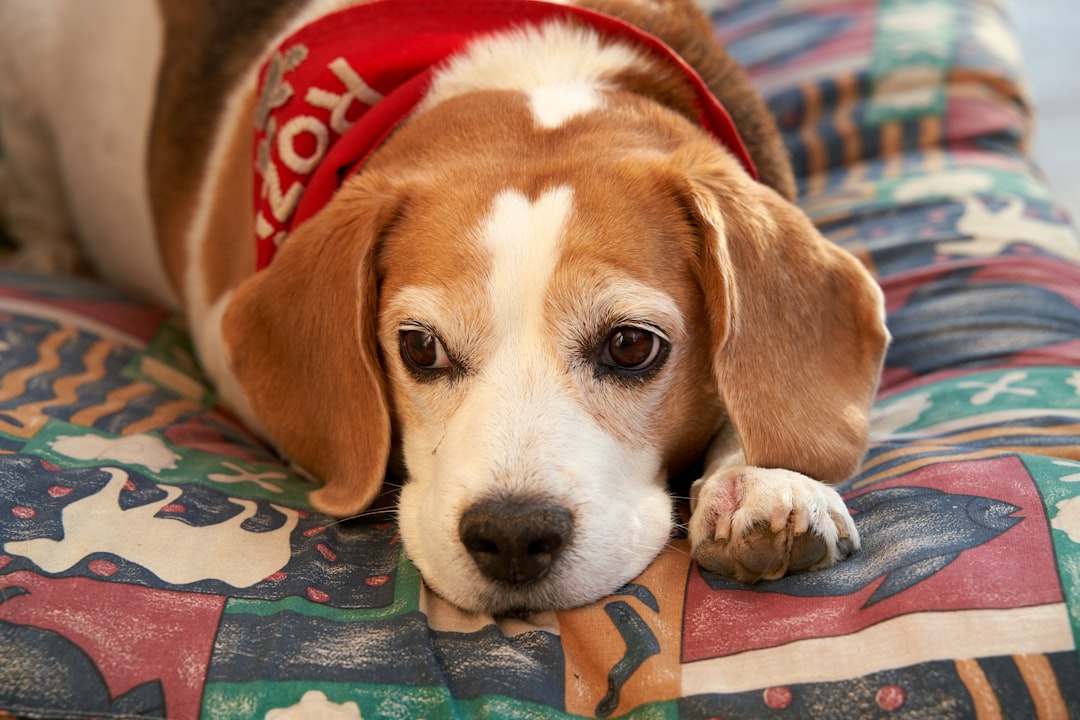
Photo by Barnabas Davoti on Unsplash
If your vet just said “slipped disc” and you’re not sure what that means for your dog’s future, you’re in the right place — this is where we start.
The phrase “slipped disc” is what most of us say. Your vet’s chart probably says IVDD — intervertebral disc disease. They mean the same thing. A disc between two vertebrae in your dog’s spine has bulged, burst, or broken down enough to press on the spinal cord or the nerves branching off it. That pressure is what causes everything from mild back pain to sudden paralysis.
What Exactly Is a Slipped Disc?
A slipped disc occurs when the cushioning disc between two spinal vertebrae fails and puts pressure on the spinal cord or surrounding nerves. The disc doesn’t literally “slip out” — it either bulges inward toward the spinal cord, or the inner material ruptures and shoots into the spinal canal.
Your dog’s spine is a series of bones (vertebrae) stacked on top of each other, separated by these jelly-filled discs that act as shock absorbers. In healthy dogs, those discs are soft and flexible. In dogs prone to IVDD, the discs often harden prematurely — a genetic condition called chondrodystrophy — which makes them much more likely to crack or burst under normal everyday pressure. A jump off the couch, a stumble on stairs, or sometimes nothing dramatic at all can trigger an episode.
The location matters too. Most slipped discs in dogs occur in the thoracolumbar region (mid-back to lower back), which is why hind-leg weakness is so common. Neck discs (cervical IVDD) happen too, and they tend to cause pain, front-leg weakness, or a head-down posture. If you want to understand how the disc location changes the symptom picture, our article on cervical vs. thoracolumbar IVDD goes deeper on that.
- Dachshunds are the highest-risk breed — up to 25% may experience IVDD in their lifetime
- Other high-risk breeds include Beagles, Basset Hounds, French Bulldogs, Corgis, Shih Tzus, Pekingese, and Cocker Spaniels
- Large breeds (German Shepherds, Dobermans, Labradors) can also develop IVDD, often with a slower-onset type
- Chondrodystrophic breeds — those bred for short legs and long backs — carry the highest genetic risk
What Are the Symptoms of a Slipped Disc in Dogs?
The most common early symptoms of a slipped disc in dogs are hunched posture, reluctance to jump or climb stairs, yelping when touched along the spine, and slower or stiffer movement than usual. As disc pressure increases, symptoms escalate to weakness, stumbling, dragging the back legs, and loss of bladder or bowel control.
What makes IVDD tricky is that symptoms can come on suddenly — your dog was fine at breakfast and struggling to walk by dinner — or they can build gradually over days or weeks. Both patterns happen, and both are real emergencies once weakness or bladder problems appear.
Here’s how the symptom picture typically unfolds, from earliest to most severe:
- Hunched or arched back: The dog tenses the muscles around the spine to guard against pain — it looks like they’re bracing.
- Reluctance to move: Refusing to jump on furniture, climb stairs, or go down steps they used to take without thinking.
- Yelping or crying: Often random-seeming, especially when touched on the back or neck, or when shifting positions.
- Slow, stiff gait: Moving like they’re sore — shorter steps, less enthusiasm.
- Wobbling or crossing the back legs: The first sign that spinal cord compression is affecting nerve signals to the legs.
- Knuckling: The paws curl under and the dog walks on the top of their foot instead of the pad — a neurological sign.
- Dragging the back legs: The dog can’t lift or coordinate the hind legs well enough to walk normally.
- Loss of bladder or bowel control: The nerves that manage elimination are being compressed. This is an urgent sign.
- Complete paralysis: The dog cannot move the hind legs at all.
If your dog is dragging their legs or has lost bladder control, that’s not a “call in the morning” situation. Our IVDD emergency signs guide walks through exactly when to head to an emergency vet versus waiting for your regular clinic.
- Sudden inability to walk or stand on the back legs
- Dragging both hind legs
- Loss of bladder or bowel control
- Deep pain sensation absent (dog doesn’t respond when a paw is squeezed firmly)
- Rapid worsening — going from mild stiffness to weakness within hours
How Will the Vet Diagnose It?
A vet will suspect a slipped disc based on your dog’s symptoms, breed, and a hands-on neurological exam — they’ll assess how your dog walks, whether they can feel their paws, and how strong the reflexes are. Imaging is needed to confirm the location and severity of the disc problem.
X-rays can sometimes hint at a disc problem but can’t show the spinal cord itself. The gold standard is an MRI, which gives the clearest picture of where the disc material is pressing and how severely the cord is compressed. A CT scan is faster and less expensive, and many surgeons will operate based on CT findings alone. A myelogram (dye injected into the spinal canal, then X-rayed) is an older technique still used at some facilities.
The vet will also assign your dog a neurological grade — typically Grade 1 through 5. That grade is the single most important number in your dog’s chart because it drives every treatment decision. If you’re not familiar with what the grades mean, the IVDD stages guide is the best place to get your bearings.
What Are the Treatment Options?
Treatment for a slipped disc in dogs falls into two broad paths: conservative management (no surgery) or surgical decompression. The right path depends heavily on your dog’s neurological grade, how quickly symptoms developed, and how long they’ve been present.
Conservative Management
For dogs with Grade 1 or 2 symptoms — pain and mild neurological changes, but still walking — strict crate rest combined with anti-inflammatory medications is the standard starting point. “Strict” means exactly that: no running, no stairs, no jumping, minimal movement for typically 4–6 weeks. It’s harder than it sounds, especially with a dog who feels better after a few days of medication and wants to zoom around.
Most vets will prescribe a combination of pain medications, anti-inflammatories, and sometimes muscle relaxants. The goal is to reduce swelling around the spinal cord, manage pain, and give the disc time to stabilize. Our IVDD without surgery article covers what that 4–6 week period actually looks like in practice.
Surgery
For dogs with Grade 3, 4, or 5 symptoms — significant weakness, paralysis, or lost bladder control — surgery is usually the recommended path. The most common procedure is a hemilaminectomy, where a veterinary surgeon removes a small section of vertebral bone to access and scoop out the disc material pressing on the spinal cord. The goal is to decompress the cord as quickly as possible, because compressed neural tissue doesn’t tolerate prolonged pressure well.
Timing is critical. A dog that goes to surgery within 24–48 hours of losing the ability to walk generally has a better prognosis than one who waits a week. The decision between surgery and conservative care at the middle grades isn’t always clear-cut, and our surgery vs. conservative care comparison lays out the specific factors that push a case one way or the other.
- What neurological grade is my dog right now?
- How quickly are the symptoms progressing?
- Is surgery strongly recommended at this grade, or is conservative management a reasonable option?
- Which imaging do you recommend — MRI, CT, or myelogram — and what does each tell you?
- If we choose conservative care, what specific signs would tell us to escalate to surgery?
What Does Recovery Look Like?
Recovery from a slipped disc in dogs is measured in weeks, not days — and it requires patience that most of us don’t realize we’ll need until we’re in the middle of it.
For dogs treated conservatively, the first week or two on restricted rest and medication usually brings meaningful pain relief. But that improvement can be deceptive. The disc hasn’t healed yet, even if your dog feels better. Many owners make the mistake of easing restrictions too early, which can cause a setback or even a re-rupture.
For dogs that had surgery, the first week home is focused on incision care, bladder management, and very restricted movement. Weeks 2–4 typically involve starting gentle physical therapy — passive range-of-motion exercises, supported standing, and eventually assisted walking. Many dogs begin showing neurological improvement within the first 2–4 weeks post-surgery, though the full recovery arc often runs 8–12 weeks or longer.
Recovery timelines vary significantly by grade. Grade 1–2 dogs treated conservatively can return to normal activity in 4–8 weeks. Grade 3–4 dogs who had surgery often take 8–16 weeks to walk confidently. A few dogs with Grade 5 injuries — those who had lost deep pain sensation — take much longer, or may not fully recover walking ability. For more on what recovery timelines actually look like across grades, the IVDD recovery time by grade article gives realistic numbers.
One piece of gear that genuinely helps during the recovery phase: the Help ‘Em Up Harness we used with Heidi. It lets you support your dog’s hindquarters during assisted walks and bathroom trips without straining your own back — which matters a lot when you’re doing this multiple times a day for weeks.
- Sudden return of weakness after improvement — call your vet the same day
- Swelling, discharge, or odor at a surgical incision site
- Dog stops urinating entirely — this requires emergency care
- Loss of deep pain sensation that wasn’t present before — a neurological emergency
Related Reading
- IVDD Symptoms in Dogs: Early Warning Signs to Catch Now
- IVDD Stages 1–5: Symptoms, Recovery Odds by Stage
- IVDD Surgery vs. Conservative Care: How to Decide
A slipped disc diagnosis is terrifying in the moment. The terminology is confusing, the decisions come fast, and you’re trying to process all of it while watching your dog suffer. What I want you to know is that most dogs who get appropriate, timely treatment do well. The path forward is rarely simple, but it’s almost always there. Start with your vet, get the grade, and go from there — one step at a time.
This guide is based on real experience and should be used alongside professional veterinary care. Always consult your veterinarian before starting any new treatment or making changes to your dog’s care plan.
Frequently Asked Questions
Is a slipped disc in dogs the same as IVDD?
Yes — when your vet says IVDD (intervertebral disc disease), they mean the same thing most owners call a slipped disc. IVDD is the clinical term for what happens when a spinal disc bulges, ruptures, or degenerates and puts pressure on the spinal cord or nerve roots.
Can a dog recover from a slipped disc without surgery?
Many dogs do recover without surgery, especially those with mild to moderate symptoms (Grades 1–3). Conservative management with strict crate rest and medication works well for a large portion of cases. However, dogs that have lost the ability to walk or have lost deep pain sensation typically need surgery to have the best chance of recovery.
How long does it take for a dog to recover from a slipped disc?
Recovery time varies widely depending on severity. Mild cases (Grade 1–2) may resolve in 4–8 weeks of strict rest. More severe cases — especially those requiring surgery — often need 8–12 weeks of recovery, sometimes longer before a dog is walking confidently again.
What are the first signs of a slipped disc in dogs?
The earliest signs are often subtle: a hunched posture, reluctance to jump or use stairs, yelping when touched along the back or neck, and moving more slowly than usual. Many owners notice their dog just “seems off” before any obvious weakness appears.