Shih Tzu & Pekingese IVDD: The Neck-Disc Risk in Small Breeds
Shih Tzu and Pekingese face a hidden IVDD risk most owners miss — cervical disc disease. What neck pain really looks like, and when to act fast.
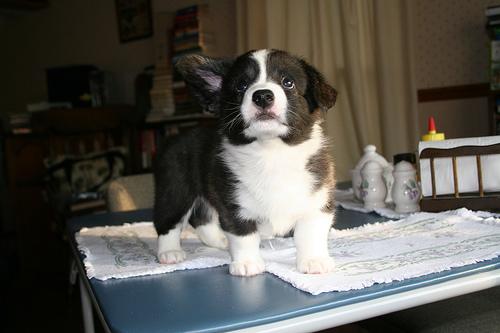
Photo by Filipe Resmini on Unsplash
Shih Tzu IVDD often hits the neck first — and because the signs look nothing like the back-leg weakness most owners expect, it gets missed until things are serious.
When people think of IVDD, they usually picture a dachshund dragging its back legs. And while that picture isn’t wrong, it’s incomplete. Shih Tzus, Pekingese, and other flat-faced small breeds have a distinct pattern of disc disease that targets the cervical spine — the neck — and it shows up very differently. If you have one of these dogs and you don’t know what cervical IVDD looks like, you might be watching it unfold without recognizing it.
Why Shih Tzus and Pekingese Are at Higher Risk
Shih Tzus and Pekingese are chondrodystrophic breeds. That word sounds clinical, but it simply means their cartilage develops differently from the start — and that includes the cartilage inside their intervertebral discs. In most dogs, disc degeneration is a slow process that unfolds in old age. In chondrodystrophic breeds, those discs can begin calcifying and losing their shock-absorbing properties as early as age two.
The result is a spine that’s vulnerable to disc herniation for most of the dog’s adult life — not just in old age.
What makes the Shih Tzu and Pekingese pattern somewhat unique is the combination of their body type and their head structure. The relatively large, heavy head of both breeds sits atop a neck that already carries degenerating discs. That mechanical load, concentrated at the cervical vertebrae, is thought to be one reason cervical IVDD is disproportionately common in these breeds compared to, say, a dachshund, whose IVDD more typically affects the thoracolumbar (mid-to-lower back) region.
Cervical vs. Thoracolumbar IVDD: What’s the Difference?
The location of a disc herniation determines almost everything about how the condition presents. These are two meaningfully different clinical pictures, and confusing them can delay diagnosis.
Thoracolumbar IVDD affects the mid-back to lower back region. This is the classic dachshund pattern: hind-leg weakness or paralysis, stumbling, loss of bladder or bowel control, and a hunched back. The spinal cord damage here affects the back half of the dog.
Cervical IVDD affects the neck — typically between C2 and C7 in the cervical vertebrae. Because the cervical spinal cord is the highway for signals going to all four limbs, a herniation here can cause pain, weakness, or dysfunction that involves the entire body. It can also be life-threatening if the compression is severe, because the nerves controlling breathing originate in the upper cervical spine.
The critical thing to understand: cervical IVDD is often primarily a pain condition, especially in early stages. The dog’s nervous system hasn’t failed yet — it hurts. A lot.
- Location: Cervical = neck (C2–C7); Thoracolumbar = mid-to-lower back (T11–L3 most common)
- Primary sign: Cervical = neck pain, head-down posture; Thoracolumbar = hind-leg weakness or paralysis
- Limbs affected: Cervical can affect all 4 limbs; Thoracolumbar typically affects hind limbs only
- Breeds at higher cervical risk: Shih Tzu, Pekingese, Beagle; Thoracolumbar more typical in Dachshund, Corgi
What Does Neck Pain Look Like in a Shih Tzu or Pekingese?
Neck pain from cervical IVDD is one of the most commonly misread conditions in small dogs. Owners often describe it as their dog “acting strange,” “being moody,” or “seeming sore from something.” The signs are subtle at first — and heartbreakingly easy to dismiss.
The most common signs of cervical IVDD pain in small breeds include:
- Head-down posture: The dog carries its head low and avoids raising it, sometimes pressing its nose toward the chest. This is the single most telling sign.
- Reluctance to look up: Won’t follow a treat held above nose height, won’t look up at you during interactions.
- Yelping when picked up: Especially if you scoop under the chest and compress the neck slightly. This cry often seems to come out of nowhere, which is exactly why owners assume they startled the dog rather than hurt it.
- Stiff neck, reluctance to turn: Won’t turn the head to follow movement; may turn the whole body instead of just the neck.
- Tense topline: The back and neck muscles may be noticeably rigid. The whole dog looks braced.
- Reduced activity, clinginess, or irritability: Pain changes behavior. A dog who becomes suddenly cuddly or suddenly snappy may be hurting.
- Forelimb weakness or stumbling: In more advanced cases, front-leg coordination may be affected.
From what I’ve seen discussed repeatedly in the disabled dog owner community, the yelping-when-picked-up sign is the one that finally prompts a vet visit — but by that point, the dog has often been in pain for weeks. If your Shih Tzu or Pekingese starts holding their head low, don’t wait for the yelp.
- Head held rigidly low with inability to raise it at all
- Wobbling or stumbling in the front legs
- Weakness in all four limbs
- Sudden unwillingness to walk
- Crying or vocalizing without an obvious trigger
How Is Cervical IVDD Diagnosed?
A neurological exam can give your vet strong clues, but imaging is required to confirm the diagnosis and locate the affected disc. X-rays may show calcified discs but cannot visualize the spinal cord itself. MRI is the gold standard for cervical IVDD — it shows the disc material, the degree of spinal cord compression, and any cord signal change that would affect prognosis. CT myelogram is an alternative when MRI isn’t available.
For a deeper look at what each imaging type shows, I’ve covered this in detail in IVDD Imaging Explained: MRI vs CT vs Myelogram vs X-Ray.
Most vets will refer to a veterinary neurologist for imaging and treatment planning. If your regular vet suspects cervical disc disease, ask for that referral. This is a case where specialist input matters.
Treatment: Conservative Management vs. Surgery
Many cases of cervical IVDD in small breeds — particularly Grade 1 and Grade 2 cases with pain but no significant neurological deficits — can be managed conservatively. That means strict crate rest, pain control, and anti-inflammatories. Typically 4–6 weeks, though it varies by case and response.
The emphasis on “strict” is real. Conservative management only works if the dog is genuinely resting. No jumping on furniture, no stairs, no rough play. A well-set-up crate with a comfortable surface makes this much more manageable for both of you. For the full picture on treatment options and how to decide between them, IVDD Surgery vs. Conservative Care: How to Decide breaks it down honestly.
Surgery becomes the recommendation when:
- Neurological deficits are present and worsening
- The dog is not responding to conservative management
- There is significant spinal cord compression on imaging
- There are signs of weakness in all four limbs
Cervical IVDD surgery involves decompressing the spinal cord, usually through a ventral slot procedure at the affected disc level. Recovery requires the same careful crate rest as conservative management, plus close monitoring for any decline. Understanding where your dog sits on the severity spectrum is important — the 5 IVDD Stages Explained is a good reference for that.
- Strict crate rest for 4–6 weeks minimum — no free-roaming
- Short, leash-only bathroom trips (no neck pulling — use a harness, not a collar)
- Prescribed medications taken on schedule, even when the dog seems better
- Daily gentle observation for any changes in posture, gait, or response to touch
- Follow-up neurological checks as recommended by your vet
One Important Gear Note for Neck IVDD Dogs
If your dog has been diagnosed with cervical IVDD, this is important: switch from a collar to a harness for all walks immediately, even gentle bathroom trips. Any pressure on the neck from a collar can aggravate an inflamed cervical disc. A well-fitted front-clip harness keeps all pressure off the neck entirely. The Help ‘Em Up Harness is worth looking at if you also need a handle for support — many owners of small dogs with cervical disease find the gentle lift support helpful during recovery.
What Escalation Looks Like — and When It’s an Emergency
Cervical IVDD can escalate quickly. A dog that was stiff and painful in the morning can be showing four-limb weakness by evening if a disc herniates more significantly. The upper cervical spine is close enough to the brainstem that severe compression can affect breathing.
- Inability to walk or sudden collapse
- Weakness or stumbling in all four legs
- Labored or irregular breathing
- Loss of bladder or bowel control alongside neck signs
- Rapid progression from pain to paralysis over hours
If any of these appear, don’t call ahead to your regular vet and wait for a callback. Go directly to an emergency veterinary hospital or veterinary neurology emergency service. Cervical IVDD at the severe end can be fatal if not treated promptly.
For deciding whether your dog’s current situation needs emergency care or can wait until morning, the ER Vet or Wait Till Morning? An IVDD Decision Guide is one of the most practical resources on this site.
Related Reading
- IVDD Symptoms in Dogs: Early Warning Signs to Catch Now
- IVDD Surgery vs. Conservative Care: How to Decide
- The 5 IVDD Stages Explained: Symptoms & Recovery Odds
- It’s worth knowing where your nearest board-certified neurologist is before you need one — our IVDD specialist finder lets you search by state.
Watching a Shih Tzu or Pekingese hold their head low and flinch at touch is one of those things that becomes unmistakable once you know what you’re looking for. The hard part is that most owners don’t know — until they do. If you found this page because something feels off with your dog, trust that instinct. Cervical IVDD caught early, with proper rest and medical management, gives these little dogs a genuinely good chance at full recovery. You’re already ahead by looking.
This guide is based on real experience and should be used alongside professional veterinary care. Always consult your veterinarian before starting any new treatment or making changes to your dog’s care plan.
Frequently Asked Questions
Are Shih Tzus prone to IVDD?
Yes. Shih Tzus are a chondrodystrophic breed, meaning their spinal discs age and degenerate much earlier than non-chondrodystrophic breeds. They are particularly prone to cervical (neck) disc disease, which is sometimes overlooked because the symptoms differ from the back-leg weakness most owners associate with IVDD.
What does cervical IVDD look like in a Shih Tzu or Pekingese?
The most common signs are head-down posture, reluctance or refusal to look up, yelping when picked up under the chest, stiffness in the neck, and a very tense, hunched appearance. Many owners initially mistake these signs for a bad mood or an injury from roughhousing.
How is cervical IVDD treated in small dogs?
Mild to moderate cases are often managed conservatively with strict crate rest (typically 4–6 weeks), pain medication, and anti-inflammatory drugs. More severe cases — especially those with weakness in all four limbs — may require surgery. Your neurologist will recommend imaging to assess the disc and guide the decision.
When is cervical IVDD a medical emergency?
If your dog loses the ability to walk, shows weakness in all four legs, or cannot support its own head, treat it as an emergency. Complete paralysis or rapid neurological decline from cervical IVDD can be life-threatening. Get to an emergency vet or veterinary neurologist immediately.