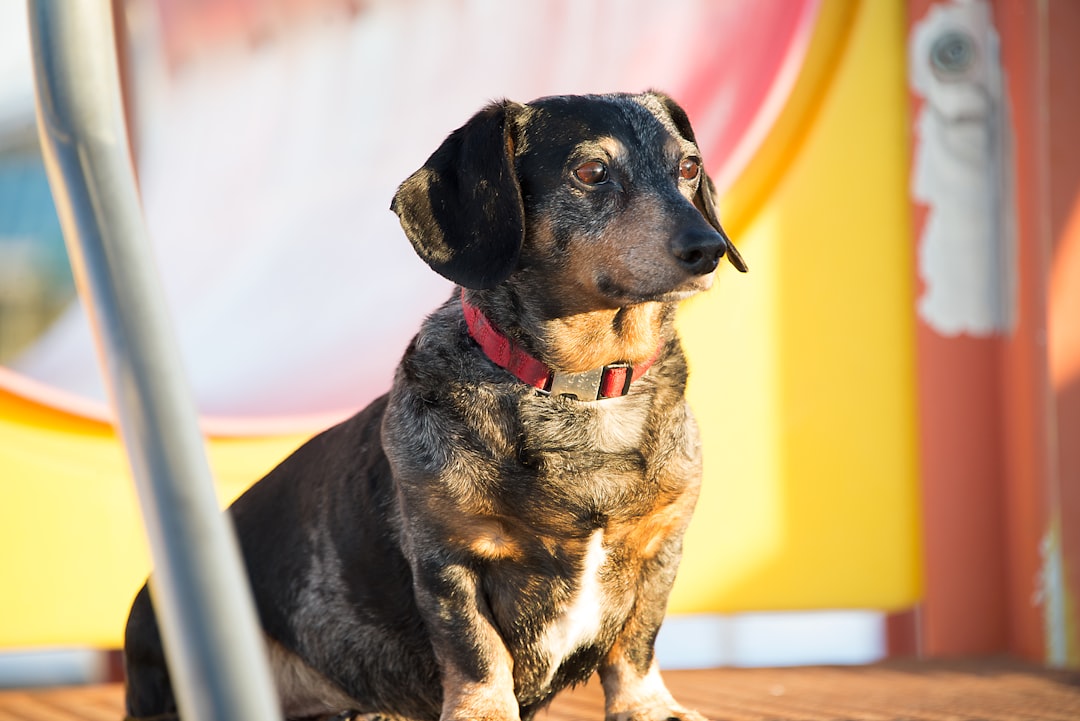
The habits you build in your dachshund puppy’s first year will shape how their spine holds up for the next decade.
Heidi came home as a puppy before I knew anything about IVDD. I let her leap off the couch fifty times a day and thought nothing of it. Years later, when she was recovering from a disc herniation, I kept thinking: what if I’d known sooner? This guide is what I wish someone had handed me on day one.
Why Dachshunds Are Built for Back Problems
Dachshunds carry a genetic mutation — chondrodystrophy — that causes their cartilage and intervertebral discs to age prematurely. While most dogs don’t show disc degeneration until late in life, a dachshund’s discs can begin calcifying in their first few years. The American Kennel Club notes that dachshunds have one of the highest rates of IVDD of any breed, with some estimates suggesting the majority will experience some degree of disc disease in their lifetime.
This isn’t a reason to panic. It is a reason to be deliberate from the start.
For a deeper look at the genetics behind this, the article on IVDD genetics: CDDY, FGF4, and chondrodystrophy explains the biology in plain English.
Weight From Day One: The Single Biggest Lever You Have
Keeping your dachshund puppy lean is the most consistently recommended and immediately actionable thing you can do to reduce spinal stress. Every extra pound on a long, low spine means more compressive force on discs that are already predisposed to early degeneration. Weight management reduces joint and disc stress directly — this is one of those areas where the evidence is solid enough to state plainly, not just hedge.
How to Manage Weight in a Dachshund Puppy
- Measure every meal: Free-feeding makes it nearly impossible to track intake. Use a measuring cup and follow feeding guidelines adjusted to your puppy’s actual activity level, not the high end of the bag’s recommendation.
- Limit treats strategically: Treats count as calories. Use small pieces — a full treat can often be broken into four without your dog noticing. Training sessions can use kibble instead of extras.
- Feel the ribs: You should be able to feel your puppy’s ribs without pressing hard, but not see them prominently. If you can’t feel them easily, it’s time to reduce portions.
- Weigh monthly at the vet: Track the number. Standard dachshunds and miniature dachshunds have very different target weights — know which you have and what your vet considers healthy for their frame.
- Dachshund puppies are small, which makes every extra ounce a larger percentage of total body weight
- A miniature dachshund who is 1 pound overweight is carrying proportionally more disc stress than a Labrador who is 5 pounds over
- Puppies go through phases of looking roly-poly that are normal — but ask your vet to confirm it’s puppy fat, not excess weight
The No-Jumping Rule: Start It Before They Jump Once
The impact of landing — especially from heights like a couch, bed, or car seat — sends a shock up through the spine. For a breed whose discs are already at risk, repeated impact landings from puppyhood accumulate over time. The goal is to establish ramp and step habits before jumping becomes the default.
When Should I Introduce Ramps?
Introduce ramps from the very first week your puppy comes home. Do not wait until they figure out how to jump — once jumping becomes a habit, breaking it is an uphill battle. Start with a low-profile ramp at the couch or wherever they’ll want to get up. Use treats to lure them up and down repeatedly until it becomes instinct.
- Make it easy first: A ramp with a gentle slope and grippy surface is far more likely to be accepted than a steep one.
- Block the alternatives: If the ramp is there but the edge of the couch is also accessible, your puppy will jump. Use cushions, pillows, or purpose-made furniture blockers to remove the option.
- Reward every ramp use: Especially early on. The habit needs to pay off for them.
- Car exits: Car exits are some of the highest-impact jumps. Train a ramp or step for the car from the first ride home.
- Start before any jumping occurs — habits formed early require far less correction later
- Place the ramp so it’s the path of least resistance, not an extra step
- Practice the ramp during calm, positive sessions rather than waiting until your dog is excited and already mid-air
- Consistency from everyone in the household matters — one person who lets the dog jump undoes the habit quickly
Harness From Day One: Collars and Dachshunds Don’t Mix Well
A collar concentrates any leash tension directly on the neck and cervical spine. For a chondrodystrophic breed, cervical IVDD (neck disc disease) is a real risk — one that often gets overlooked because owners focus on the lower back. A harness distributes leash pressure across the chest and shoulders instead.
Fit a well-padded, properly sized harness from the first walk. Check the fit regularly because puppies grow fast and a too-tight harness creates its own problems.
For owners of adult dogs recovering from disc issues, the best rear-support harnesses for IVDD dogs article covers more specialized support options — but for a puppy, a standard front-clip or Y-front harness is the right starting point.
Stairs: Control Access, Don’t Eliminate Movement
Free stair access — especially when a puppy is zooming up and down unsupervised — creates repeated spinal loading in a breed with vulnerable discs. The goal isn’t to bubble-wrap your dog; it’s to control when and how stairs happen.
- Gate the stairs: A simple baby gate prevents unsupervised access. This is the easiest and most consistent solution.
- Leash-walk stairs when needed: If stairs are unavoidable in your home, walk your puppy on a short leash up and down, at a controlled pace. Remove the frantic running element.
- Minimize frequency: If you can carry your puppy for one floor rather than having them do stairs five times a day, do it.
- Revisit at one year: Many dachshund owners continue to limit stair access throughout their dog’s life, not just in puppyhood. This is a judgment call you’ll make with your vet based on your individual dog.
Core-Strengthening Play: Building the Muscles That Protect the Spine
The muscles running alongside the spine — the paraspinal muscles — act as a natural support structure for the discs. A dog with stronger core and back muscles has better shock absorption and disc support. You can build this through everyday puppy play without any special equipment.
- Cavaletti poles (low broom handles laid on the ground): Walking over these encourages deliberate, balanced foot placement and engages core muscles
- Balance wobble cushion: Briefly standing on a slightly unstable surface (keep it very low and stable for puppies) engages stabilizing muscles
- Slow walking on varied terrain: Grass, gentle slopes, sand — natural variation is better core work than flat pavement
- Sit-to-stand exercises: Luring your puppy from a sit to a stand and back repeatedly is a simple muscle-strengthening exercise most puppies find easy to learn
- Swimming or controlled water play: Excellent low-impact exercise for the whole body if you have access
Avoid high-impact activities: frisbee catching, repetitive ball-chasing with abrupt stops, or any jumping games. Chasing a ball at low speed on grass is fine. Leaping and landing repeatedly is not.
Leash Walking: Keep It Controlled Early
Short, calm, structured leash walks are better for a dachshund puppy than long, uncontrolled runs. Teach a loose-leash walk from the start — not just for training reasons, but because a puppy that pulls hard against a collar (or even a harness) is generating forces your puppy’s developing spine doesn’t need.
Keep early walks short. Puppies tire faster than you think, and an overtired puppy moves sloppily — which increases fall and awkward-landing risk.
Should I Consider DNA Testing?
If you’ve purchased from a breeder, you may be able to request or source IVDD genetic test results. The CDDY/IVDD genetic mutation is testable, and some responsible breeders now test breeding stock. Knowing your puppy’s genetic risk level won’t change your prevention approach much — the same habits apply regardless — but it can inform how aggressive you are with restrictions and how often you speak to your vet about spinal health. The article on IVDD DNA testing before you buy a puppy covers what the results mean in practical terms.
What Signs Should I Watch for Even With Prevention?
Prevention reduces risk — it doesn’t eliminate it. Knowing early IVDD warning signs means you can act fast if a disc event happens despite your best efforts. Watch for: hesitation to jump up when they normally would, yelping when picked up, hunched posture, reluctance to go up or down anything, and any wobbliness or dragging in the back legs. Early signs caught early are a very different situation than a crisis caught late. If you ever see sudden hind-leg weakness or loss of bladder control, treat it as an emergency.
The full breakdown of what to watch for is in our IVDD symptoms guide — worth bookmarking even if your puppy is perfectly healthy.
Related Reading
- Dachshund IVDD Guide: Risk, Signs & Prevention
- IVDD Dogs and Stairs: Ramps, Gates & Rules
- Pet Insurance for Dachshund Owners: What to Look For in the Fine Print
Frequently Asked Questions
At what age should I start using a ramp for my dachshund puppy?
Start introducing a ramp as soon as you bring your puppy home — ideally before they ever jump off furniture. The earlier the habit forms, the less you’ll fight them on it later. Many owners find a low-profile ramp is the easiest first step.
Can a dachshund puppy ever go up stairs?
Some owners allow limited stair use on leash with supervision, treating stairs like structured exercise rather than free access. Most IVDD-aware vets and the dachshund community recommend keeping stair access gated until the puppy is at least a year old, and even then monitoring closely. Free, unsupervised stair use is generally considered a risk factor.
What weight should my dachshund puppy be, and how do I keep them trim?
Your vet will track weight at each visit against breed-standard charts for standard versus miniature dachshunds. Keeping ribs easily felt but not visible and avoiding free-feeding are the core habits. Even a few extra pounds puts meaningful extra load on a long spine.
Does a harness really make a difference over a collar for IVDD risk?
Yes — collars concentrate any pulling force directly on the neck and cervical spine, which is a real risk point for chondrodystrophic breeds. A well-fitted harness distributes that force across the chest instead. This is especially important if your puppy is a puller.
The habits I’m describing aren’t complicated, and they don’t require a perfectly controlled environment. They just require starting early and holding the line consistently — especially when your puppy is being adorable and you just want to let them leap onto the bed. Build the ramp habit, keep them lean, and watch for the early signs. That’s the work.
This guide is based on real experience and should be used alongside professional veterinary care. Always consult your veterinarian before starting any new treatment or making changes to your dog’s care plan.