Preventing IVDD Relapse: 5 Rules I Follow
After Heidi's IVDD crisis, relapse was my biggest fear. These 5 daily habits and home rules are how I keep her spine safe — practical and doable today.
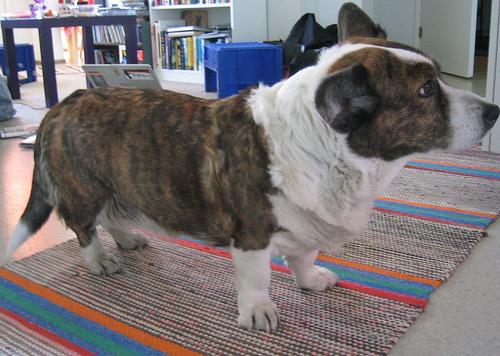
If your dog just came through an IVDD episode, preventing the next one becomes your entire focus, and that’s exactly where mine went after Heidi’s recovery.
The fear of relapse is real. You’ve been through the panic, the vet bills, the crate rest, the sleepless nights. The idea of going through it again is almost too much to sit with. But here’s the good news: there are concrete, daily habits that can meaningfully reduce the risk. They’re not complicated. They’re not expensive. And you can start most of them today.
These are the five rules I built our life around after Heidi’s IVDD crisis, and they’ve become second nature now. I hope they help you too.
Rule 1: No More Jumping. Full Stop.
This was the hardest adjustment for us, honestly. Heidi had spent years launching herself on and off the couch like it was nothing. After her diagnosis, that had to end completely.
The problem isn’t just the jump down. It’s the spinal compression that happens on landing, and the awkward twist dogs often do mid-air. For a spine that’s already shown vulnerability, that repeated impact adds up.
What actually works:
- Ramps and pet stairs: These are non-negotiable in our house now. We have ramps at the couch and the bed. Yes, it took Heidi a few days to get used to them.
- Baby gates: Block access to furniture you can’t monitor. If I can’t watch her, she can’t be near the couch unsupervised.
- Leash management: In the early post-recovery months, Heidi was on a leash or in my arms for anything involving height. Period.
Training helps, but physical barriers are what keep dogs safe. You can’t rely on a dog to remember “no jumping” when they’re excited to greet you at the door.
- Getting on and off car seats is one of the most overlooked jump hazards
- Even small jumps from a low ottoman or step add cumulative spinal stress
- Excitement makes dogs forget everything — manage the environment, not just the behavior
What Does “Safe Exercise” Actually Look Like?
Exercise after IVDD recovery isn’t optional. Staying mobile and keeping core muscles strong is widely thought to support spinal health long-term. But the type of movement matters enormously.
Here’s what I learned from Heidi’s rehab vet and from talking to other owners in the IVDD community:
- Short, leashed walks on flat ground: This is the gold standard. No off-leash running, no uneven terrain, no fetch that ends in a sudden lunge.
- Gradual increases: Don’t rush back to long walks just because your dog seems fine. Build duration over weeks, not days.
- Avoid roughhousing: Even gentle wrestling with other dogs involves sudden spinal twisting that you can’t control.
- Swimming and hydrotherapy: Many rehab therapists consider this excellent low-impact exercise for post-IVDD dogs, though always check with your vet first.
I also kept up the home physical therapy exercises Heidi’s rehab vet showed us, things like slow walking over low poles and gentle range-of-motion work. If you want a starting point for at-home rehab, I’ve covered that in detail in IVDD Physical Therapy at Home: Rehab Exercises.
- Two or three short, calm walks daily beats one long intense one
- Leash walks let you control pace and prevent sudden movements
- Core-strengthening exercises (recommended by your rehab vet) may help support the spine long-term
- Consistency matters more than intensity
Rule 3: Weight Management Is Non-Negotiable
This one is unglamorous but arguably the most impactful thing you can control. Extra body weight puts more mechanical load on every spinal disc with every single step. For a dog who’s already had a disc problem, keeping them lean is one of the most direct levers you have.
After Heidi’s recovery, we had her weighed at every vet visit and I started being much more disciplined about:
- Measuring meals: No more eyeballing. Every meal is measured.
- Treating strategically: Low-calorie treats (tiny pieces of carrot or blueberry work) instead of frequent biscuits.
- Asking the vet for a target weight: This gave me something concrete to aim for rather than guessing.
It sounds simple, but maintaining a healthy weight is one of the most consistently recommended long-term protective measures for IVDD-prone dogs.
Rule 4: Fix the Flooring Before Something Goes Wrong
Slipping on hard floors is a major hazard for dogs with spinal vulnerabilities. The sudden scramble to catch themselves when they slip involves exactly the kind of uncontrolled spinal movement you’re trying to avoid.
After Heidi’s episode, I did a full walk-through of our house and assessed every surface. We added:
- Yoga mats and carpet runners: In hallways and high-traffic areas
- Non-slip rugs with rug grippers: Anywhere she moves from one room to another
- ToeGrips: Dr. Buzby’s ToeGrips were genuinely life-changing for Heidi’s confidence on our hardwood floors. They grip the nail and give dogs traction without any footwear fuss.
I go into much more detail on flooring choices in Best Flooring & Traction for IVDD Dogs if you want to do a proper home audit.
- Check every transition point between surfaces — these are slip hotspots
- Area rugs need non-slip pads underneath or they become a hazard themselves
- ToeGrips or paw wax can help dogs with naturally smooth nails get grip on hard floors
- Consider where your dog runs when excited — that’s where the real slip risk lives
Rule 5: Know the Warning Signs and Act Fast
Even with every precaution in place, IVDD can recur. The single biggest factor in outcome is how quickly you respond when symptoms appear. I’ve heard this from every vet we’ve seen: early intervention (whether that’s cage rest or surgery) almost always leads to better recovery than waiting.
After going through this with Heidi, I know her normal so well that even subtle changes register immediately. What I watch for:
- Any change in gait: Even slight wobbling or “drunk walking” gets my full attention
- Reluctance to jump or climb (even onto their ramp): This can be an early pain signal
- Crying or yelping without obvious cause: Especially during movement or when touched along the back
- Changes in posture: Hunching, tucked tail, or a “sawhorse” stance
- Sudden incontinence: In a previously continent dog, this is urgent
If you see any of these, don’t wait to see if it passes. IVDD Emergency Signs: When to Rush Your Dog to the Vet lays out exactly what warrants an immediate ER visit versus a same-day call to your regular vet.
- Loss of ability to walk or stand — this is a neurological emergency
- Complete loss of bladder or bowel control in a previously continent dog
- Dragging of rear legs, even briefly
- Deep pain perception loss — your vet will test for this; it’s a critical indicator
Living with an IVDD dog long-term means accepting that you can’t eliminate risk entirely, but you can stack the odds in your favor. For more on building a sustainable routine beyond the acute phase, Long-Term Care for an IVDD Dog: Life After Crisis is worth a read when you’re ready.
Related Reading
- Long-Term Care for an IVDD Dog: Life After Crisis
- Best Flooring & Traction for IVDD Dogs
- IVDD Emergency Signs: When to Rush Your Dog to the Vet
Frequently Asked Questions
Can IVDD come back after recovery?
Yes. Dogs who have had one IVDD episode are at higher risk of future episodes, especially breeds like dachshunds with chondrodystrophic spines. That’s why long-term lifestyle management matters so much after recovery.
How do I stop my IVDD dog from jumping?
Physical barriers are your most reliable tool: baby gates, blocked furniture, and keeping your dog on leash during unsupervised time. Training alone is rarely enough, because a dog can’t remember the rule in the excitement of the moment.
Is it okay for a recovered IVDD dog to use stairs?
Most vets and rehab therapists recommend avoiding stairs permanently or using ramps and steps instead. The repetitive impact and spinal flexion from stair climbing is generally considered a risk factor for future disc problems.
Does weight really matter for IVDD relapse risk?
Yes, and significantly. Extra body weight puts more mechanical load on the spinal discs with every step. Keeping your IVDD dog lean is one of the most concrete, controllable things you can do to reduce relapse risk.
You’ve already proven you can handle the hard part: the crisis, the crate rest, the uncertainty. The daily prevention work that comes after is so much more manageable, and every day you stick to these habits is a day you’re actively protecting your dog. You’ve got this.
This guide is based on real experience and should be used alongside professional veterinary care. Always consult your veterinarian before starting any new treatment or making changes to your dog’s care plan.