Poodle and Poodle-Mix IVDD: The Chondrodystrophic Doodle Question
Doodle owners often assume hybrid vigor protects their dog from IVDD. It doesn't — if your mix inherited the CDDY variant, disc disease risk comes with it.
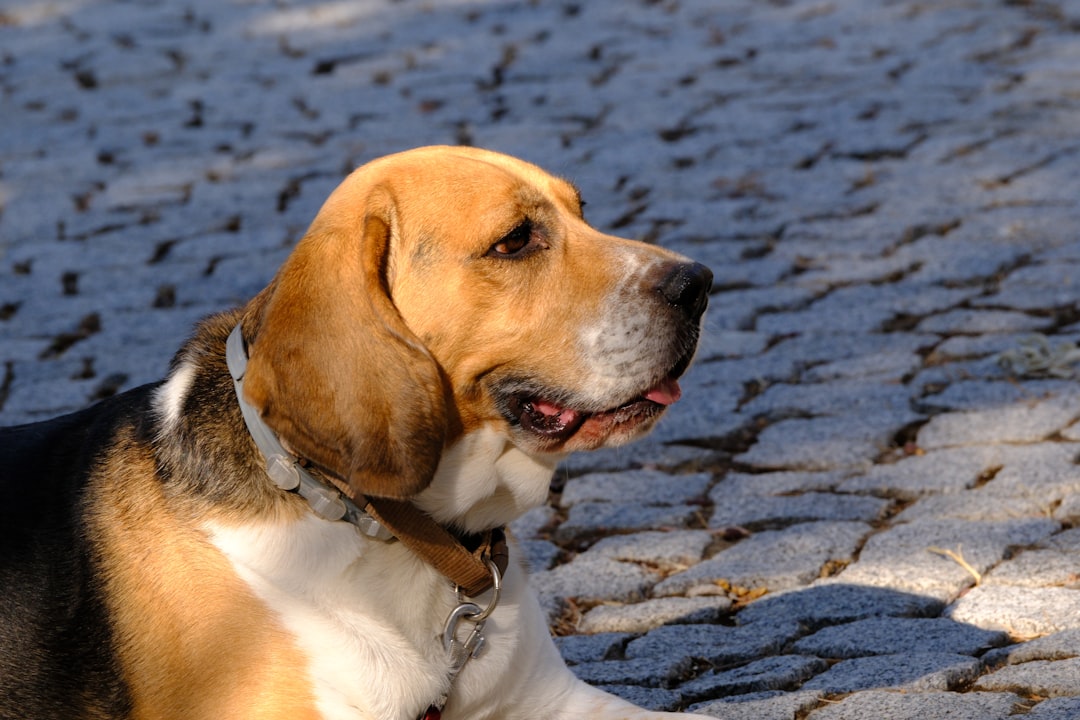
Photo by Lavi Cella on Unsplash
If your doodle inherited the CDDY gene variant from the cocker spaniel, cavalier, or dachshund side of the family, that dog’s spine doesn’t know it has fluffy, hybrid-vigor fur — it’s at risk for IVDD the same way any chondrodystrophic breed is.
Poodle IVDD Risk: Does Size Actually Matter?
Yes — size matters considerably when it comes to poodle IVDD risk. Standard poodles are large dogs and are generally considered lower-risk for the acute Hansen Type I disc herniations that cause sudden paralysis, though they can develop the slower-onset Type II disease as they age. Toy and miniature poodles sit in a different category, with disc stress accumulating across a smaller frame and a measurably higher rate of acute IVDD events.
Pure poodles are not classified as chondrodystrophic breeds the way dachshunds and corgis are — they don’t carry the FGF4 retrogene insertion on chromosome 12 that causes the short-legged, long-backed body type. That matters because chondrodystrophy (the genetic trait that causes premature disc calcification) is what drives the most severe, fast-moving IVDD cases. Without it, poodles’ IVDD risk is more comparable to other medium-to-large breeds: present, but not the defining health concern it is for, say, a dachshund.
Where things get complicated is the moment you start mixing poodles with breeds that DO carry CDDY.
- Standard poodles: Lower acute IVDD risk; more likely to develop slow-onset Type II if IVDD occurs at all
- Miniature poodles: Moderate risk; smaller frame increases disc load relative to body weight
- Toy poodles: Higher risk among the poodle varieties; most similar in size to high-risk small breeds
- All sizes: Risk increases significantly if mixed with a CDDY-carrying breed
What Is CDDY and Why Does It Follow Doodles?
CDDY (chondrodystrophoid-type intervertebral disc disease) refers to a specific mutation — technically an FGF4 retrogene insertion, but on a different chromosome from the one that causes short legs. You can read a full breakdown in our article on the genetics of IVDD: CDDY, FGF4, and chondrodystrophy explained. The short version: CDDY causes intervertebral discs to calcify and degenerate earlier in life than they should. Dogs carrying this variant are prone to Hansen Type I herniations — the kind that can go from stiff and sore to completely paralyzed in a matter of hours.
CDDY is present in many of the breeds that poodles get mixed with most often:
- Cocker spaniels (cockapoos): Known CDDY carriers, and our site has a dedicated piece on cocker spaniel IVDD worth reading if that’s your mix
- Cavalier King Charles spaniels (cavapoos): Also CDDY-positive as a breed
- Dachshunds (doxiepoos): Among the highest-risk CDDY breeds in existence
- Beagles (poogle mixes): Moderate CDDY prevalence
CDDY is inherited as a dominant trait. That means a puppy only needs to receive one copy of the variant — from one parent — to have early disc degeneration. A doxiepoo whose dachshund parent is CDDY-positive has a real chance of inheriting that variant even if the poodle parent is entirely clear. This is not a recessive gene where both parents need to be carriers for the puppy to be affected.
Why “Hybrid Vigor” Doesn’t Apply Here
Many doodle owners — and honestly, many doodle breeders — cite hybrid vigor as a reason not to worry about inherited health conditions. The concept is real in a limited sense: crossing two different breeds can reduce the expression of traits that are influenced by many genes accumulating from a single gene pool. Hip dysplasia risk, for example, can sometimes be reduced through careful outcrossing because multiple genetic pathways contribute to hip conformation.
CDDY doesn’t work that way. It’s a single dominant variant. If it’s present in one parent, it can be passed to puppies regardless of what the other parent contributes. A cavapoo with CDDY discs will have those discs degenerate on the same timeline as a cavalier with CDDY discs. The poodle half of the equation doesn’t dilute or cancel the variant.
This is one of the most important things I want doodle owners to understand: hybrid vigor is not a shield against single-variant dominant conditions. If the CDDY gene is in the mix, it’s in the mix.
- Doxiepoos (dachshund × poodle): Dachshunds carry some of the highest CDDY prevalence of any breed; any doxiepoo from an untested dachshund parent is at elevated risk
- Cockapoos: Cocker spaniels are established CDDY carriers
- Cavapoos: Cavalier King Charles spaniels carry CDDY
- Beagledoodles / Poogles: Beagles have moderate CDDY prevalence
- Any mix with unknown parental genetic history: No test results means you genuinely don’t know
What IVDD Looks Like in Poodles and Doodles
The symptoms of IVDD in a poodle or doodle are the same as in any other at-risk breed, but the presentation can be sneaky. Because doodles tend to be energetic and resilient-seeming dogs, owners sometimes explain away early warning signs.
Watch for:
- Sudden reluctance to jump: A dog who previously launched onto the couch without a second thought and now hesitates or refuses
- Yelping when touched along the back or neck: Even a light touch during grooming or play can trigger a pain response
- Hunched or arched spine: The dog holds its back in a tense, roached position rather than its normal posture
- Changes in gait: Wobbling, crossing of the back legs, or scuffing paws on the floor — all signs of spinal cord involvement
- Reluctance to move: Lying still when the dog would normally be active; appearing “off” without an obvious cause
Any of these signs in a doodle with CDDY risk warrants a same-day vet call. Our full guide to IVDD emergency signs can help you decide how urgently to act based on what you’re seeing.
Specific Concerns by Mix
Doxiepoos
This is the mix I’d worry about most. Dachshunds are among the highest-risk breeds in the world for IVDD — our dachshund IVDD guide covers just how profound that risk is. A doxiepoo from a CDDY-positive dachshund parent carries that same degeneration risk. Compounding this, doxiepoos sometimes inherit longer backs that magnify disc stress. If you have a doxiepoo and you haven’t had CDDY genetic testing done, that’s a conversation worth having with your vet.
Cockapoos
Cocker spaniels have their own well-documented IVDD history. The cockapoo community is large and enthusiastic, and it’s genuinely underserved by health information that takes the CDDY risk seriously. Many cockapoo owners are surprised when their dog presents with spinal pain because the breed’s reputation skews toward coat and personality, not orthopedics.
Cavapoos
Cavalier King Charles spaniels are CDDY-positive as a breed and also carry other serious heritable conditions. Cavapoos are popular precisely because the cavalier temperament is exceptional — but that same gentle, quiet nature can mask pain. A cavapoo in early-stage IVDD pain may simply seem subdued rather than clearly distressed.
- Ask your vet about CDDY genetic testing for your dog — blood or saliva swab, relatively affordable
- If buying a doodle puppy, request CDDY test results for both parents from the breeder
- Know the early warning signs and take them seriously — waiting even 24 hours can change the prognosis
- Manage weight carefully; every extra pound adds stress to discs that may already be compromised
Should You Test Your Doodle for CDDY?
If you already have a doodle and you’re wondering whether genetic testing is still worth it after the fact — yes, I think it is. Knowing your dog’s CDDY status doesn’t change their past, but it does change how you manage their daily life. A CDDY-positive dog benefits from ramp access instead of jumping, weight management that is kept tight rather than approximate, and a vet who knows to take any spinal pain complaint seriously from the start rather than dismissing it as a muscle strain.
For people considering buying or adopting a doodle puppy, asking for parental CDDY test results is completely reasonable. Our piece on IVDD DNA testing before you breed or buy a puppy walks through what the tests actually tell you and how to interpret the results.
As VCA Hospitals notes in their clinical resources on inherited disc disease, genetic screening in at-risk breeds can meaningfully inform early prevention and monitoring decisions — and that principle extends directly to mixed breeds when one parent is a known carrier.
Managing a Poodle or Doodle With IVDD Risk
Living with a CDDY-positive or at-risk doodle doesn’t have to be anxiety-inducing — it mostly means being thoughtful about a few specific things:
- Ramps and steps: Block access to furniture heights that require jumping; use ramps or pet stairs instead
- Harness support: For a dog in active recovery or with ongoing weakness, a good rear-support harness like the Help ‘Em Up Harness can make daily life safer for both of you
- Weight: This is non-negotiable. Extra weight compresses discs that may already be degenerating. In chondrodystrophic dogs, weight management reduces disc stress directly.
- Exercise: Controlled, low-impact activity. Long walks on flat surfaces rather than fetch sessions with sharp pivots and jumps.
- Vet relationship: Make sure your vet knows your dog’s genetic background so that any spinal complaint gets taken seriously early.
If your dog has already been diagnosed, the full treatment and recovery picture is covered across many articles on this site — from IVDD surgery vs. conservative care to the 5 IVDD stages explained.
Related Reading
- Genetics of IVDD: CDDY, FGF4, and Chondrodystrophy Explained
- Cocker Spaniel IVDD: What Owners Need to Know
- IVDD DNA Testing Before You Breed or Buy a Puppy
The doodle world is enormous, enthusiastic, and genuinely underinformed about IVDD — not because owners don’t care, but because no one is talking about it directly. If your doodle’s breeder didn’t mention CDDY, that’s not necessarily a red flag about the breeder, but it is a gap you should fill. Test if you can, manage the risk factors you can control, and trust your gut if something about your dog’s movement or pain level seems off. You know your dog. That instinct is worth something.
This guide is based on real experience and should be used alongside professional veterinary care. Always consult your veterinarian before starting any new treatment or making changes to your dog’s care plan.
Frequently Asked Questions
Can a doodle get IVDD?
Yes. If a doodle inherits the CDDY genetic variant from either parent — typically the cocker spaniel, cavalier, or dachshund side — that dog carries the same early disc degeneration risk as a purebred chondrodystrophic dog. Hybrid vigor does not cancel out a single dominant gene variant.
Which poodle size is most at risk for IVDD?
Toy and miniature poodles carry a meaningfully higher IVDD risk than standard poodles, simply because smaller body size tends to correlate with disc stress across many breeds. Standard poodles can develop Type II IVDD as they age, but the acute Hansen Type I pattern is more commonly seen in the smaller poodle varieties.
What are the first signs of IVDD in a poodle or doodle?
Early signs include sudden reluctance to jump, yelping when picked up or touched along the back, a hunched or arched spine, and changes in gait such as wobbling or scuffing paws. Any of these warrants a same-day vet call — IVDD can escalate from mild pain to paralysis within hours.
Should I get a DNA test before buying a doodle puppy?
If IVDD risk matters to you — and it should — asking the breeder for CDDY genetic test results on both parents is completely reasonable. A reputable breeder should have this information or be willing to test. You can also test your existing dog to understand their risk profile and adjust their daily management accordingly.