IVDD Physical Therapy at Home: Rehab Exercises
Passive range of motion, weight shifting, and knowing when to progress — what I learned doing IVDD rehab at home with Heidi, step by step.
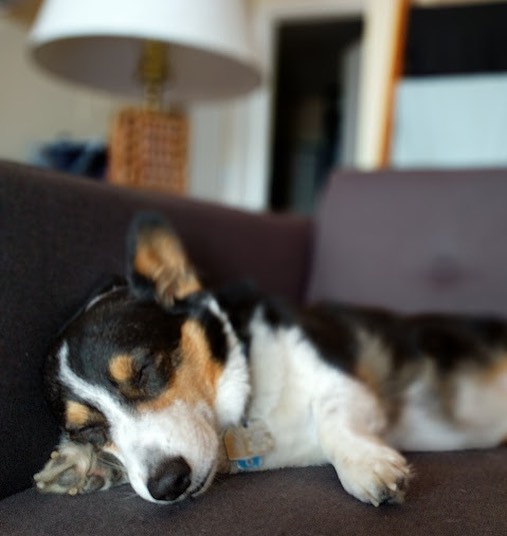
You don’t need a fancy rehab clinic to make a real difference in your IVDD dog’s recovery, but you do need the right exercises, done correctly, at the right time.
When Heidi was going through her IVDD recovery, I spent hours reading about physical therapy and still felt completely lost the first time I tried to do passive range of motion on her little legs. Nobody had shown me what “gentle” actually looked like. I learned by asking questions, watching videos, and eventually getting one session with a canine rehab therapist who corrected everything I’d been doing slightly wrong.
This article is what I wish I’d had from the start.
- Never begin rehab exercises without your vet’s approval, especially in the first days after surgery or a severe episode
- If your dog is still in the acute phase (sudden onset, unable to walk, significant pain), exercises are not appropriate yet
- If you’re unsure what stage your dog is in, read The 5 IVDD Stages Explained first
What Is the Goal of At-Home IVDD Physical Therapy?
The spine may have caused the injury, but the muscles, nerves, and joints pay the long-term price. When a dog is immobile (especially during crate rest), muscles atrophy fast, joints stiffen, and the nerve pathways that control movement can go quiet. Physical therapy is about keeping those pathways open and the body ready to move when the nervous system is ready to signal.
For dogs who regain function, PT supports that return. For dogs who may not fully recover, PT reduces muscle wasting, maintains joint health, and keeps your dog more comfortable.
The exercises below fall into three general phases: passive work (you move the limbs), assisted work (your dog participates with support), and active work (your dog moves more independently). Most dogs start in phase one and progress gradually.
Passive Range of Motion (PROM): The Starting Point
Passive range of motion, where you gently flex and extend your dog’s limbs without them doing the work, is usually the first thing a rehab therapist will teach you. It’s safe for most dogs even early in recovery, but technique matters.
How to Do PROM Correctly
Have your dog lying on their side on a comfortable, non-slip surface. Support the limb above and below the joint you’re working, never just grip one end of the leg. Move each joint slowly through its natural range: flex (bend) and extend (straighten), then gently hold for one to two seconds at the end of each movement.
Work each joint separately:
- Hip: Gently draw the back leg forward toward the belly, then slowly extend it back. Think slow bicycle pedaling.
- Knee (stifle): Flex and extend without rotating.
- Ankle (hock): Small, slow movements. This joint is easy to over-bend.
- Shoulder and elbow: Same principles apply for the front legs if they’re affected.
Do about 10–15 repetitions per joint, two to three times daily. The whole session for both back legs might take five to eight minutes. If your dog tenses, vocalizes, or you feel resistance, stop.
- Warm the muscles first: a warm (not hot) towel on the limbs for two to three minutes before starting helps
- Keep your movements slow and rhythmic, almost meditative
- Talk to your dog throughout; a calm voice helps them stay relaxed
- Watch for tail tension, panting, or subtle lip licking. These are stress signals in dogs.
Weight Shifting: The Bridge to Active Movement
Once your vet says your dog can stand (even with assistance), weight shifting exercises are the next step. These are small, controlled movements designed to encourage the nervous system to “remember” how to manage balance and load.
Assisted Standing
Support your dog in a standing position. The Help ‘Em Up Harness we used during Heidi’s recovery is genuinely useful here, because it lets you hold your dog upright without straining your own back or awkwardly gripping their belly. Aim for 30–60 seconds of supported standing, two to three times a day. Just being upright and bearing some weight is doing a lot of work.
Gentle Weight Shifting
While your dog is standing (with your support), very gently shift their weight side to side by lightly pressing their hip in one direction, then the other. You’re not trying to knock them off balance. You’re giving the muscles a tiny challenge. Three to five gentle shifts per session is enough in the early stages.
Footing on Different Surfaces
As your dog gains stability, having them stand briefly on a slightly unstable surface (like a folded towel or a small balance disc) encourages the stabilizing muscles to engage. This is something to add later, once standing is already comfortable.
How Do I Know When to Progress to Active Exercises?
This is the question I got wrong at first. I was so eager to see Heidi walking again that I rushed the progression. What I learned from our rehab therapist: the signal to move forward is consistency, not a single good day.
Look for:
- Sustained voluntary movement: Your dog is attempting to move the limb on their own, consistently, not just occasionally
- Improved proprioception: Proprioception is the awareness of where a limb is in space. A simple test is the “knuckling check.” If you fold your dog’s paw under, do they correct it quickly? Faster correction means improving nerve function.
- Stable supported standing: They’re not collapsing immediately when you ease your grip
When those signs are consistent over several days, talk to your vet about adding short assisted walking sessions. Even just a few shuffling steps with full support counts as active exercise early on.
- Your dog attempts to reposition their own limbs during PROM (a great sign)
- They begin to bear more weight during assisted standing without you holding as much
- Knuckling responses become faster and more reliable
- They seem more engaged and less anxious during sessions
What to Avoid
A few things I’ve seen go wrong, and that rehab therapists commonly flag:
- Doing too much too soon: More is not better with IVDD. Fatigue can cause a dog to compensate in ways that create new problems.
- Skipping sessions because “they seem fine”: Consistency matters more than intensity.
- Using heat on a fresh injury: Warmth is helpful for muscle prep before exercises, but never apply heat to an acute injury site. When in doubt, skip the heat.
- Exercising through pain: If your dog is on pain medication and seems comfortable, that’s not clearance to push harder. The medication is masking their ability to signal discomfort.
- Sudden worsening of weakness or loss of function after exercise
- Crying, yelping, or aggression during sessions
- New loss of bladder or bowel control. See IVDD Emergency Signs immediately.
- Any signs of deep pain loss (no response when toes are firmly squeezed)
Related Reading
- IVDD Surgery Recovery: A Week-by-Week Timeline
- Conservative Management for IVDD: What to Do When Surgery Isn’t the Answer
- Long-Term Care for an IVDD Dog: Life After Crisis
- Looking for a rehab vet near you? Our IVDD specialist finder lists practices with PT, hydrotherapy, and conservative-care experience by state.
Recovery is rarely a straight line. Some days Heidi would make me think she’d never walk again, and then the next morning she’d take three steps on her own like it was nothing. Physical therapy at home won’t replace the work your vet and your dog’s nervous system are doing, but it will give that nervous system the best possible environment to heal. Show up for the sessions even on the hard days. Especially on the hard days.
Frequently Asked Questions
When can I start physical therapy after an IVDD episode?
For dogs who had surgery, most rehab specialists recommend starting gentle passive range of motion exercises within a few days of surgery, but always get your vet’s green light first. For conservative management dogs, the timeline depends on the severity of the episode and your vet’s instructions.
How many times a day should I do rehab exercises with my IVDD dog?
Most rehab therapists recommend short sessions two to three times a day rather than one long session. Five to ten minutes per session is usually plenty, especially in the early weeks.
What if my dog cries or tenses up during exercises?
Stop immediately. Pain during passive range of motion is a signal that something is wrong: either you’re moving too fast, the range is too wide, or your dog isn’t ready for that exercise yet. Call your vet or rehab therapist before continuing.
Do I need a canine rehabilitation therapist, or can I do everything at home?
A certified canine rehabilitation therapist (CCRT) is genuinely worth consulting, even for just one or two sessions. They can teach you correct technique and build a plan specific to your dog’s stage and abilities. Home exercises are a complement to professional guidance, not a replacement.
This guide is based on real experience and should be used alongside professional veterinary care. Always consult your veterinarian before starting any new treatment or making changes to your dog’s care plan.