Pet Insurance for Yorkshire Terrier Owners
Yorkies carry a breed-specific health risk profile that changes how pet insurance decisions play out. What to look for in policy language — no rankings, no…
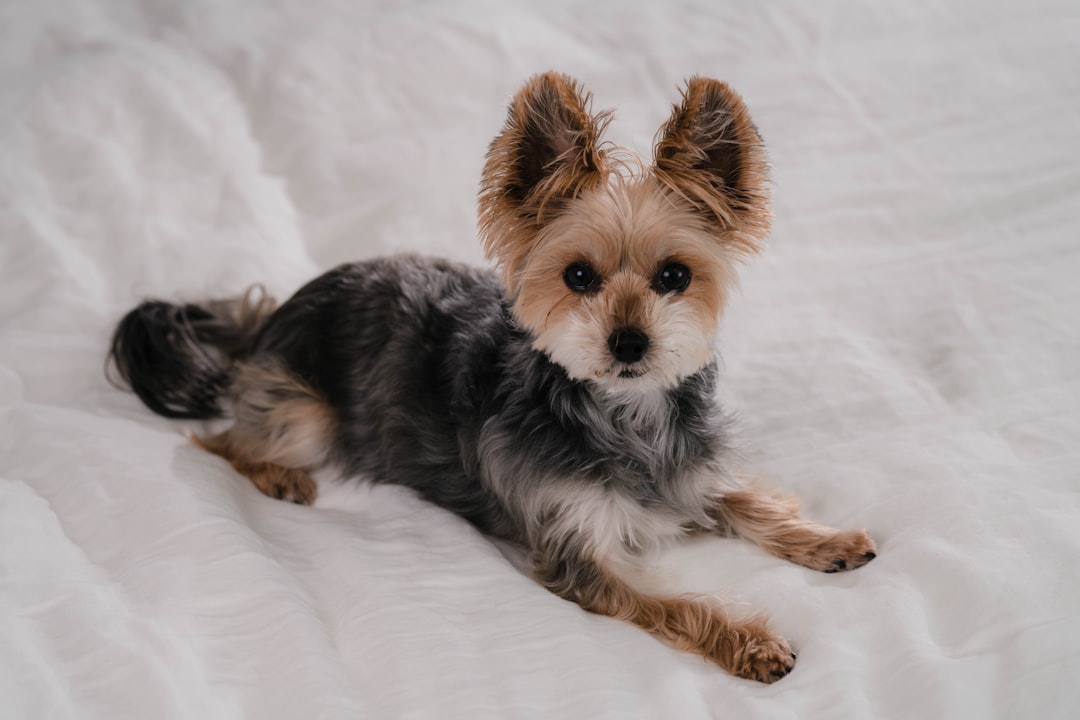
Photo by Tommy Nguyen on Unsplash
Yorkshire Terriers are small dogs with a layered health risk profile, and understanding that profile before you choose a pet insurance policy can save you from discovering a gap in coverage at exactly the wrong moment.
DDC has no financial relationship with any insurance provider mentioned on this page. Links go to each company’s homepage. Nothing here is sponsored, and no provider has paid to appear or be described in any particular way.
Last reviewed: 2026-08-10
The Yorkie Risk Profile: Why It Changes Insurance Decisions
Yorkshire Terriers are not a one-risk breed. Most small-breed insurance conversations focus on a single condition, but Yorkies present a genuinely layered set of hereditary and breed-specific vulnerabilities that each interact with policy language in a different way. Before you can evaluate a policy intelligently, it helps to see the full picture.
The conditions most relevant to insurance planning for Yorkies are:
- Cervical IVDD: Yorkshire Terriers are classified as chondrodystrophic — they carry genes that cause premature disc degeneration. The cervical spine (neck) is particularly vulnerable in this breed. Our own article on Yorkie IVDD: Small-Breed, Cervical-Heavy Risk walks through what that actually looks like clinically. Cervical IVDD treatment often involves referral to a specialist and may require MRI, surgery, or prolonged rehabilitation — costs that range from several thousand dollars for conservative management to well above $6,000–$10,000 for surgical decompression, depending on location and severity.
- Luxating patella: A condition where the kneecap (patella) intermittently slips out of its normal groove. It is extremely common in toy breeds. Surgical correction, if needed, typically runs $1,500–$4,000 per knee. This is an orthopedic condition, so orthopedic waiting periods apply.
- Tracheal collapse: A progressive weakening of the cartilage rings that support the trachea (windpipe), leading to chronic coughing, respiratory distress, and in severe cases, surgical intervention. Management ranges from medication to stenting procedures.
- Dental disease: Yorkies are prone to significant periodontal disease, partly because toy-breed teeth crowd into small jaws. Annual dental cleanings under anesthesia are common. Note that dental coverage is handled very differently across policies — many standard plans exclude routine dental, and even illness-related dental work has policy-specific limits.
- Portosystemic shunt (PSS): A congenital condition where blood bypasses the liver, causing toxin accumulation. It typically presents in young dogs and often requires specialist referral and, in many cases, surgery. This is a congenital and hereditary condition, so policies that exclude congenital conditions (or make them an add-on) may not cover it.
Understanding this risk profile matters because not all policies treat these categories the same way. IVDD falls under hereditary conditions. Luxating patella falls under orthopedic conditions. Tracheal collapse and portosystemic shunt fall under hereditary and congenital conditions. A policy that only covers accidents and basic illness — or that makes hereditary and congenital coverage an add-on — leaves major gaps for this breed specifically.
What Policy Language Actually Matters for Yorkshire Terriers?
Several clauses in pet insurance policies carry disproportionate weight for Yorkies specifically. These are the ones to read carefully — not skim.
Hereditary and Congenital Condition Coverage
Most major accident-and-illness policies include hereditary and congenital conditions as standard when those conditions are not pre-existing at enrollment. However, coverage structures vary in ways that matter for Yorkies.
Nationwide’s standard plan, for example, makes hereditary and congenital coverage an add-on rather than a built-in feature. For a breed with IVDD, luxating patella, tracheal collapse, and portosystemic shunt on its risk list, a plan that doesn’t include hereditary and congenital coverage as a baseline is a significant mismatch. That’s not a ranking judgment — it’s a factual gap to be aware of before you sign.
Providers that include hereditary and congenital conditions as standard in their accident-and-illness plans include ASPCA, Embrace, Fetch, Figo, Healthy Paws, Lemonade, MetLife, Pets Best, Pumpkin, Spot, and Trupanion, among others. But the fact that a condition category is “covered” doesn’t tell you everything. Read the sample policy — marketing language and policy documents can diverge.
The Bilateral Condition Clause and IVDD
This is the most misunderstood piece of policy language for dogs with spinal disease, and it matters enormously for Yorkies.
Dogs have multiple intervertebral discs. If one cervical disc herniates — say, at C4-C5 — that is one IVDD event. But your Yorkie has other cervical discs, each capable of herniating independently at a future date. The question that really determines your coverage is: if your dog has a second IVDD episode at a different disc location, will the insurer treat it as a new, covered condition or as a continuation of a pre-existing one?
Providers handle this differently, and the language is rarely clear on marketing pages.
Embrace’s V6 policy form contains specific language stating that if a dog is diagnosed with, treated for, or shows clinical signs of IVDD in the first 180 days after enrollment, any future IVDD episode anywhere in the spine will not be covered. This is a bilateral-condition clause applied across the whole spine — not just the same disc level. Fetch has been noted in third-party reviews to apply a similar exclusion to “same or neighboring spinal region” IVDD if the first episode predates or occurs during the waiting period, though you should verify current policy language directly.
For a breed like the Yorkshire Terrier, where cervical IVDD has a meaningful recurrence risk and multiple disc levels are vulnerable, this clause can functionally eliminate long-term IVDD coverage if symptoms appear at the wrong moment. Searching your sample policy document for the words “bilateral” and “same or neighboring” is one of the most practical things you can do before enrolling.
Our deeper explanation of how these waiting periods work is at Pet Insurance Waiting Periods for IVDD: The Loophole That Traps Owners.
Orthopedic Waiting Periods and Luxating Patella
Orthopedic waiting periods are separate from standard illness waiting periods, and they apply directly to luxating patella claims. The variation across providers is wide:
| Provider | Orthopedic Waiting Period |
|---|---|
| ASPCA | 14 days |
| Embrace | 6 months (waivable in some states with vet exam) |
| Lemonade | 30 days |
| MetLife | 14 days |
| Nationwide | 12 months |
| Pets Best | 6 months (waivable in some states) |
| Spot | 14 days |
| Trupanion | 30 days |
 disableddogcare.com
Source: Bankrate waiting period compilation, June 2026. Verify against your state’s current sample policy — these vary by state.
A Yorkie puppy enrolled at 8 weeks under a provider with a 14-day orthopedic wait has effective patella coverage relatively quickly. The same puppy under a provider with a 6- or 12-month orthopedic wait doesn’t. That difference is a concrete factor for this breed.
Some providers, including Embrace and Pets Best, allow the orthopedic waiting period to be reduced or waived in certain states if a licensed veterinarian completes a physical exam and finds no signs of orthopedic disease at enrollment. If this option is available in your state, it’s worth asking about — both because it shortens the gap before coverage begins and because it documents your dog’s clean orthopedic baseline.
Pre-Existing Condition Language
The definition of “pre-existing condition” is where many Yorkie owners run into trouble, and it’s often because they delayed enrollment until something looked off.
A pre-existing condition is generally any condition that showed clinical signs, was treated, or was diagnosed before or during the waiting period. In practice, this means a vet note that mentions “intermittent kneecap displacement” or “occasional neck stiffness” — even casually, even without a formal diagnosis — can be enough to exclude the relevant condition from future coverage.
For Yorkies specifically, this creates urgency around timing. Luxating patella can often be observed during a routine puppy exam. Tracheal collapse can produce a cough that gets noted in records. Cervical IVDD can produce neck sensitivity that a vet mentions offhandedly. Each of those notations is a potential pre-existing condition marker.
The cleaner the vet records at enrollment, the broader the coverage window.
- Any condition documented in vet records before or during the waiting period can be excluded for life
- “Watching” a symptom before enrolling is not the same as having insurance — it is creating a pre-existing condition record
- Waiting until symptoms appear to enroll almost always means the presenting condition is excluded from day one
- Bilateral condition clauses may extend this exclusion to related conditions throughout the same body system
How Does Dental Coverage Work for Yorkies?
Dental disease is one of the most common and expensive ongoing conditions in Yorkshire Terriers, but it is also one of the most inconsistently covered categories in pet insurance.
Routine preventive dental cleanings are generally not covered under standard accident-and-illness plans — those typically fall under wellness add-ons, which are priced and structured separately. Whether dental illness (such as tooth resorption, periodontal disease requiring extraction, or dental abscess treatment) is covered depends on the provider’s definition of “dental illness” versus “dental routine.”
Some policies cover dental illness as part of standard coverage; others require a specific dental rider. A few cover anesthesia for dental procedures but not the dental work itself. Because this is genuinely variable and because Yorkies have above-average dental costs over their lifetime, it is worth asking directly: “Does this policy cover tooth extractions required due to periodontal disease?” and getting the answer from the sample policy document, not the marketing page.
- Does the policy cover tooth extraction due to periodontal disease?
- Is dental illness covered under the standard plan or only with a dental add-on?
- Are anesthesia costs for dental procedures covered?
- Is there a separate annual cap on dental claims?
- Does a pre-existing dental condition exclusion apply to all future dental claims or only the specific condition?
What About Portosystemic Shunt?
Portosystemic shunt (PSS) is a congenital condition — present from birth — where blood bypasses normal liver filtration. It is more common in Yorkshire Terriers than in most other breeds and often requires specialist evaluation and surgical intervention in the first one to two years of life.
Because PSS is congenital, its coverage depends entirely on whether your policy includes congenital conditions as a standard feature. Most major accident-and-illness plans from providers like ASPCA, Trupanion, Healthy Paws, Pumpkin, and others do include congenital conditions when not pre-existing — but again, that phrase “when not pre-existing” does real work here.
A puppy showing neurological symptoms or poor growth that a vet attributes to possible liver shunting, even before a formal diagnosis, may have a documented pre-existing condition by the time you enroll. Enrolling early, ideally at the first well-puppy visit, keeps this window open.
For a broader overview of how providers handle hereditary and congenital coverage in spinal and neurological conditions, the cluster’s main reference is at Pet Insurance for Dogs with Spinal Conditions.
- Request a sample policy PDF before purchasing — not the marketing summary page
- Search the PDF for: “bilateral,” “same or neighboring,” “hereditary,” “congenital,” “orthopedic,” “pre-existing”
- Ask your vet what, if anything, is currently documented in your Yorkie’s records that could be flagged as a pre-existing condition
- If your provider offers an orthopedic exam waiver to shorten the orthopedic waiting period, ask whether it’s available in your state
- Confirm dental illness coverage specifically — don’t assume it’s included
Realistic Cost Ranges for Common Yorkie Conditions
These are general ranges based on what owners and veterinary professionals commonly report. Actual costs vary significantly by geography, specialist involvement, and treatment path.
| Condition | Typical Cost Range | Notes |
|---|---|---|
| Cervical IVDD — conservative management | $1,500–$4,000 | Includes imaging, medication, recheck exams |
| Cervical IVDD — surgical decompression | $6,000–$10,000+ | Specialist referral; varies by location |
| Luxating patella — Grade II–III surgery | $1,500–$4,000 per knee | Bilateral surgery doubles the estimate |
| Tracheal collapse — medical management | $500–$2,000/year | Ongoing medication, monitoring |
| Tracheal collapse — stenting | $3,000–$6,000 | Specialist referral |
| Portosystemic shunt — surgical correction | $5,000–$10,000+ | Specialist referral; staging affects cost |
| Dental cleaning + extractions | $800–$2,500 | Per episode; Yorkies often need annual cleanings |
disableddogcare.comThese figures are not exact and should not be used for budgeting without a vet estimate. They are here to illustrate why Yorkshire Terrier owners who are weighing premium costs against potential claim value have a genuinely meaningful calculation to do — the breed’s cumulative risk profile is real.
The Self-Insurance Question
For some Yorkshire Terrier owners, particularly those whose dogs already have documented conditions at enrollment or who are enrolling an older dog, the honest answer is that a dedicated savings account may provide more value than a premium-plus-deductible insurance structure.
That framing isn’t a recommendation — it’s an honest acknowledgment that insurance math depends on your specific dog, your deductible choice, your premium, and what coverage is actually available given your dog’s records. For a young, healthy Yorkie puppy with clean records, an accident-and-illness policy with strong hereditary coverage and a reasonable orthopedic waiting period may well pay out more than it costs over the dog’s lifetime given the breed’s risk profile. For a six-year-old Yorkie who has already had a luxating patella noted in records, the calculation looks different.
Neither answer is universal, which is exactly why understanding policy language matters more than finding the “best” provider.
Related Reading
- Yorkie IVDD: Small-Breed, Cervical-Heavy Risk
- Pet Insurance Waiting Periods for IVDD: The Loophole That Traps Owners
- Pet Insurance for Dogs with Spinal Conditions
Frequently Asked Questions
Is IVDD covered by pet insurance for Yorkshire Terriers?
Most accident and illness policies cover IVDD as a hereditary condition when it is not pre-existing at the time of enrollment. The key variables are the waiting period before IVDD is coverable, whether the policy includes a bilateral condition clause that could exclude future disc herniations after a first episode, and whether the policy explicitly includes hereditary conditions at all — some providers make this an add-on rather than a standard feature.
When is the best time to insure a Yorkshire Terrier?
Insuring a Yorkie before any symptoms appear is the strongest position. Once a dog has shown signs of IVDD, luxating patella, or tracheal collapse, those conditions are likely to be excluded as pre-existing. Enrolling as a puppy or young adult — before any vet notes reflect symptoms — gives the broadest future coverage window.
What is a bilateral condition clause, and why does it matter for Yorkies?
A bilateral condition clause means a provider treats conditions that can occur on both sides of the body — or throughout the same body system — as related to one pre-existing event. For Yorkies with IVDD, this means a herniation at one cervical disc could be used to exclude coverage of future herniations at other disc spaces in the same spine. Not all providers apply this clause the same way, so it is worth searching your sample policy for the words “bilateral” and “same or neighboring region.”
Does pet insurance cover luxating patella in Yorkshire Terriers?
Luxating patella — a kneecap that pops out of its normal position — is a hereditary orthopedic condition common in small breeds including Yorkies. Policies that cover hereditary conditions as standard generally include luxating patella when it is not pre-existing. Orthopedic waiting periods, which typically range from 14 days to 6 months depending on the provider, apply before coverage begins. Some providers allow a vet exam to waive or shorten the orthopedic wait.
Yorkshire Terriers are worth getting this right for. The breed’s combination of spinal vulnerability, orthopedic fragility, and congenital risks creates a profile where the right policy — enrolled at the right time, with the right clause language — can be genuinely meaningful. Take the time to read the sample policy, not just the marketing summary. The language that matters most for your Yorkie is almost never on the homepage.
This guide is based on real experience and should be used alongside professional veterinary care. Always consult your veterinarian before starting any new treatment or making changes to your dog’s care plan. This article is not financial advice. Pet insurance policy terms change frequently and vary by state — always read the current policy document from the provider before enrolling.