Pet Insurance for Pekingese and Shih Tzu Owners
What Pekingese and Shih Tzu owners should look for in a pet insurance policy — BOAS, IVDD, eye conditions, and the pre-existing traps that catch flat-faced…
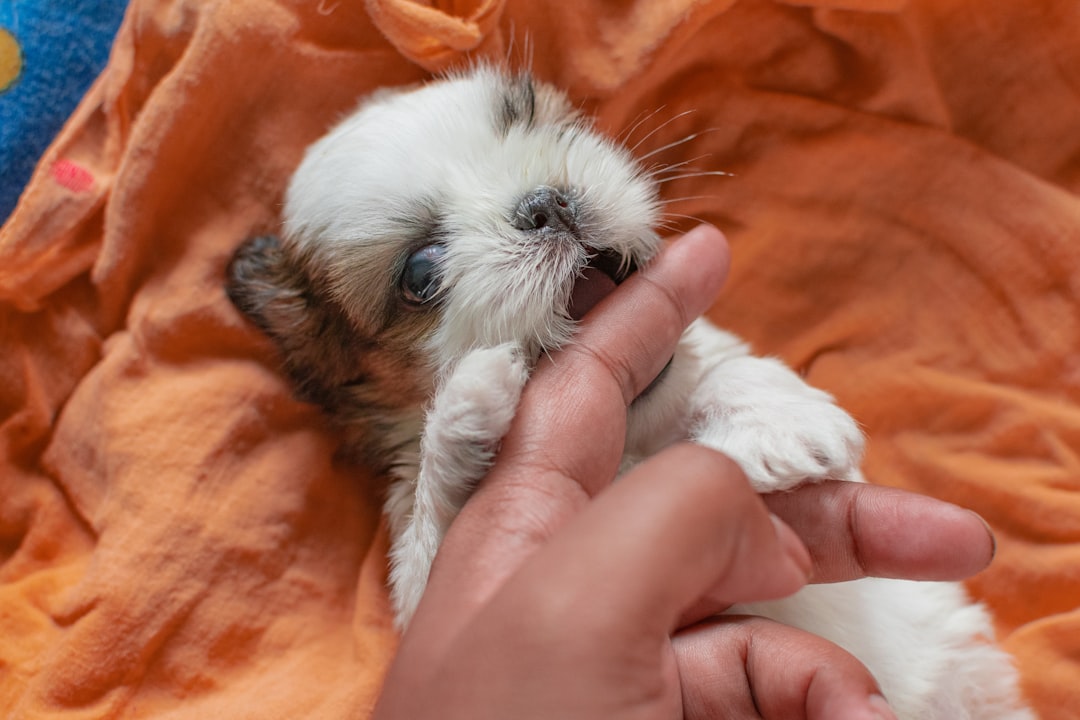
Photo by Kinshuk Bose on Unsplash
Pekingese and Shih Tzu owners face a stacked insurance problem: these breeds carry multiple high-cost risk profiles simultaneously, and the policy language that matters most is rarely the language anyone reads first.
DDC has no financial relationship with any insurance provider mentioned on this page. Links go to each company’s homepage. Nothing here is sponsored, and no provider has paid to appear or be described in any particular way.
Last reviewed: 2026-08-12
Why These Two Breeds Share an Insurance Profile
Pekingese and Shih Tzus are distinct breeds with distinct personalities, but from a pet insurance standpoint their risk profiles overlap so heavily that the same policy questions apply to both. Both are brachycephalic — their shortened skull structure creates a cluster of anatomical crowding that affects breathing, eyes, teeth, and spine. Both are small, long-lived breeds with hereditary conditions that show up across their lifetimes, not just in old age.
The conditions that most commonly drive large claims in these breeds fall into four categories:
- Brachycephalic Obstructive Airway Syndrome (BOAS): the catch-all term for the breathing difficulties caused by narrowed nostrils, an elongated soft palate, and a narrowed trachea. Surgical correction — which can involve trimming the soft palate, widening the nostrils, or both — typically runs several thousand dollars depending on your location and the severity of the case.
- IVDD (intervertebral disc disease): both breeds are susceptible, with cervical (neck) disc disease being the more common presentation. Pekingese carry a particularly notable cervical IVDD risk. Surgical decompression for cervical IVDD is expensive, and the recovery requires careful management.
- Eye conditions: proptosis (the eye displacing from the socket, which is a genuine emergency in flat-faced breeds), corneal ulcers, and keratoconjunctivitis sicca (KCS, or dry eye) all occur at higher rates in these breeds due to their shallow eye sockets and prominent eyes.
- Dental disease: severe crowding in the shortened jaw creates periodontal problems that accumulate over a lifetime and often require multiple anesthetic dental procedures.
Heat sensitivity is also a real concern — not typically an insurance claim category on its own, but it raises the overall cost and complexity of care.
None of these conditions is rare. In a Pekingese or Shih Tzu, they’re the expected background of ownership.
- Many Pekingese and Shih Tzu puppies show subclinical BOAS signs — noisy breathing, occasional snorting, exercise intolerance — before any formal diagnosis
- If a vet notes these signs in a routine visit before enrollment, some providers can classify BOAS as pre-existing, even without a diagnosis on record
- Enrolling before any vet record mentions breathing concerns gives you the cleanest possible starting point
- Ask your vet to review what language appears in existing records before you choose an enrollment date
Pekingese-Specific: What the Policy Language Needs to Cover
Cervical IVDD Is the Primary Spinal Risk
Pekingese are a chondrodystrophic breed — their cartilage development differs from non-chondrodystrophic breeds, and this affects disc health throughout the spine. The cervical spine (neck) is where most Pekingese IVDD episodes occur, which matters for insurance in a specific way.
If a Pekingese has had a neck disc event before enrollment, any provider with a bilateral or regional exclusion clause could apply that exclusion to the entire cervical spine rather than just the specific disc that herniated. This is the same logic behind Embrace’s 180-day IVDD clause — if IVDD appears in the first 180 days after enrollment, all future IVDD in any disc space is excluded for the life of the policy. The cervical spine has seven disc spaces; a regional exclusion can close off all of them.
For detailed background on how cervical IVDD presents in flat-faced small breeds, the Shih Tzu and Pekingese IVDD article and the Pekingese IVDD breed guide cover the anatomy and warning signs in detail.
What to Search in a Pekingese Policy
When you pull a sample policy for a Pekingese, search specifically for:
- “brachycephalic”: does this word appear in the exclusions section, the hereditary/congenital section, or both?
- “intervertebral” or “IVDD”: does the policy have a separate IVDD waiting period distinct from the general orthopedic period?
- “bilateral”: does the policy exclude conditions in a paired or regional structure?
- “cervical”: some policies specifically name cervical disc disease as a separate covered or excluded condition
- “hereditary” and “congenital”: are these covered as standard, or do they require an add-on? Nationwide’s standard plan, for example, requires a separate add-on for hereditary condition coverage — which matters significantly for a breed where hereditary conditions are the expected claims
Shih Tzu-Specific: What the Policy Language Needs to Cover
BOAS Surgery Is the Primary Financial Risk
Shih Tzus share the Pekingese’s cervical IVDD susceptibility, but the condition that most often drives the largest single claim in a Shih Tzu’s life is BOAS surgery. Soft palate resection and nares widening can run between roughly $1,500 and $5,000 or more depending on severity and location, and many Shih Tzus need intervention before age five.
This is where policy language varies most meaningfully among providers. Some providers cover BOAS surgery as a hereditary or congenital condition when it’s not pre-existing. Others specifically exclude brachycephalic conditions — not as a fine-print carveout, but as an explicit named exclusion. The word “brachycephalic” in the exclusions section of a policy document is the signal you’re looking for. A provider’s marketing page may not mention this exclusion at all; the sample policy document is the only reliable source.
Trupanion’s marketing explicitly states coverage of brachycephalic conditions, and their sample policy language is worth reviewing as a comparison baseline. That doesn’t constitute a recommendation — policy terms change, and any claim outcome depends on the specific facts of your dog’s history at enrollment.
Eye Conditions and What Policies Say About Them
Shih Tzu eye conditions — particularly proptosis after head trauma, corneal ulcers, and KCS — can be expensive across a lifetime. Emergency treatment for proptosis is a genuine emergency-vet situation with costs that can reach several thousand dollars in a single event.
Most standard accident and illness policies will cover eye conditions when they’re not pre-existing. The complication, again, is the pre-existing determination. A Shih Tzu who has had one corneal ulcer before enrollment may find subsequent corneal events excluded. KCS, because it’s often hereditary and progressive, may be treated differently than an acute corneal injury. Ask your prospective provider directly: “If my dog has had one corneal ulcer, will future eye conditions be covered or excluded?”
Dental Disease as a Lifetime Cost
This is where most pet owners run into a wall: routine dental cleanings are almost universally excluded from standard accident and illness policies. The claims that do get covered are dental procedures tied to illness or injury — dental disease that causes an infection, or a tooth fracture that requires extraction. Wellness add-ons may cover one cleaning per year, but they rarely offset the full cost of the complex dentistry that Shih Tzus often need.
Understanding how your policy distinguishes “routine dental” from “dental disease” before enrollment is worth doing. It’s a conversation to have with your provider, not an assumption to make.
- Search the sample policy PDF for “brachycephalic” — its location (exclusions vs hereditary conditions section) tells you everything
- Verify whether IVDD has its own waiting period separate from general orthopedic (Embrace: 180 days for IVDD; AKC Pet Insurance: 180 days in some states)
- Ask whether eye conditions that have occurred previously will be excluded on a going-forward basis
- Confirm whether hereditary condition coverage is standard or an add-on (Nationwide requires the add-on)
- Check whether rehab and physical therapy are standard or a separate rider — this matters for IVDD recovery
The Enrollment Timing Question
For both Pekingese and Shih Tzu owners, enrollment timing matters more than it does for most other breeds. The reason is that the conditions most likely to generate claims — BOAS, IVDD, eye conditions — often show early subclinical signs before any formal diagnosis is made. Once a vet note mentions noisy breathing, exercise intolerance, neck stiffness, or eye discharge, the pre-existing condition clock starts ticking.
The practical guidance here isn’t which provider to choose; it’s when to enroll. A young puppy with a clean vet record and no documented symptoms is the easiest candidate to enroll without pre-existing exclusions. An adult dog who has had multiple vet visits with notes mentioning breathing concerns or neck sensitivity will face more pre-existing determinations at enrollment, regardless of which provider you choose.
If your dog has already had a BOAS or IVDD diagnosis, the pet insurance after an IVDD diagnosis article covers what coverage options may still exist.
- Pull your dog’s complete vet records and read what’s actually documented, not what you remember being said
- Note any visit where breathing, neck, eye, or dental concerns appear — even as an offhand observation
- Request a sample policy PDF from any provider you’re considering (not the marketing page)
- Search the PDF for: brachycephalic, bilateral, IVDD, intervertebral, hereditary, orthopedic, pre-existing
- Ask the provider in writing: what is the waiting period specifically for IVDD? Is it the same as the orthopedic waiting period?
- Confirm whether physical therapy and rehab are standard or require a rider
How Providers Handle the Key Policy Axes
Rather than walking through each provider individually, these are the structural differences that matter most for Pekingese and Shih Tzu owners. For the full provider landscape, the pet insurance guide for dogs with spinal conditions covers each major provider’s policy language in detail.
Hereditary condition coverage — standard vs add-on: Most major providers include hereditary and congenital conditions as standard in their accident and illness plans when the condition is not pre-existing. Nationwide is the notable exception — hereditary coverage is an add-on on their standard plan. For a Pekingese or Shih Tzu, whose primary risk conditions are largely hereditary, this distinction matters significantly.
IVDD waiting periods: Standard illness waiting periods are typically 14 days. Orthopedic waiting periods run from 14 days (ASPCA, Spot, MetLife) to six months (Embrace, Figo). IVDD may carry its own distinct waiting period beyond the orthopedic standard. Embrace’s verified policy language applies a 180-day bilateral clause specifically to IVDD: if IVDD appears in the first 180 days, all future IVDD in any disc space is excluded for the life of the policy. AKC Pet Insurance has a 180-day IVDD-specific waiting period per California disclosure filings.
Reimbursement and deductible structure: Per-condition deductibles (like Trupanion’s model) work differently from annual deductibles for dogs who have multiple separate conditions in the same year. A dog dealing with both a BOAS recovery and an eye condition in the same year pays a per-condition deductible twice under a per-condition structure, but only the annual deductible once under an annual structure. The math runs in different directions depending on your dog’s specific claim pattern.
Rehab and physical therapy: Post-IVDD recovery for cervical disc disease can involve weeks of physical therapy. Some providers include rehab as standard; others require a rider. Lemonade, for example, covers physical therapy as an add-on rather than in the core policy — important to know before an IVDD episode, not after.
- “Brachycephalic conditions” appears in the exclusions section without a hereditary-coverage carve-back
- No specific IVDD waiting period disclosed — means you need to ask directly rather than assume it follows the orthopedic period
- Hereditary conditions listed as an add-on or rider rather than standard coverage
- No coverage for rehabilitation, hydrotherapy, or physical therapy — or coverage only under a separate rider not included in the base plan
- Age-based enrollment limits that could close the enrollment window for a dog in mid-life before a first diagnosis occurs
A Note on Cost Ranges
Premiums for brachycephalic breeds tend to run higher than for non-brachycephalic breeds of similar size, because insurers price based on breed risk. The specific premium for your dog depends on age, location, the coverage level you choose, and the provider’s underwriting model for your breed. Requesting quotes from multiple providers for the same coverage level is the only way to understand what your specific dog’s profile will cost.
What’s more useful to think about than premiums is the surgical cost reality: BOAS surgery in the $1,500–$5,000+ range, cervical IVDD decompression surgery in a similar range, emergency eye treatment that can reach several thousand dollars in a single event. These are the numbers that a policy needs to be measured against, not the premium alone.
Related Reading
- Shih Tzu & Pekingese IVDD: The Neck-Disc Risk in Small Breeds
- Pet Insurance for Dogs with Spinal Conditions
- Pet Insurance After an IVDD Diagnosis: What’s Still Possible
Frequently Asked Questions
Does pet insurance cover BOAS surgery for Pekingese and Shih Tzus?
It depends on the policy. Some providers cover BOAS surgery as a hereditary or congenital condition when it’s not pre-existing, while others exclude brachycephalic conditions entirely. The specific phrase to search in any sample policy is “brachycephalic” — that word will tell you whether the condition is covered, excluded, or covered only with a rider.
Will a provider consider my puppy’s flat face a pre-existing condition?
Possibly, yes. This is the core trap for brachycephalic breeds. Many Pekingese and Shih Tzu puppies show subclinical signs of BOAS — noisy breathing, occasional snorting — before they’re formally diagnosed. Some providers can classify these early signs as a pre-existing condition at enrollment. Enrolling before any vet notes mention breathing issues gives you the cleanest record.
Is cervical IVDD common in Pekingese and Shih Tzus?
Cervical IVDD (neck disc disease) is the more common presentation in both breeds compared to the thoracolumbar IVDD that dachshunds typically get. Pekingese in particular carry a notable cervical IVDD risk. If IVDD is documented in the neck before enrollment, any policy with a bilateral or regional exclusion clause could bar coverage for future neck disc events.
What waiting periods should I watch for with these breeds?
The orthopedic waiting period is the one that catches most owners. Standard illness waiting periods run 14 days, but orthopedic waiting periods range from 14 days to six months depending on the provider. IVDD may also carry its own separate waiting period — Embrace’s policy applies a 180-day clause specifically to IVDD that goes beyond the standard orthopedic window. Always check whether IVDD has its own waiting period or falls under the general orthopedic timeline.
If you’re reading this while trying to decide whether insurance makes sense for a Pekingese or Shih Tzu puppy you just brought home, the honest answer is: the breed’s risk profile makes the question worth taking seriously. These aren’t breeds where the conditions that cost the most money are rare surprises. The work of insurance shopping for these breeds is mostly the work of reading carefully before signing — not after a diagnosis arrives.
This guide is based on real experience and should be used alongside professional veterinary care. Always consult your veterinarian before starting any new treatment or making changes to your dog’s care plan. This article is not financial or veterinary advice. Policy terms change frequently — always read the current sample policy document for any provider you are considering, and verify all coverage details directly with the provider before enrolling.