Pet Insurance for Dachshunds: What's in the Fine Print
What dachshund owners should read before signing a pet insurance policy — focused on IVDD, hereditary exclusions, bilateral clauses, and enrollment timing. No…
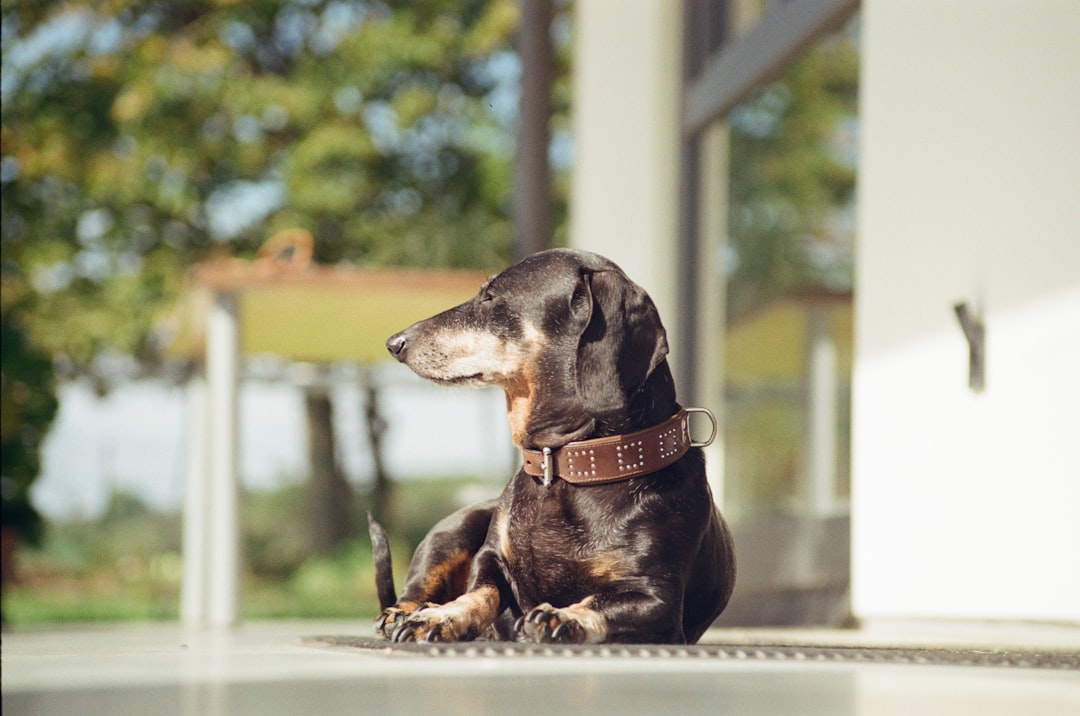
Photo by Paul Schnürle on Unsplash
If you share your home with a dachshund, pet insurance is a different conversation than it is for most other breeds — and the fine print matters more than the monthly premium.
DDC has no financial relationship with any insurance provider mentioned on this page. Links go to each company’s homepage. Nothing here is sponsored, and no provider has paid to appear or be described in any particular way.
Last reviewed: 2026-07-17
Heidi is a dachshund. When she had her first IVDD episode, the bills were significant and arrived fast — imaging, hospitalization, surgery, post-op care. I know firsthand why so many dachshund owners ask the insurance question, and I know how easy it is to buy a policy that sounds comprehensive but excludes the exact thing you’re most worried about.
This article walks through what to look for in a policy specifically as a dachshund owner. For the full provider landscape — including a provider-by-provider breakdown — see how providers handle IVDD coverage.
Why Dachshunds and IVDD Are a Distinct Insurance Problem
Dachshunds are chondrodystrophic — a genetic trait that causes their intervertebral disc material to calcify much earlier in life than it does in most other breeds. The American Kennel Club notes that dachshunds are among the breeds most commonly affected by IVDD, with estimates frequently cited in the veterinary community suggesting that roughly one in four dachshunds will experience a clinically significant disc episode during their lifetime. First episodes often occur between ages 3 and 6, though earlier and later presentations happen.
What that means practically: this is not a breed where disc disease is a remote possibility you are insuring against. It is a near-baseline risk you are planning around. That changes how you should read a policy.
The costs are also real. IVDD surgery for a dachshund can run anywhere from $3,000 to $8,000 or more depending on the facility, the severity of the episode, and whether post-op rehabilitation is involved. Conservative management with strict crate rest, medication, and monitoring is less expensive but still adds up — and it sometimes fails, eventually requiring the surgery anyway. For more on what we actually spent, see IVDD surgery cost: what we paid for Heidi.
- Chondrodystrophy makes IVDD a breed-specific hereditary risk, not a random event
- Multiple disc spaces are at risk over a lifetime — not just one
- First episodes often occur between ages 3 and 6, so puppy enrollment timing matters
- Rehab (hydrotherapy, laser, acupuncture) is a significant cost after an episode — check whether it is standard or an add-on
The Coverage Axes That Actually Matter for Dachshund Owners
Does the policy cover hereditary conditions — and does it name IVDD specifically?
Most major pet insurance providers cover hereditary and congenital conditions when they are not pre-existing at enrollment. But the phrasing varies, and for dachshunds it matters.
Some providers explicitly name IVDD on their marketing pages as a covered hereditary condition. Others cover it under broader language like “hereditary orthopedic conditions” or “hereditary neurological conditions.” Both can work, but broader language gives an insurer more interpretive room.
A smaller number of providers — Nationwide being the most commonly cited example — structure hereditary condition coverage as a separate add-on rather than including it in the standard accident and illness plan. If you enroll in a base plan without adding that rider, IVDD would not be covered regardless of whether it is pre-existing. For a breed where hereditary disc disease is this prevalent, an add-on structure is a meaningful structural difference worth understanding before you buy.
The only way to know how a specific policy handles this is to read the policy document — not the FAQ, not the marketing page. Search the document for “hereditary,” “congenital,” “intervertebral,” and “IVDD.”
What is the waiting period for IVDD specifically?
Standard illness waiting periods are typically 14 days. Orthopedic waiting periods are commonly 6 months, though this varies considerably across providers. But IVDD sometimes has its own distinct waiting period that falls outside both of those categories.
Embrace’s policy (V6 form) includes specific language worth reading in full: “Any Pet diagnosed, treated or showing Clinical Signs of intervertebral disk disease (IVDD) prior to being insured or during the first 180 days after the Pet Original Start Date runs a higher risk of further episodes of IVDD in other disc spaces and will not be covered for any future incidences of this condition in any area.”
That 180-day window is substantially longer than a standard illness waiting period. It also introduces the bilateral condition problem, which is the next axis and arguably the most important one for dachshunds.
AKC Pet Insurance (via California state disclosure filings) has also been documented with a 180-day IVDD-specific waiting period. Other providers may have similar language buried in the policy document that does not appear on their marketing pages.
The practical implication: if your dachshund has a first episode during those early months — before the waiting period clears — the timing can determine whether that episode (and potentially all future ones) is covered.
What is the bilateral condition clause — and how does it apply across disc spaces?
This is the single most important clause for dachshund owners to understand, and it is the one most commonly missed.
A bilateral condition clause is designed for conditions that can affect paired body parts — both knees, both hips. But some providers apply similar logic across disc spaces: if one disc herniates, the insurer treats the entire spine as a pre-existing condition going forward.
Dachshunds have more than 20 intervertebral discs. Many dachshunds who have one episode eventually have another — at a different disc space, sometimes years later. If your policy treats a second herniation at a different location as a continuation of a pre-existing condition, you may be paying premiums for years with no coverage available when the next episode hits.
Embrace’s 180-day clause quoted above is exactly this: if IVDD appears during the first 180 days, all future IVDD “in any area” is excluded. Fetch has been reported in third-party analyses to apply a similar exclusion to “same or neighboring spinal regions” — though you should verify this language in the current policy document directly.
Other providers may be more permissive, but their sample policies still contain pre-existing condition language that can be applied in ways that affect future disc episodes. The question to ask — in writing to the provider before you enroll — is: “If my dog has IVDD at one disc space and then, two years later, herniates a different disc, will the second episode be covered or treated as a continuation of the pre-existing condition?”
- Search any policy PDF for the words “bilateral,” “same or neighboring,” and “any area”
- Look for IVDD-specific waiting period language separate from the general orthopedic waiting period
- If the policy applies a 180-day IVDD-specific window, anything that happens in those first six months can define your coverage for the policy’s life
- Ask the provider directly in writing how they handle a second herniation at a different disc space — the answer is often not in the public policy document
Is rehabilitation covered — and is it standard or an add-on?
Post-IVDD recovery for dachshunds frequently involves hydrotherapy, underwater treadmill work, laser therapy, and sometimes acupuncture. These are not small line items. For details on what these therapies look like in practice, see hydrotherapy for IVDD dogs.
Some providers include rehabilitation in their standard accident and illness coverage. Others require a separate rider or add-on. Lemonade, for example, lists physical therapy as an add-on rather than standard coverage. If you enroll in the base plan without it, rehab costs are out-of-pocket regardless of what caused the need.
For a dachshund owner, this is not a hypothetical. It is a likely future cost. Factor it into your monthly premium comparison.
Payout structure: annual max, per-condition max, or unlimited?
IVDD claims for dachshunds can be large and recurring. An annual deductible structure with a per-condition cap may look affordable on paper but limit your protection in the years that matter most. An unlimited lifetime benefit sounds better but typically comes with a higher premium.
Understanding whether the deductible resets annually or applies per condition also matters here. A per-condition deductible means you pay it once per condition and then the insurer covers the rest of that condition going forward. An annual deductible resets each year. For a condition that tends to recur, the structure matters.
The Enrollment Timing Question
When should a dachshund owner enroll?
The earlier the better — and specifically, before any clinical signs appear. Insuring a dachshund puppy gives you the best chance of having IVDD treated as a coverable hereditary condition rather than a pre-existing exclusion.
Here is how the three common scenarios break down:
Enrolling as a puppy (no symptoms, no prior episodes): IVDD is not yet pre-existing. Depending on the policy’s waiting period, you may have full hereditary condition coverage once that window clears. This is the scenario most likely to result in meaningful coverage when a first episode occurs.
Enrolling as an adult dachshund (no prior episodes, but older): Still possible to enroll before any symptoms appear, but the statistical window is narrowing. The same logic applies — IVDD is not pre-existing — but some providers have age-based enrollment restrictions or rate significantly higher for older dogs. Verify enrollment eligibility and pricing before assuming a policy is available.
Enrolling after a first mild episode: This is the scenario where most owners discover the coverage they hoped for is no longer available. A documented IVDD episode — even a mild one managed conservatively — is typically classified as a pre-existing condition for that diagnosis going forward. In providers that apply bilateral or whole-spine language, this can mean no future IVDD coverage at any disc space, for the life of the policy.
There is no “right” answer here that applies to every owner. The trade-off is real: premiums paid over years before a first episode may exceed the benefit, or may not, depending on when an episode occurs and how severe it is. Only you know your financial situation and your risk tolerance.
- Does this policy cover hereditary conditions as standard, or as an add-on?
- What is the IVDD-specific waiting period — and is it different from the general orthopedic waiting period?
- If my dog has IVDD at one disc space and later herniates a different disc, will the second episode be covered?
- Is rehabilitation (hydrotherapy, laser therapy, acupuncture) covered in the standard plan or requires a rider?
- What is the payout cap — annual, per-condition, or lifetime?
- Is the deductible annual or per-condition?
What This Means When You’re Comparing Policies
No article — including this one — can tell you which policy is right for your dachshund. What I can tell you is that the policy document, not the marketing page, is the source of truth.
When you pull a sample policy, search for these terms in this order:
- “Intervertebral” or “IVDD”
- “Hereditary” and “congenital”
- “Bilateral”
- “Same or neighboring”
- “Pre-existing”
- “Waiting period” (and look for IVDD-specific language separate from orthopedic)
- “Rehabilitation” or “physical therapy”
If any of those search terms produces language you do not fully understand, contact the provider directly and ask for clarification in writing before you enroll.
For a complete look at how the major providers handle IVDD coverage, bilateral clauses, waiting periods, and rehab coverage across the board, the full breakdown is in how providers handle IVDD coverage.
- Hereditary conditions require a separate add-on to be covered at all
- IVDD-specific waiting period of 180 days or more
- Bilateral clause language that extends an exclusion across “any area” of the spine
- Rehabilitation listed as excluded or only available as an optional rider with no pathway to add it
- No sample policy available to review before purchase
Related Reading
- Dachshund IVDD Guide: Risk, Signs & Prevention
- Pet Insurance for Dogs with Spinal Conditions: What Actually Varies Between Providers
- Pet Insurance Terms for Spinal and Neurological Conditions: A Plain-English Glossary
If you are in the middle of a first IVDD episode and trying to figure out costs right now, the more immediate resource is IVDD when you can’t afford surgery: real options.
The honest reality of insurance for dachshund owners is that the policies most likely to actually pay out are the ones you buy before you need them — and even then, the clauses above determine whether they deliver. None of that is a reason not to look. It is a reason to look carefully.
Frequently Asked Questions
Is IVDD covered by pet insurance for dachshunds?
Most major pet insurance providers cover IVDD as a hereditary condition when it is not pre-existing at the time of enrollment. The key is enrolling before any clinical signs appear. Some policies include specific IVDD waiting periods — sometimes as long as 180 days — that are separate from the standard illness waiting period, so check the policy document carefully.
What is a bilateral condition clause and why does it matter for dachshunds?
A bilateral condition clause means that if one disc space develops IVDD, the insurer may treat future herniations at other disc spaces as related to a pre-existing condition — excluding them from coverage. Dachshunds have more than 20 intervertebral discs and frequently experience episodes at more than one location over their lifetime, which makes this clause particularly consequential for the breed.
When is the best time to enroll a dachshund in pet insurance?
Enrolling as a puppy — before any symptoms appear — gives you the best chance of having IVDD treated as a coverable hereditary condition rather than a pre-existing one. Enrolling after a first mild episode often means that IVDD (and potentially all spinal conditions) will be excluded for life. This is not a universal rule; policy language varies, so read the specific exclusion language in any policy you are considering.
Does pet insurance cover dachshund IVDD surgery costs?
If IVDD is covered under your policy and not excluded as pre-existing or hereditary, then yes — spinal surgery, hospitalization, imaging, and follow-up care are generally reimbursable up to your plan’s limits. IVDD surgery for dachshunds commonly runs between $3,000 and $8,000 or more depending on the facility and severity, so the financial case for coverage is real.
This article is not financial or veterinary advice. Pet insurance policy terms change frequently and vary by state. Always read the current policy document — not just the marketing page — before enrolling. The information above reflects research as of the last reviewed date; verify any specific policy language directly with the provider before making a decision.
This guide is based on real experience and should be used alongside professional veterinary care. Always consult your veterinarian before starting any new treatment or making changes to your dog’s care plan.