Pet Insurance for Beagles and Basset Hounds with IVDD Risk
Beagles and Basset Hounds face IVDD risk similar to dachshunds — but get far less clear guidance on insurance. What to read in the fine print before you sign.
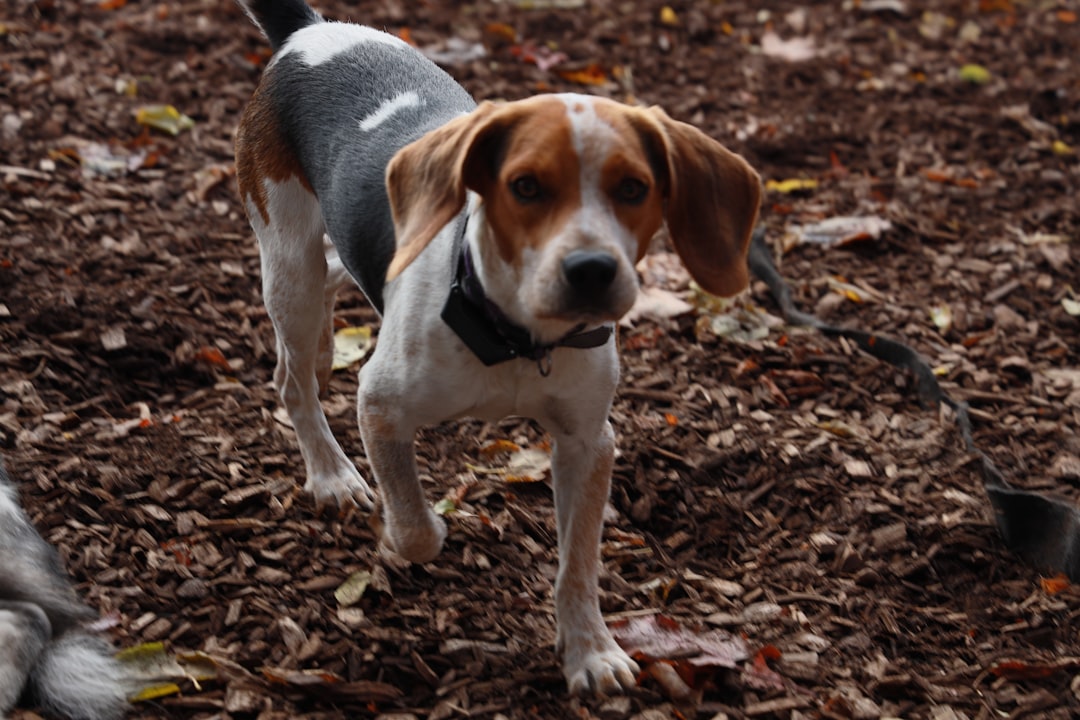
Photo by Richard Burlton on Unsplash
Beagles and Basset Hounds face a real IVDD risk — but when it comes to pet insurance, these breeds rarely get the clear, breed-specific guidance that dachshund owners now routinely find online.
DDC has no financial relationship with any insurance provider mentioned on this page. Links go to each company’s homepage. Nothing here is sponsored, and no provider has paid to appear or be described in any particular way.
Last reviewed: 2026-07-21
Dachshund owners have a well-worn path when it comes to pet insurance research. There’s a lot written specifically for them, including breed-specific coverage guides and even provider marketing pages that name dachshunds outright. Beagle and Basset Hound owners are often working with less. Their breeds carry real IVDD risk, but the underwriting guidance is murkier, and the breed-specific content is thinner.
This article walks through what Beagle and Basset Hound owners specifically need to read in a pet insurance policy — not which provider to choose, but what to look for and why the fine print matters so much for these two breeds.
Why Do These Breeds Face IVDD Risk in the First Place?
Both Beagles and Basset Hounds carry chondrodystrophic genetics — the same underlying trait that makes dachshunds notorious for disc disease. Chondrodystrophy affects how cartilage develops throughout the body, including the cushioning discs between the vertebrae. In chondrodystrophic dogs, those discs tend to calcify and harden earlier in life than in other breeds, making them more prone to sudden herniation (Hansen Type I IVDD).
The American Kennel Club lists IVDD as a health concern for both breeds. Basset Hounds, with their long bodies, low-slung build, and heavy bone structure, have a particularly high mechanical load on the spine. Beagles are somewhat less severely affected than Bassets or dachshunds on average, but the risk is real — especially in dogs who are overweight, very active, or regularly jumping on and off furniture.
For a deeper look at the genetics behind chondrodystrophy and disc disease risk, the IVDD breed risk overview covers this terrain in detail.
What Insurance Policies Often Don’t Say Clearly
This is where Beagle and Basset owners tend to get less clear guidance than dachshund owners. Some providers name dachshunds explicitly in their marketing — citing case studies, breed-specific blog posts, or FAQ entries. Beagles and Bassets are usually just lumped under “chondrodystrophic breeds” or “hereditary condition coverage” without breed-level specificity.
That ambiguity doesn’t mean you’re unprotected. It means you have to read more carefully.
- Is IVDD covered as a hereditary condition — and is that coverage standard or an add-on?
- What is the orthopedic or neurological waiting period (not just the general illness waiting period)?
- Does the policy contain a bilateral condition clause? If so, how broadly is it written?
- Is rehabilitation (hydrotherapy, acupuncture, physical therapy) included in standard coverage, or does it require a separate rider?
Hereditary Coverage: Standard vs. Add-On
Most major pet insurance providers cover hereditary and congenital conditions — but “most” isn’t “all,” and even among those who do, the structure matters.
Nationwide’s Modular Pet Insurance Plan, for example, treats hereditary and congenital conditions as an add-on, not as standard coverage. If a Beagle or Basset Hound owner enrolled without that add-on, an IVDD claim would likely be denied as a hereditary exclusion. That’s a meaningful distinction — and one that doesn’t announce itself prominently in the enrollment flow.
Providers like ASPCA, Embrace, Pumpkin, Spot, Trupanion, Healthy Paws, MetLife, Pets Best, and Lemonade generally include hereditary conditions as standard when not pre-existing. But “when not pre-existing” is doing a lot of work in that sentence, and that’s where the bilateral condition clause comes in.
The Bilateral Condition Clause — The Most Important Thing to Understand
Dogs have more than 20 intervertebral discs. If one herniates, that’s one disc. But if a future disc herniates a year later, is that a new condition or a continuation of the first one?
Providers handle this very differently, and the stakes are high.
Embrace’s policy (from their V6 policy form) contains specific language: any dog diagnosed, treated, or showing clinical signs of IVDD prior to enrollment or within the first 180 days of coverage faces exclusion of all future IVDD claims anywhere in the spine. That’s not a single-disc exclusion. That’s a whole-spine exclusion triggered by a single early episode.
Fetch, per third-party review, reportedly excludes IVDD in the same or neighboring spinal region if previously treated. The scope is somewhat narrower but still consequential.
The practical implication for Beagle and Basset owners: if your dog has a mild disc episode early in the policy — even one that resolves with conservative management — it could permanently close the door on future IVDD coverage with some providers.
When reviewing any sample policy, search specifically for the words “bilateral,” “same or neighboring,” and “intervertebral.” If you find those terms, read the surrounding language carefully before assuming coverage is broad.
For a full breakdown of how providers handle IVDD coverage across the market, the pet insurance for dogs with spinal conditions overview covers the provider landscape in detail — that’s the right place to compare the broader picture.
- General illness waiting periods (typically 14 days) are not the same as orthopedic waiting periods — and IVDD often falls under orthopedic, not illness
- Orthopedic waiting periods range from 14 days (ASPCA, Spot, MetLife) to 6 months (Embrace, Figo) to 12 months (Nationwide historically)
- Trupanion’s orthopedic waiting period is 30 days — shorter than many competitors
- Some providers allow a vet exam waiver that can reduce the orthopedic waiting period; ask specifically about this at enrollment
- Waiting periods vary by state — the figures above are general; always verify in your state’s sample policy
Does the Breed Trigger Different Underwriting?
This is a question many Beagle and Basset owners ask — and the honest answer is: it’s not always clear. Providers don’t consistently publish their underwriting guidelines, and breed-based pricing or exclusions aren’t always disclosed upfront.
What we do know from the disabled dog caregiver community is that some owners with Basset Hounds have encountered pushback at enrollment or at claims time when IVDD is flagged as hereditary. The same pattern that affects dachshund owners can apply here — the breed’s chondrodystrophic status means IVDD is never going to be classified as a random accident. It’s a hereditary predisposition, and providers who exclude hereditary conditions will apply that exclusion consistently.
The practical implication: don’t assume that because IVDD is common, it will be covered. Confirm in the policy document, not on the marketing page.
## What About Basset Hound Neck Risk?
Basset Hounds face disc risk throughout the spine — including cervical (neck) discs, not just the thoracolumbar region that tends to get most of the attention. If you have a Basset, it’s worth confirming that any policy covers disc disease across the full spine, not just the lower back. The Basset Hound IVDD overview covers the anatomy of that risk in more detail.
Beagles tend to present with thoracolumbar IVDD more commonly, though any chondrodystrophic breed can have cervical involvement. Either way, the policy question is the same: does coverage extend to spinal disc disease at any location, or is it anatomically limited?
The Enrollment Timing Question
When is the right time to insure a Beagle or Basset Hound? From what many caregivers in the disabled dog community consistently report: the answer is as early as possible, and before any symptoms appear.
Once a dog shows clinical signs of IVDD — even mild ones, like yelping when picked up, reluctance to jump, or a hunched posture — that episode is on the medical record. Any policy enrolled after that point will likely exclude IVDD as pre-existing. With some providers’ bilateral condition clauses, a single documented episode before enrollment can close the door on all future spinal coverage permanently.
This doesn’t mean insurance is worthless after a first episode. Non-spinal conditions, wellness coverage, and accident-only policies can still provide value. The post-diagnosis article covers what’s still possible in detail: pet insurance after an IVDD diagnosis.
Rehabilitation Coverage — Check This Specifically
IVDD recovery for Beagles and Bassets often involves post-surgical rehabilitation: hydrotherapy, underwater treadmill work, acupuncture, and physical therapy. These services are not cheap, and they’re not universally covered.
Some providers include rehab in their standard illness coverage (Embrace covers rehabilitation, acupuncture, and laser therapy in their standard policy, per their coverage pages). Others treat physical therapy as an add-on. Lemonade, for example, lists physical therapy as a rider rather than standard coverage. Trupanion’s Recovery and Complementary Care rider covers rehabilitation and hydrotherapy at 90% — but it requires enrolling in the rider specifically.
If your dog does end up needing surgery, the rehabilitation phase can span weeks or months. The gap between “covered” and “requires a rider” can add up to a significant out-of-pocket difference. Confirm this in the policy document, not the FAQ page.
- Download the sample policy PDF from the provider’s website — not just the marketing summary
- Search the PDF for: “bilateral,” “intervertebral,” “hereditary,” “orthopedic,” “rehabilitation,” “pre-existing”
- Ask the provider directly (in writing, via email) whether chondrodystrophic breeds trigger any additional exclusions
- Note the orthopedic waiting period specifically — not just the general illness waiting period
- Confirm whether rehabilitation, hydrotherapy, and acupuncture are standard or require a rider
A Note on Policy Terms Changing
Pet insurance is not a static product. Waiting periods change, coverage structures shift at renewal, and what’s true of a provider today may not be true at your next renewal. The figures and policy language descriptions in this article reflect research as of July 2026. Always verify against the current sample policy document before enrolling, and re-read your renewal documents carefully each year.
- “Hereditary and congenital conditions excluded” with no option to add them as a rider
- A bilateral condition clause written broadly enough to cover the whole spine after any disc event
- Orthopedic waiting period of 6–12 months with no exam waiver option
- Rehabilitation listed only as an add-on with a separate premium — and no clear cap on what’s included
- Vague “pre-existing condition” language that doesn’t distinguish between curable and incurable conditions
Related Reading
- Pet Insurance for Dogs with Spinal Conditions: What Actually Varies Between Providers
- Beagle IVDD: Signs, Risk & Prevention for an Active Breed
- Basset Hound IVDD: Long-Back & Neck Risk Explained
The right insurance decision for your Beagle or Basset Hound is one only you can make — based on your dog’s age, health history, your financial situation, and your risk tolerance. What this article is here to do is make sure you’re reading the right parts of the policy before you decide. The marketing page tells you what the provider wants you to see. The sample policy document tells you what’s actually true.
This article is not financial or veterinary advice. Pet insurance policy terms change frequently — always read the current sample policy document for your state before enrolling, and consult your veterinarian about your dog’s individual health history and risk factors.
Frequently Asked Questions
Are Beagles and Basset Hounds considered high-risk breeds by pet insurance companies?
Underwriting practices vary by provider and aren’t always publicly disclosed. What matters more than breed labeling is whether your policy covers hereditary and congenital conditions — because IVDD in these breeds is classified as hereditary. Review the sample policy document for that specific language before enrolling.
What is a bilateral condition clause and why does it matter for my dog?
A bilateral condition clause allows an insurer to treat a condition in one part of the body as “related” to the same condition appearing elsewhere — meaning a future disc herniation could be excluded as a pre-existing condition. For IVDD dogs, who have 20+ discs, this clause can effectively eliminate all future spinal coverage after a single episode.
When is the best time to insure a Beagle or Basset Hound?
Most insurance advisors and caregivers in the disabled dog community agree: before any symptoms appear. Once IVDD signs show — even mild ones like reluctance to jump or a yelp when touched — that episode can be flagged as pre-existing and excluded from future coverage.
Does pet insurance cover rehab, hydrotherapy, or acupuncture after IVDD surgery?
It depends on the policy. Some providers include rehabilitation, hydrotherapy, and acupuncture in their standard illness coverage; others require an add-on rider. Lemonade, for example, lists physical therapy as an add-on rather than standard. Always check the specific policy document — the marketing page and the actual policy wording often differ on this point.
This guide is based on real experience and should be used alongside professional veterinary care. Always consult your veterinarian before starting any new treatment or making changes to your dog’s care plan.