IVDD vs Degenerative Myelopathy: Two Different Roads
IVDD comes on fast and painful; DM creeps in painless and slow. The differences that change how you act, what you ask the vet, and what's coming next.
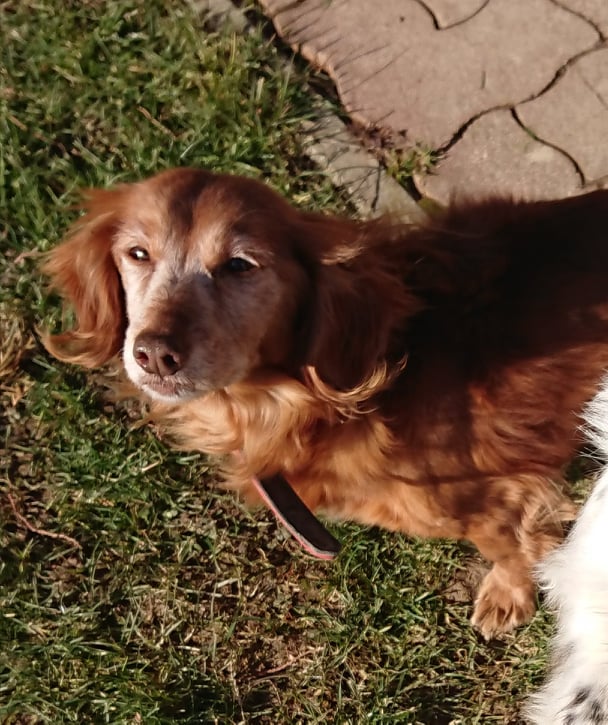
Two different spinal conditions, two completely different timelines, and two very different action plans — telling them apart in the first few hours can change everything for your dog.
When you first see your dog’s back legs failing, the panic does not care about the diagnosis. You just want to know what’s happening. The trouble is that intervertebral disc disease (IVDD) and degenerative myelopathy (DM) can look almost identical at the start, and they share some of the most affected breeds, but the way they unfold and the way you respond to them could not be more different. One is an emergency. The other is a long road. Knowing which is which buys you time, money, and sometimes the difference between walking and not walking.
What Is IVDD?
IVDD is a disc problem. The cushions between the vertebrae either rupture or bulge, and the material presses on the spinal cord. The result is pain and, often within hours, neurological symptoms — weakness, dragging, paralysis. It’s mechanical, sudden, and almost always painful, because the spinal cord and the nerve roots around the disc are loaded with pain fibers.
IVDD comes in two flavors. Hansen Type I is the explosive, sudden version that hits chondrodystrophic breeds (dachshunds, corgis, beagles, Frenchies). Hansen Type II is the slow-bulge version more common in larger breeds. Either way, the diagnostic test is imaging — MRI or CT — to see exactly which disc is compressing the cord and how badly. Read more about the difference in Hansen Type I vs Type II IVDD.
My dachshund Heidi had Type I IVDD. One morning she was fine. By afternoon she could not stand. The neurologist’s office had us there within hours, MRI that night, surgery before midnight. That’s the IVDD timeline when it goes bad.
What Is DM?
DM is a different disease entirely. It’s the slow, painless degeneration of the white matter in the spinal cord — the part that carries movement signals between brain and legs. It is most often compared to ALS in humans. The dog feels nothing wrong, in the literal sense: there is no pain, no flinching, no whimper. They just gradually lose the ability to move their back legs correctly.
DM tends to start with subtle signs an owner often misses: occasional knuckling of one back paw, scuffing of the rear toenails, a little hesitation on slippery floors. Over months, the weakness becomes obvious. Over a year or two, the dog typically becomes unable to walk. Eventually it can affect breathing and swallowing. There is no cure and no surgery that helps.
The breeds most associated with DM are German shepherds, corgis, boxers, Bernese mountain dogs, Rhodesian ridgebacks, and Chesapeake Bay retrievers. A genetic mutation called SOD1 is strongly linked but is not the same as a diagnosis — many SOD1 at-risk dogs never develop the disease.
How Do You Tell Them Apart at Home?
The single most useful clue at home is pain. IVDD is painful; DM is not. If your dog cries out when you touch their back, hesitates to be picked up, hunches their spine, or refuses food because moving hurts — suspect IVDD and treat it as an emergency. If your dog seems happy and unbothered but is gradually losing rear-end coordination over weeks or months, suspect DM.
- Yelping when picked up, especially around the middle of the body
- Hunched or arched back posture
- Stiff neck, refusing to look up or down
- Tense abdomen when touched
- Reluctance to eat, jump, or move at all
- Trembling that looks like full-body shivering even when warm
The second clue is speed. IVDD moves in hours; DM moves in months. If your dog was normal yesterday and dragging today, that is almost never DM. If the weakness has been slowly getting worse since last spring, that is almost never sudden IVDD.
Age matters too. IVDD tends to strike dogs in the 4-to-8-year window, often during a normal moment of jumping off the couch or running upstairs. DM almost always shows up in dogs 8 and older, sometimes much older. A 5-year-old corgi with sudden weakness is overwhelmingly more likely to be IVDD; a 12-year-old shepherd with creeping weakness is overwhelmingly more likely to be DM.
Why the Diagnosis Determines Everything Next
Treatment for the two diseases is on opposite ends of the spectrum. IVDD with significant compression is often a surgical case, and the prognosis is much better when surgery happens within the first 24 to 48 hours — sometimes within hours for the worst grades. Conservative care with crate rest and pain management is an option for milder grades. Either way, the dog is potentially heading toward a real recovery.
DM has no surgical option, no medication that meaningfully slows the disease, and no cure. The treatment is supportive: physical therapy and hydrotherapy to preserve muscle, mobility aids when the time comes, careful management of skin and bladder as the disease progresses, and eventually decisions about quality of life. The arc is downward, but it can be a long, meaningful arc with the right support.
This is why getting the diagnosis right matters so much. A dog with IVDD who gets sent home to “wait and see” because the vet assumed slow DM-style progression can lose the surgical window in a single afternoon. A dog with DM who gets put through an unnecessary surgical workup costs the family thousands of dollars and yields nothing useful.
- “Is there pain on spinal palpation?”
- “Do you think this looks more like an acute disc problem or a gradual neurological process?”
- “Should we image now, and if so MRI or CT?”
- “If imaging is clear, do we run the SOD1 genetic test?”
- “How fast has this been progressing — are we measuring in hours or months?”
- “Should we be talking to a neurologist today, or is that something for next week?”
Where the Two Diseases Overlap
Corgis sit at the unfortunate intersection of both. Their long backs put them at IVDD risk, and the breed carries SOD1 at high rates. A senior corgi with rear weakness needs both conditions ruled in or out, not assumed. The same is increasingly true for shepherds and shepherd mixes.
A dog can also have both. A dog with treated IVDD can still develop DM years later. And a dog being managed for DM can absolutely throw a disc on top of the existing disease. If symptoms change suddenly in a known-DM dog — especially with new pain — re-image. Do not assume the DM is just progressing.
When to Move Fast
If you are reading this with a scared, suddenly weak dog at your feet, here is the short version. Painful and sudden, with the weakness coming on in hours? Go now. Do not wait for a callback. Do not wait until tomorrow. The surgical window for IVDD closes fast, and the best outcomes happen for dogs who got to a neurologist in the first day. Painless and slow, building up over weeks or months? You still need a vet, but you have time to book a proper appointment with a neurologist and to research what comes next. Either way, you are doing the right thing by asking the question.
The hardest part of being a caregiver is acting on incomplete information. You will not have a clean diagnosis in the first hour. But the pain question and the speed question together get you most of the way there, and they tell you whether you are in an emergency or a long, slow conversation.
Related Reading
- Dog Suddenly Dragging Back Legs? Causes, Urgency, and What to Do
- IVDD Emergency Signs: When to Rush Your Dog to the Vet
- The DM hub — care, mobility aids, and progression timelines
Frequently Asked Questions
Can a dog have both IVDD and DM?
Yes, especially in older corgis and dachshunds — both breeds are predisposed to each. A dog with disc disease can also develop DM independently, and the symptoms can mask one another. If a dog with treated IVDD continues to decline without pain after recovery, ask your vet to consider DM.
How do vets tell IVDD and DM apart?
The neurological exam is the first clue: IVDD usually causes pain on spinal palpation; DM doesn’t. MRI confirms or rules out IVDD by showing disc compression directly. DM is a diagnosis of exclusion — when nothing on imaging explains the weakness, and the SOD1 genetic test comes back at-risk, DM becomes the leading suspect.
Is the SOD1 test enough to diagnose DM?
No. The SOD1 test tells you whether your dog carries the genetic mutation linked to DM, but many at-risk dogs never develop the disease. A definitive DM diagnosis can only be confirmed at autopsy. In life, vets diagnose DM by combining clinical signs, ruling out IVDD via imaging, and using the SOD1 result as supporting evidence.
Which is more urgent — IVDD or DM?
IVDD is the emergency. Acute disc rupture can progress from mild weakness to full paralysis within hours, and the surgical window for the best outcomes is narrow. DM progresses over months or years and is never a same-day emergency. If you’re not sure which condition your dog has and they’re declining quickly, treat it as IVDD until proven otherwise.
This guide is based on real experience and should be used alongside professional veterinary care. Always consult your veterinarian before starting any new treatment or making changes to your dog’s care plan.