IVDD Stage 4 & 5: Care Guide for Paralyzed Dogs
Caring for a dog with Stage 4 or 5 IVDD? This hands-on guide covers pain management, bladder care, mobility aids, and daily routines for paralyzed dogs.
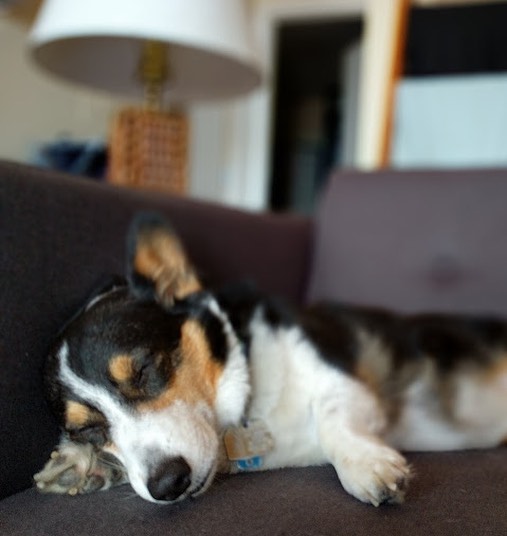
A Stage 4 or Stage 5 IVDD diagnosis is terrifying — but with the right daily care, paralyzed dogs can live full, happy lives.
When my dog’s rear legs stopped working, I felt completely out of my depth. The vet explained the IVDD grading scale, told me we were looking at Stage 4 (paralysis with some retained deep pain sensation) and suddenly I was Googling everything at 2 a.m. If that’s you right now, I want you to know: this is manageable. It’s hard, but it’s manageable.
What Do Stage 4 and Stage 5 Actually Mean?
IVDD (intervertebral disc disease) is graded on a scale of 1 to 5 based on how severely the spinal cord is compressed. By the time you reach Stages 4 and 5, the situation is serious.
- Stage 4: The dog has lost the ability to walk (paralysis) but still has deep pain perception, meaning when a vet pinches a toe firmly, the dog responds. This is a meaningful sign. It tells you the spinal cord is damaged but not completely severed in function.
- Stage 5: The dog has lost both motor function and deep pain perception (DPP). No response to that toe pinch. This is the most severe stage, and the window for surgical recovery narrows fast.
If you’ve just received a Stage 5 diagnosis, please read our IVDD care guides, especially the section on deep pain perception, because timing matters enormously at this stage.
- Surgery within 24–48 hours of losing deep pain perception gives the best odds of recovery
- After 48 hours, recovery rates drop significantly but are not zero
- If your dog just lost DPP, call your vet or emergency neurologist immediately — do not wait
- Even dogs who don’t regain walking can live well with good supportive care
The Surgery Question
The first decision you’ll likely face is whether to pursue surgery (called a hemilaminectomy, basically removing the disc material pressing on the spinal cord) or manage conservatively.
For Stage 4 and 5 dogs, surgery is generally recommended whenever it’s financially and medically feasible. According to VCA Hospitals, approximately 90–95% of Stage 4 dogs who undergo surgery regain the ability to walk. Stage 5 dogs have lower odds, but early surgery still offers the best chance.
That said, not every family can access or afford spinal surgery. Conservative management at Stage 4 and 5 is harder than at earlier stages, and the nursing care is intensive, but dogs absolutely do recover without surgery, and dogs who don’t recover can still live well.
Whatever you decide, get there quickly. This is not a “wait and see” situation.
If you’re working through the surgery-or-euthanasia call right now, the personal essay on how we made the same decision for Heidi might help.
What Does Daily Care Look Like?
This is where most guides fall short. They tell you what the condition is, but not what Tuesday morning at 7 a.m. actually looks like when you have a paralyzed dog.
Here’s what your new routine will likely involve:
Bladder and Bowel Management
This is the most critical piece of daily care and the one that catches most new caregivers off guard. A paralyzed dog usually cannot urinate on their own, and a full bladder for too long leads to urinary tract infections, bladder damage, and serious illness.
Manual bladder expression is a technique your vet will teach you. You apply gentle pressure to the bladder through the abdomen to help the dog void. Most paralyzed dogs need this every 6–8 hours. I do it first thing in the morning, midday, and before bed.
Bowel movements are often easier, as gravity and diet help, but some dogs need gentle abdominal massage or a vet-recommended stool softener.
- Ask your vet to demonstrate manual expression before you leave the clinic — watch it done once, then try yourself with guidance
- Keep a simple log: time expressed, amount, color of urine
- Cloudy, dark, or foul-smelling urine = possible UTI; call your vet
- Omega-3s and good hydration support bladder health long-term
Skin and Positioning
A dog who can’t reposition themselves is at risk for pressure sores, ulcers that develop where bony prominences press against hard surfaces. Hips, elbows, and hocks are the most vulnerable spots.
- Bedding: Use thick orthopedic foam or a pressure-relief pad. Memory foam works well.
- Repositioning: If your dog can’t shift weight themselves, help them change sides every 2–4 hours during the day.
- Drag injuries: If your dog tries to drag themselves and has no feeling in their paws, you’ll need to protect those paws with booties or socks. I went through about three brands before finding ones that actually stayed on.
Mobility and Muscle Preservation
Even if your dog can’t walk, keeping their muscles from wasting completely matters, both for recovery chances and long-term quality of life.
Passive range-of-motion exercises (gently moving the hind legs through a natural walking motion while the dog lies still) help maintain joint flexibility and circulation. Do these 2–3 times a day, about 10–15 repetitions per leg. Your rehab vet can show you the correct technique.
A wheelchair or cart is worth pursuing early, even before you know if recovery will happen. Carts provide mental stimulation, prevent the depression that comes from immobility, and help maintain muscle tone in the forelimbs. I cover this in more detail in our neurological care guides.
- Passive range-of-motion exercises twice daily
- Hydrotherapy or underwater treadmill if available in your area
- A properly fitted rear-support cart for daily “walks”
- Non-slip flooring or yoga mats throughout the house
- Keeping your dog at a healthy weight — every extra pound adds stress to an already-compromised spine
How Do I Know If My Dog Is Still in Pain?
This is one of the questions I get asked most, and it’s harder to answer than you’d think.
Dogs with severe IVDD can seem quiet or even calm, but that doesn’t mean they’re pain-free. The spinal cord injury may reduce their ability to express pain in the ways we expect (crying, limping), but inflammation and nerve pain can still be significant.
Signs of pain in a paralyzed dog include:
- Panting at rest: One of the most reliable pain signals in dogs
- Muscle guarding: Tension or flinching when you touch the back or sides
- Restlessness: Difficulty settling, frequent shifting
- Appetite changes: Eating less or more slowly than normal
- Facial tension: Furrowed brow, tight mouth, ears pulled back
Your vet will likely prescribe a combination of anti-inflammatories (NSAIDs) and possibly gabapentin, a nerve pain medication, for the recovery period. Don’t skip doses, even when your dog seems fine.
- Sudden worsening of condition after a period of stability
- Dog is crying out or cannot be comforted
- Urine is dark, bloody, or has a strong odor (possible UTI or kidney stress)
- New pressure sores developing despite your precautions
- Dog stops eating entirely for more than 24 hours
Will My Dog Be Happy?
I asked myself this question every single day in the first month. The answer, honestly, surprised me.
Dogs adapt. They don’t grieve their paralysis the way we might imagine. What they care about is you, their routine, smells, food, playtime, and connection. Once we got into a rhythm, once I knew how to care for him confidently, my dog’s tail wagged just as hard as it ever did.
The hardest part isn’t the physical work. It’s the fear and uncertainty at the beginning. Once you learn the routines, the fear shrinks. What’s left is just love and logistics.
If you’re navigating Stage 4 or 5 IVDD alongside another condition affecting the spine or hind end, our degenerative myelopathy guides have useful overlap in terms of long-term paralysis care.
You’re not alone in this. And your dog is lucky to have someone who cares enough to be reading at whatever hour it is right now.
Related reading
- Conservative Management for IVDD: What to Do When Surgery Isn’t the Answer
- IVDD in Dogs: Early Symptoms Every Owner Should Watch For
- IVDD Surgery vs. Conservative Management: How to Make the Right Call
- Just Diagnosed with IVDD: What to Do in the First 72 Hours
Looking for a rehab vet near you? Our IVDD specialist finder lists practices with PT, hydrotherapy, and conservative-care experience by state.
Frequently Asked Questions
Can a dog recover from Stage 4 or Stage 5 IVDD?
Stage 4 dogs have a reasonable chance of regaining some function, especially with surgery. Stage 5 dogs (those who have lost deep pain perception) face a more uncertain prognosis, but some do recover, particularly if surgery happens within 24–48 hours of losing deep pain.
How do I know if my Stage 4 or 5 IVDD dog is in pain?
Paradoxically, dogs with severe IVDD can appear calm because they’ve lost sensation. Watch for panting, restlessness, muscle tension, changes in breathing, or reluctance to be touched around the spine. Pain can still be present even without obvious crying.
Does a paralyzed IVDD dog need a wheelchair?
Not every paralyzed dog needs a wheelchair, but most benefit from one. Carts help maintain muscle tone, mental stimulation, and quality of life. Even dogs in conservative management can use a wheelchair for short, supervised exercise sessions.
How often should I express my paralyzed dog’s bladder?
Most paralyzed dogs need manual bladder expression every 6–8 hours. Your vet will show you the technique. Consistent emptying prevents urinary tract infections, which are one of the most common complications in IVDD paralysis.
This guide is based on real experience and should be used alongside professional veterinary care. Always consult your veterinarian before starting any new treatment or making changes to your dog’s care plan.