IVDD in Large Breeds: The Slow-Onset Type II Most Owners Miss
Large breed IVDD looks nothing like dachshund IVDD — slow weakness, not sudden collapse. What GSD and Lab owners need to catch it early.
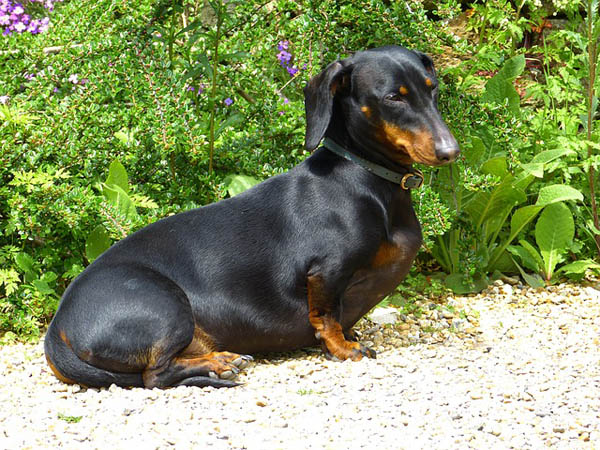
Large breed IVDD is real, it’s underdiagnosed, and the slow way it creeps in is exactly why so many owners miss it until the window for the best outcomes has passed.
When most people hear “IVDD,” they picture a dachshund. And honestly, that makes sense — dachshunds and other small, long-backed breeds make up a huge portion of the IVDD cases you see discussed online. But if you share your home with a German Shepherd, a Doberman, a Labrador Retriever, or another large breed and you’ve been watching your dog slowly struggle to get up from a nap or wobble when turning corners, this article is for you.
Large breed IVDD exists, it’s more common than most people realize, and the way it presents is fundamentally different from the small-breed story.
What Is the Difference Between Hansen Type I and Type II IVDD?
Hansen Type I and Type II IVDD describe two different ways that intervertebral discs fail — and knowing the difference explains almost everything about why large and small breed dogs experience IVDD so differently.
Hansen Type I is the version most people know. The disc undergoes chondroid (cartilage-like) degeneration — common in chondrodystrophic breeds like dachshunds, Beagles, Corgis, and French Bulldogs — and the nucleus of the disc essentially explodes outward into the spinal canal. This is often fast and dramatic: a dog that was fine yesterday is suddenly screaming in pain, dragging a leg, or worse.
Hansen Type II is the large-breed story. Here, the disc undergoes fibroid degeneration — the outer wall of the disc gradually thickens, hardens, and bulges inward over months or even years. It doesn’t blow out. It slowly encroaches on the spinal cord like a slow-moving pressure. The result is a dog that gets a little weaker, a little wobblier, a little more reluctant to jump — and because it happens so gradually, owners often chalk it up to “just getting older.”
That assumption is where the trouble starts.
- German Shepherds
- Doberman Pinschers
- Labrador Retrievers
- Rottweilers
- Dalmatians
- Large mixed breeds with these lineages
Why Is Large Breed IVDD So Often Missed?
Large breed IVDD is missed for a few connected reasons, and once you understand them, the pattern makes complete sense.
First, these breeds are not considered “IVDD breeds.” When a dachshund owner sees hind-leg weakness, IVDD is often the first thing a vet reaches for. When a Labrador owner describes the same symptom, the differential usually starts with hip dysplasia, arthritis, or cruciate ligament issues. Those are legitimate concerns worth ruling out — but IVDD should be in the conversation too.
Second, the slow onset of Type II genuinely mimics arthritis and aging. A dog who takes an extra second to stand up after a rest, who isn’t quite as enthusiastic about stairs as they used to be, who occasionally stumbles on the back end — that picture fits half a dozen diagnoses, and “spinal disc disease” may not feel urgent.
Third, the pain signals in Type II can be subtler. Dogs with a sudden Type I disc rupture often yelp dramatically and guard their back. Dogs with slow Type II compression may show only mild discomfort that’s easy to miss or dismiss.
The frustrating reality is that by the time a large-breed dog with Type II IVDD is clearly neurologically compromised, the compression has often been building for a long time. Earlier intervention, when only mild weakness is present, generally leads to better outcomes.
How Do I Know If My Large Dog Has IVDD?
The early signs of large breed IVDD overlap with other conditions, but there are patterns worth watching closely — especially in middle-aged and older large dogs (typically 5 years and up, though it can appear earlier).
Hind-leg weakness: The back legs seem less reliable than usual — stumbling, crossing when turning, or drifting to one side.
Difficulty rising: Taking longer to stand from a lying position, or pushing up unevenly.
Changed gait: A slightly shuffling or wobbly rear end, sometimes called “drunk walking” or ataxia (loss of coordination) in vet language.
Reluctance to jump or climb: Avoiding the couch, hesitating at stairs, not wanting to load into the car.
Back or neck sensitivity: Flinching or pulling away when you touch the spine, reluctance to look up or down, or stiffness in the neck.
Knuckling: The paws occasionally folding under or dragging on the ground — a sign of proprioceptive (positional awareness) loss.
If you’re seeing any combination of these signs in a large breed dog, it’s worth a vet visit where you specifically mention spinal cord disease as a concern — not just joint problems.
- Sudden worsening of rear-leg weakness over hours, not days
- Loss of bladder or bowel control (incontinence or inability to go)
- Knuckling that appears suddenly rather than gradually
- Yelping when the back or neck is touched
- Complete inability to rise without help
For context on how neurological grades are assigned and what they mean for prognosis, the 5 IVDD stages explained article walks through the grading system in plain language.
How Is Large Breed IVDD Diagnosed?
A standard X-ray can suggest disc disease — narrowed disc spaces or calcification can be visible — but X-rays alone won’t show you soft tissue spinal cord compression. For a definitive diagnosis and surgical planning, you need advanced imaging.
MRI is the gold standard for large breed IVDD. It shows the soft tissue detail needed to see exactly where the disc is bulging, how much it’s compressing the cord, and whether there’s any damage to the cord itself. CT myelogram is another option — a CT scan combined with contrast dye injected into the spinal canal — and is often more accessible or faster in an emergency setting. Our IVDD imaging guide breaks down all the imaging options and what each one can and can’t tell you.
Because large breed dogs are heavier and harder to position, and because Type II often develops in the neck (cervical) or thoracolumbar regions, you’ll typically want a veterinary neurologist involved in both the imaging and the treatment conversation.
What Are the Treatment Options for Large Breed IVDD?
Treatment for large breed IVDD follows a similar framework to small breed IVDD, but there are some important differences in how surgery is approached and what conservative care looks like for a 70-pound dog.
Conservative Management
For dogs with mild neurological signs — some weakness, some ataxia, but still able to walk — conservative management is often the starting point. This typically involves strict activity restriction, anti-inflammatory medications, pain management, and physical rehabilitation. The goal is to reduce inflammation around the compressed area and prevent further progression.
The catch with Type II is that the underlying fibroid change in the disc doesn’t reverse. Conservative care can manage symptoms and slow progression, but it doesn’t fix the structural problem. Many large breed dogs do well for extended periods on conservative management, but if weakness progresses, surgery becomes a more serious conversation.
Surgery
Surgical decompression for large breed IVDD involves removing the bulging disc material to relieve pressure on the spinal cord. The specific procedure depends on the location of the affected disc. In the neck region (cervical IVDD, common in Dobermans and Dalmatians), a ventral slot procedure is often used. In the thoracolumbar region, hemilaminectomy is more typical.
Recovery from spinal surgery in a large dog requires significant logistical planning. Managing a 70-pound dog through strict rest, bladder care if needed, and physical rehabilitation is a very different experience from managing a 10-pound dachshund. That’s worth thinking through before the decision is made. Our overview of IVDD surgery vs. conservative care can help you think through the decision framework.
Physical Rehabilitation
Rehab is genuinely valuable for large breed IVDD dogs, both post-surgery and as part of conservative management. Hydrotherapy (underwater treadmill work) is especially well-suited for large dogs — the water supports body weight while allowing the legs to work, building strength without overloading a compromised spine. A certified canine rehabilitation therapist can build a plan appropriate for your dog’s grade and size.
A rear-support harness can make a real difference for large dogs who need help getting up or maintaining balance during walks — a well-fitted harness like the Help ‘Em Up Harness is designed specifically for this kind of daily lifting support.
- Non-slip flooring throughout the house (yoga mats, carpet runners)
- Raised food and water bowls to reduce neck flexion in cervical cases
- Ramps instead of stairs for getting in and out of vehicles
- Regular, gentle supported walks — not long hikes
- Weight management — every extra pound increases spinal load
The Under-Recognition Problem Is Worth Taking Seriously
From what I’ve seen and heard from other owners in the disabled dog community, there’s often a significant delay between first symptoms and diagnosis in large breed IVDD. The dog is treated for arthritis for months. A joint supplement is added. Maybe a short course of NSAIDs. And the dog seems slightly better, then slightly worse, then slightly better again — until one day the weakness is impossible to ignore.
By that point, the window for certain surgical outcomes has often narrowed. Spinal cord compression that has been present for a long time causes changes that can be difficult or impossible to reverse, even with the pressure removed.
I’m not saying this to frighten anyone. I’m saying it because the outcome data strongly favors early intervention, and the main barrier to early intervention in large breeds is that nobody thought to put IVDD on the list. If you’re watching a large breed dog gradually lose their rear end and you haven’t had a spinal workup, that conversation with your vet is worth having now.
Related Reading
- IVDD Symptoms in Dogs: Early Warning Signs to Catch Now
- IVDD Imaging Explained: MRI vs CT vs Myelogram vs X-Ray
- The 5 IVDD Stages Explained: Symptoms & Recovery Odds
Frequently Asked Questions
Can large breed dogs get IVDD?
Yes — large breeds like German Shepherds, Dobermans, and Labrador Retrievers can and do develop IVDD. They most commonly develop Hansen Type II, a slower-onset form involving fibroid degeneration of the disc rather than the sudden rupture more typical in small breeds.
How is Type II IVDD different from Type I?
Type I IVDD involves a disc that suddenly ruptures and forces disc material into the spinal canal, causing rapid or acute symptoms. Type II involves a disc that slowly bulges and hardens over months or years, causing gradual weakness rather than sudden paralysis — which is why it’s so often mistaken for arthritis or aging.
What are the early signs of IVDD in large dogs?
Early signs in large breeds often include subtle hind-leg weakness, stumbling or crossing rear legs when walking, reluctance to climb stairs, difficulty rising from a rest position, and occasionally yelping when touched along the back or neck. These signs are easy to mistake for hip dysplasia or normal aging, which is why a neurological evaluation is important if you’re seeing them.
Is IVDD in large breeds treatable?
Yes, and outcomes are often good when the condition is caught before significant spinal cord damage has occurred. Treatment options include conservative management, medication, physical rehabilitation, and surgery — with the right path depending on the dog’s grade, age, and how much function remains at the time of diagnosis.
If your large breed dog is showing any of the signs described here, please don’t wait and hope it resolves on its own. Advocate for a complete spinal evaluation. You know your dog — if something feels off in their rear end, trust that instinct and get it looked at.
This guide is based on real experience and should be used alongside professional veterinary care. Always consult your veterinarian before starting any new treatment or making changes to your dog’s care plan.