IVDD in Boston Terriers: The Cervical Disc Focus
Boston Terriers get IVDD differently than dachshunds — neck pain, not back legs, is the red flag. What owners need to know about cervical disc disease in…
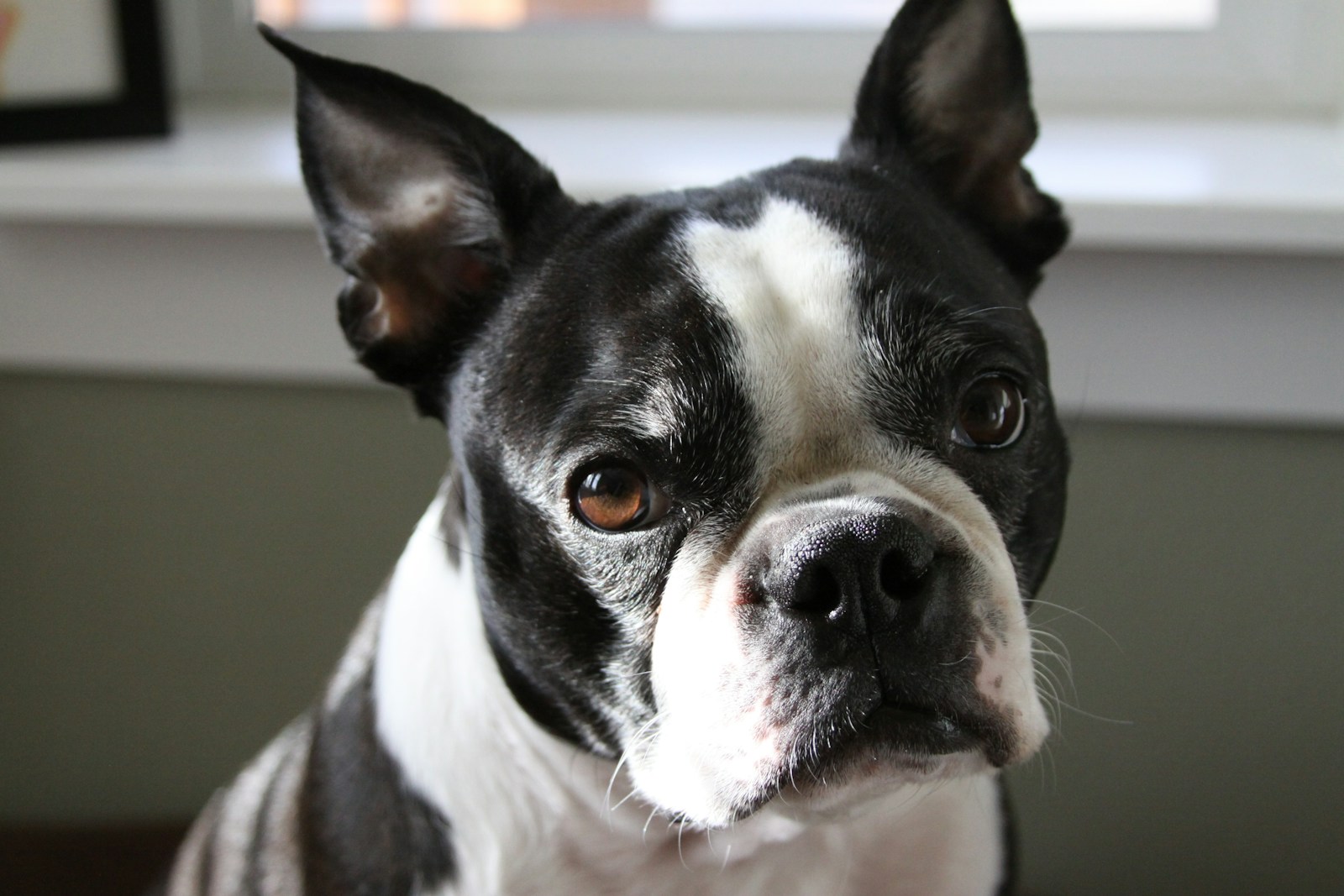
Photo by Taylor Corcoran on Unsplash
Boston Terriers are at real risk for IVDD — but the disease often shows up in the neck, not the back, and that difference changes everything about what you should be watching for.
When most people think of IVDD, they picture a dachshund with a bad back. That mental image makes sense — thoracolumbar disc disease in long-bodied breeds gets the most attention, and most of what you’ll read online is written with that pattern in mind. But Boston Terriers have their own version of this disease, and it tends to play by different rules. Understanding those rules is what this article is about.
Why Are Boston Terriers at Risk for IVDD?
Boston Terriers carry a moderately elevated IVDD risk, and the reason is rooted in their skeletal anatomy. Brachycephalic breeds — those with the flattened face and compact skull characteristic of Bostons — also tend to have associated skeletal proportions throughout the body, including changes in the vertebral column that can predispose certain discs to degenerate earlier than they would in a longer-snouted, more traditionally built dog.
It’s worth being precise here: the term “brachycephalic” refers to the skull and facial bone structure, not to respiratory anatomy. Brachycephalic obstructive airway syndrome (BOAS) is a separate, breathing-related condition. The skeletal features relevant to IVDD risk are distinct from any airway concerns — we’re talking about bone structure, not breathing.
Boston Terriers are sometimes described in veterinary literature as “chondrodystrophic-adjacent.” True chondrodystrophy, at the genetic level, is defined by the CDDY mutation (an FGF4 retrogene insertion on chromosome 12) that has been confirmed in breeds like dachshunds, French Bulldogs, and Corgis. The research on this specific genetic marker in Boston Terriers is not as clear-cut, and claiming Boston Terriers carry the confirmed CFA12 FGF4 retrogene would go beyond what the current science supports. What is clinically documented is that Bostons exhibit disc changes and disc disease at rates that put them in a higher-risk category than average — and that their disease pattern leans cervical.
For more on the genetics behind which breeds are most affected, which dog breeds get IVDD most is a good overview of where Boston Terriers fall on the at-risk spectrum.
What Does “Cervical Predominance” Actually Mean?
Cervical IVDD affects the discs in the neck — the cervical vertebrae, designated C1 through C7. In breeds where thoracolumbar IVDD dominates (think dachshunds and Corgis), the trouble discs tend to sit in the mid-back or lower thoracic region. In Boston Terriers, the discs most likely to herniate or bulge are those in the neck.
This matters enormously for clinical presentation. Thoracolumbar disc disease produces signs in the back half of the body: hind-leg weakness, dragging, wobbling, loss of bladder control. Cervical disc disease produces signs in the neck and, depending on severity, can affect all four limbs — since the cervical spinal cord carries signals to the front legs as well as routing signals downward to the rear.
There’s already a deep-dive on cervical IVDD on this site that covers the mechanics in detail. The short version: cervical IVDD is the disc disease owners underestimate, partly because the signs don’t match the “dragging back legs” image that dominates IVDD awareness.
What Are the Warning Signs in Boston Terriers?
The cervical IVDD warning signs that Boston Terrier owners should know are genuinely different from the back-problem signs that get the most press. A Boston with a herniated neck disc often looks like a dog in vague pain — not a dog with obvious leg problems.
The most common signs include:
- Reluctance to lower the head: Your dog stops eating from a floor-level bowl comfortably, or seems hesitant to sniff the ground.
- Yelping when picked up: This is one of the most telling signs. The act of being lifted puts traction and compression stress on the cervical spine, and a dog with a painful disc will often cry out.
- Neck stiffness or guarded movement: Your Boston turns its whole body to look sideways rather than just moving its head. The neck may look “fixed” in one position.
- Holding the head at an unusual angle: Some dogs hold the head slightly down and forward in a protective posture; others tilt.
- Sudden reluctance to jump or use stairs: Even without obvious hind-leg weakness, neck pain can make impact-heavy movements aversive.
- Forelimb weakness or stumbling: In more significant compressions, the front legs may become weak, wobbly, or start to knuckle.
- General behavior change: Unusual irritability, reluctance to be touched around the neck or shoulders, or increased panting can all be pain signals.
Importantly, neck pain in dogs is often described as “crying out for no apparent reason” — your Boston may yelp during what looks like normal rest, when shifting position, or when startled. That phantom yelp is a classic cervical IVDD sign.
- Sudden inability to use one or more legs
- Yelping in pain that won’t stop or worsens rapidly
- Knuckling of front paws (walking on the top of the foot)
- Loss of bladder or bowel control
- Complete neck rigidity or inability to lift the head
When Does IVDD Typically Appear in Boston Terriers?
Clinically, disc disease in chondrodystrophic-adjacent small breeds tends to present in middle age. For Boston Terriers, owners most commonly notice first signs in dogs between roughly 4 and 8 years old, though it can appear earlier or later. This is similar to the general pattern seen in other moderate-risk compact breeds.
This is worth knowing because it means a perfectly healthy, active 5-year-old Boston deserves some awareness. The disease rarely announces itself with dramatic sudden collapse on day one — many dogs have a period of intermittent yelping or vague stiffness before a more obvious episode occurs.
- First signs most commonly reported in dogs 4–8 years old
- Cervical (neck) discs more commonly affected than thoracolumbar (mid-back) discs
- Episodes may start intermittent — brief yelps, occasional stiffness — before becoming sustained
- Males and females appear to be affected at broadly similar rates
How Is Boston Terrier IVDD Diagnosed and Treated?
Diagnosis for suspected cervical IVDD follows the same path as for any IVDD case: a physical and neurological exam first, then imaging. Plain radiographs (X-rays) can sometimes suggest disc disease but cannot show soft-tissue compression. MRI is the gold standard for seeing which disc is affected, how much material has herniated, and the degree of spinal cord compression. A CT myelogram is sometimes used as an alternative when MRI isn’t available.
Most Boston Terrier IVDD cases are evaluated and graded using the standard IVDD neurological grading scale (Grades 1–5). The grade at presentation guides treatment decisions. The 5 IVDD stages explained breaks down what each grade means in practical terms.
Conservative Management
Mild to moderate cervical IVDD — Grades 1 and 2, and sometimes Grade 3 — is often managed without surgery. Conservative management typically involves:
- Strict crate rest: Limiting movement is the foundation of conservative care. Most protocols run 4–6 weeks minimum.
- Anti-inflammatory medication: NSAIDs or corticosteroids to reduce swelling around the disc and spinal cord (your vet will decide which is appropriate).
- Pain management: Gabapentin and muscle relaxants are commonly prescribed alongside anti-inflammatories.
- Activity restriction: No jumping, stairs, or rough play during recovery.
One important note for cervical IVDD specifically: collars should be avoided during and after an episode. A harness that doesn’t put any pressure on the neck is much safer. The standard wisdom about harness use vs. collar use applies with even more urgency when the disc disease is in the neck.
Surgical Treatment
More severe presentations — Grade 3 with deterioration, Grade 4, or Grade 5 — are generally referred for surgical decompression. The goal of surgery is to remove the herniated disc material pressing on the spinal cord. For cervical discs, the surgical approach differs from thoracolumbar surgery, and it’s performed by a board-certified veterinary neurologist or surgeon.
As the American College of Veterinary Surgeons notes, surgical outcomes are strongly influenced by the neurological grade at the time of surgery and how quickly the case is addressed. This is why rapid veterinary evaluation after any Boston Terrier yelping or neck-stiffness episode matters — the window for the best outcomes is real.
- Switch from a neck collar to a well-fitted harness for all walks
- Feed from a raised bowl to reduce neck extension strain
- Block access to furniture that requires jumping, or add ramps and steps
- Familiarize yourself with the warning signs listed above — early recognition is the biggest variable you can control
- Know your nearest veterinary neurology clinic before you need it
For any episode that could be cervical IVDD, please also review the IVDD emergency signs guide — it covers what to watch for that means “go right now” vs. “call your vet in the morning.”
Related Reading
- Cervical IVDD: The Neck-Disc Disease Owners Underestimate
- Which Dog Breeds Get IVDD Most? The At-Risk Breed List
- IVDD Emergency Signs: When to Rush Your Dog to the Vet
Frequently Asked Questions
Are Boston Terriers prone to IVDD?
Boston Terriers have a moderately elevated risk for IVDD compared to the general dog population, largely due to skeletal features associated with their compact, brachycephalic build. Their disc disease tends to affect the cervical (neck) region more often than the thoracolumbar (mid-back) region that dominates in breeds like dachshunds. Owners of Boston Terriers should learn the neck-specific warning signs, which are quite different from the back-leg weakness most people associate with IVDD.
What does Boston Terrier IVDD look like — won’t it drag its back legs?
Not necessarily. Cervical IVDD often produces neck pain, stiffness, and reluctance to lower the head rather than hind-leg dragging. Your Boston may yelp when picked up, hold its head in an unusual position, resist turning to one side, or suddenly become reluctant to jump. Back-leg involvement can occur in more severe cases, but neck-region signs usually come first.
How is cervical IVDD in Boston Terriers diagnosed?
Diagnosis typically requires imaging beyond a plain X-ray. MRI is the gold standard for identifying which disc is affected and the degree of spinal cord compression. A veterinary neurologist is usually involved for definitive staging and treatment planning. Your regular vet may start with a physical and neurological exam before referring you.
Can cervical IVDD in Boston Terriers be treated without surgery?
Mild to moderate cervical IVDD is often managed conservatively with strict rest, anti-inflammatory medications, and pain management — but this decision must be made by a veterinarian based on your dog’s neurological grade. Severe or rapidly worsening cases, or those that fail conservative management, are typically referred for surgical decompression. Early diagnosis gives the most options.
This guide is based on real experience and should be used alongside professional veterinary care. Always consult your veterinarian before starting any new treatment or making changes to your dog’s care plan.