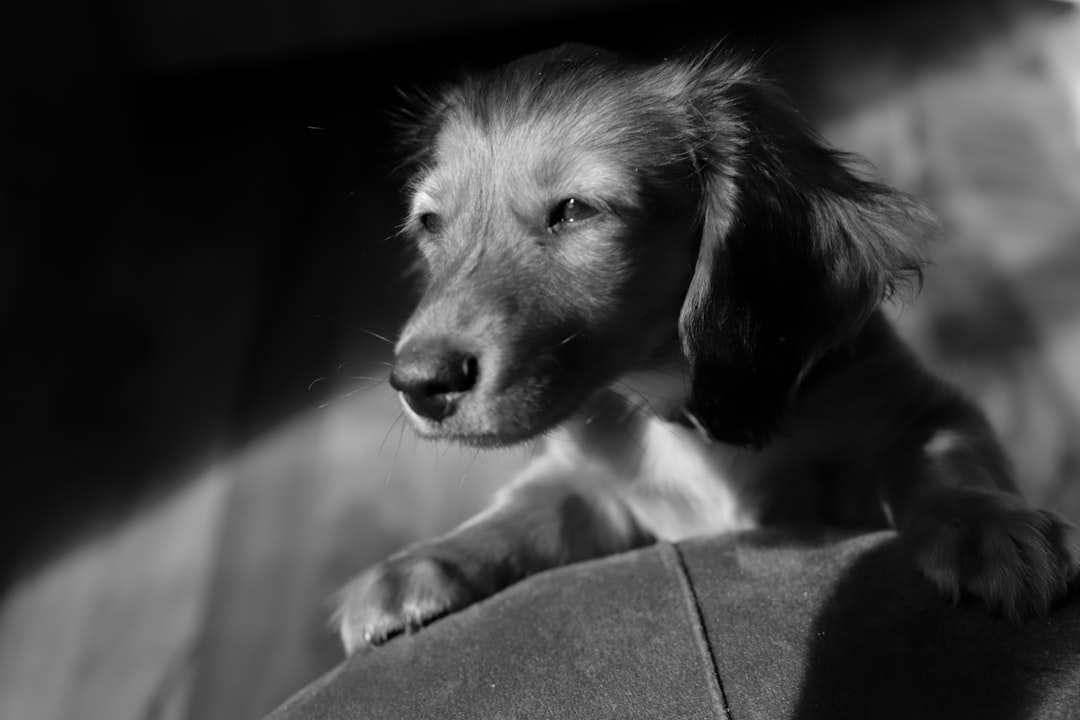
Living in a multi-level home with an IVDD dog isn’t just inconvenient — it’s a genuine safety challenge that requires a whole new mental map of your house.
When Heidi was first diagnosed with IVDD, our two-story house felt like an obstacle course designed specifically to hurt her. Stairs were suddenly the enemy. The couch she’d always launched herself onto was off-limits. Even a single step down from the back door felt like a risk. It took some time, some trial and error, and a few things I wish I’d known earlier — but we figured out a system that works. This is that system.
Why Stairs Are Non-Negotiable for IVDD Dogs
Stairs are one of the most mechanically stressful activities a chondrodystrophic dog can do. Each step down creates a concussive force through the spine. Each step up compresses the discs. Dodgerslist — the gold standard IVDD owner resource — lists stair restriction as a core component of both conservative management and long-term relapse prevention, and for good reason.
The risk isn’t only during the acute recovery window. A dog who has had one IVDD episode has discs that are already compromised. That’s true whether the episode was mild or required surgery. The no-stairs rule isn’t temporary for most IVDD dogs — it’s a permanent part of life. I know that’s hard to hear if you’re in a house with two flights of stairs, but the alternative is a repeated cycle of injury that gets harder to recover from each time.
If you want a deeper look at how IVDD recurrence works and what triggers it, the article on IVDD recurrence odds and prevention covers exactly that.
Ramp Selection and Installation: What Actually Matters
The right ramp makes the difference between a dog who uses the thing confidently and one who refuses it entirely. Here’s what to focus on:
Slope Is Everything
A ramp that’s too steep defeats the purpose. For most small IVDD-prone breeds, a slope of roughly 18–22 degrees is the usable range. To get a gentle enough slope in a confined space, you often need a longer ramp than you’d expect. A ramp that spans 48 inches but only rises 10 inches is far better than a 24-inch ramp rising the same 10 inches.
Surface Traction
A slippery ramp is worse than no ramp — a dog that scrambles or panics on the way down can torque their spine in a split second. Look for ramps with a carpet, rubber grip tape, or textured surface. We added non-slip bathtub stickers to ours as extra insurance. For more on traction throughout the home, the guide on flooring and traction for IVDD dogs has detailed advice.
Where to Place Ramps
Think through every elevation change your dog encounters in a day:
- Couch or bed access: If your dog sleeps with you or rests on furniture, a ramp to that surface is essential. The launch-and-land of jumping is one of the highest-impact movements a small dog does.
- Back door step: Even a single step down to the yard needs a ramp. I cut a small wedge ramp for ours out of a foam pool noodle base — it’s not pretty, but it works.
- Vehicle access: Getting in and out of the car is a major spinal event without a ramp. Telescoping pet ramps work well for this.
- Any interior level change: Sunken living rooms, raised thresholds, and those one-step-down entryways are all hazards worth addressing.
- Measure the rise (height) and calculate the slope angle before purchasing
- Check the weight rating — most commercial dog ramps are rated for small breeds only
- Look for side rails or edges so the dog can’t slide off
- Test the surface grip yourself — if your hand slips, your dog’s paws will too
- Consider how the ramp stores when not in use if space is tight
Gate Placement: Blocking the Stairs Completely
Gates are not optional. Even a well-trained dog will bolt up the stairs the moment something exciting happens — a knock at the door, a squirrel outside, another pet running by. In that moment, training goes out the window. Gates don’t.
Which Gates Work Best
Pressure-mounted gates are fine for doorways, but for the top of stairs, use a hardware-mounted gate only. A pressure-mounted gate at the top of a staircase can be dislodged by a dog pushing against it — and the consequences of that failure are catastrophic. Hardware-mounted gates screw into the wall and do not move.
For the bottom of stairs, pressure-mounted is acceptable since a fall forward is far less dangerous than a fall backward down the stairs.
Gate Placement Strategy in a Two-Story Home
The goal is to create a safe zone on a single floor that contains everything your dog needs: their bed, food, water, and access to an outdoor bathroom route. During acute recovery, this containment is strict. Long-term, you may open it up, but the staircase itself should remain gated permanently.
If your layout requires your dog to access an upper floor for any reason, that access needs to be managed directly by you — carried, not walked.
- Pressure-mounted gates at stair tops — replace with hardware-mounted immediately
- Gates with bar spacing wide enough for a small dog to squeeze through
- Auto-close gates that fail to latch — test the latch weekly
- Gates your dog has learned to push open — add a carabiner clip to the latch
Carrying Protocols by Dog Size
How Do You Safely Carry an IVDD Dog?
Carry an IVDD dog by supporting both ends of the spine simultaneously — one hand under the chest, one hand cradling the hindquarters, with the dog’s back kept level. Never let the back end hang free, even for a few seconds. That unsupported dangling puts direct traction on the lumbar spine, which is exactly where most disc injuries occur in small breeds.
Small Dogs (Under ~15 lbs)
This is manageable solo with good technique. Scoop from below, keep the spine horizontal, and hold the dog close to your body for stability. Avoid the temptation to carry them like a football with one arm — it twists the spine.
Medium Dogs (15–30 lbs)
At this weight, one-person carries are still doable but require more deliberate positioning. The Help ‘Em Up Harness we used during Heidi’s recovery is actually designed for this exact scenario — it gives you a secure handle at both the front and rear, so you can support the full length of the dog without awkward hand placement. For dogs in this weight range, a harness with rear support makes carrying up and down stairs much safer.
Larger Dogs (Over 30 lbs)
Honestly, if you have a large IVDD-prone dog (Dobermans, Labrador Retrievers with Type II IVDD), single-person carries up stairs are risky — for you and for the dog. A two-person carry with one person at each end is safer. Alternatively, if the upper floor is rarely needed, eliminating that access entirely and relocating everything to one floor is the cleaner solution.
- Always support both the chest and hindquarters — keep the spine level
- Move slowly and communicate with a second person if needed
- Bend at your knees, not your waist — carrying a dog repeatedly while hunched will wreck your back over months
- Put the dog down gently, hind end first, onto a non-slip surface
- Never rush a carry, even if the dog is squirming to get down
Choosing a Sleeping Level
This one comes up in almost every conversation I’ve had with other IVDD caregivers: do I move my dog to the ground floor, or do I carry them upstairs every night?
The honest answer is that ground floor is the right choice for recovery — and for long-term management in most cases. Here’s why:
It eliminates overnight stair risk. Dogs who sleep upstairs and need a bathroom trip at 2 a.m. create a scenario where you’re half-awake, carrying a heavy or squirming dog down a dark staircase. That’s how accidents happen.
It makes monitoring easier. During the first weeks post-diagnosis or post-surgery, you need to hear your dog if they’re in distress overnight. One floor is easier to monitor.
It prevents relapse triggers. A dog that lives on one floor and has no stair access simply cannot have a stair-related injury. The temptation is removed entirely.
If sleeping separately from your dog feels wrong (I get it — it did for us too), move your own setup to the ground floor temporarily. An air mattress next to the crate for the first few weeks of recovery is not glamorous, but it works. The article on nighttime routines for post-op IVDD dogs has practical advice on making this work.
- Active recovery from surgery or conservative management (strict rest period)
- Any signs of relapse: yelping, reluctance to move, hind-leg weakness returning
- A dog who has had two or more IVDD episodes
- Loss of bladder or bowel control — incontinence means no unsupervised stair access ever
Making the Ground Floor Actually Work
The single biggest objection I hear is “but everything is upstairs.” That’s fixable. Here’s what to relocate:
- A second set of food and water bowls — leave the originals upstairs, buy duplicates
- A bed or crate on the ground floor — it doesn’t need to be elaborate
- Any medications stored upstairs — move them to a ground-floor cabinet
- Your own overnight setup — if you’re monitoring closely, be on the same level
The two-story home doesn’t become a one-story home overnight, and you’ll still be going up and down yourself constantly. The point is that your dog’s world becomes flat — and that changes everything for their spine.
For the broader picture of life after the crisis phase, the article on long-term care for an IVDD dog is worth reading alongside this one.
Related Reading
- IVDD Dogs and Stairs: Ramps, Gates & Rules
- Best Flooring & Traction for IVDD Dogs
- IVDD Recurrence: The Odds & How to Prevent a Second Episode
Frequently Asked Questions
Can an IVDD dog ever use stairs again after recovery?
Most IVDD specialists recommend a permanent no-stairs policy, even after full recovery. A dog who recovered from one disc episode is at elevated risk for another, and stair impact is one of the most consistent triggers. Ramps or being carried should remain the long-term standard.
What angle is safe for a dog ramp when an IVDD dog is recovering?
A slope of roughly 18–22 degrees is generally considered manageable for most small-breed IVDD dogs. Steeper than that puts significant strain on the spine and front legs. Longer ramps with a gentler rise are always safer than short, steep ones — measure the rise-to-run ratio before buying.
How do I safely carry a small IVDD dog up and down stairs?
Keep the spine level and supported — one hand under the chest, one under the hindquarters. Never let the back end dangle. For dogs over roughly 20 pounds, a sling or rear-support harness adds extra control and protects your grip. Move slowly and avoid twisting your own body while carrying.
Where should an IVDD dog sleep in a multi-level home?
Ground floor is the safest choice during recovery and is strongly recommended long-term. Being on the same level as your dog makes overnight monitoring easier, eliminates any stair temptation, and means that if there’s a relapse at 2 a.m., you’re not carrying a painful dog down a flight of stairs in the dark.
This guide is based on real experience and should be used alongside professional veterinary care. Always consult your veterinarian before starting any new treatment or making changes to your dog’s care plan.