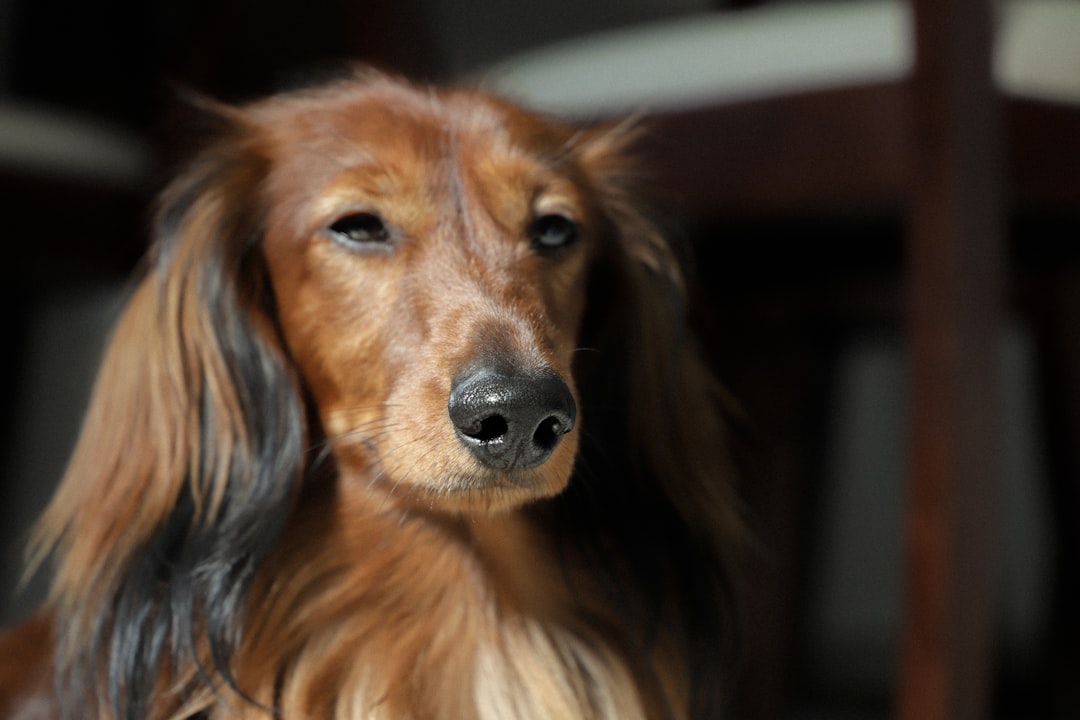
Genetic testing for IVDD risk won’t guarantee a healthy dog, but it gives breeders and buyers real information — and that’s more than most people had even five years ago.
What Does the IVDD Genetic Test Actually Measure?
The test identifies a specific genetic variant — an FGF4 retrogene insertion on chromosome 12 — that causes the skeletal trait called chondrodystrophy (CDDY). Dogs carrying this variant develop abnormally calcified, brittle discs that are prone to sudden, explosive herniation: the classic Hansen Type I IVDD pattern.
If you want the full science behind this mutation, the genetics of IVDD deep-dive covers it thoroughly. The short version: chondrodystrophy is what gives dachshunds and corgis their short, curved legs — and the same gene variant that shapes those legs also ages the spinal discs prematurely.
The test is a simple cheek-swab DNA test, typically run through a veterinary genetics lab. Results come back as one of three categories.
Homozygous (Two Copies)
Dogs with two copies of the FGF4 insertion carry the highest genetic load for early disc degeneration. Both short legs and accelerated disc calcification are strongly expressed. Breeding two homozygous dogs together guarantees all puppies will be homozygous.
Heterozygous (One Copy)
One copy of the variant is enough to produce the chondrodystrophic body type. These dogs still face meaningfully elevated IVDD risk compared to clear dogs, though generally lower than homozygous individuals. A heterozygous dog bred to a clear dog produces roughly 50% clear and 50% heterozygous offspring.
Clear (No Copies)
A clear result means the dog doesn’t carry the CDDY mutation at all. Risk for Hansen Type I disc herniations is significantly reduced. Note: “clear” doesn’t mean zero lifetime IVDD risk — the slower-onset Hansen Type II disease involves different mechanisms and can affect non-chondrodystrophic dogs as they age.
- Tests for: FGF4 retrogene on chromosome 12 (CDDY / chondrodystrophy)
- Linked to: Hansen Type I IVDD — the sudden, high-force herniations most common in dachshunds, French bulldogs, corgis, beagles, and similar breeds
- Not covered: Hansen Type II IVDD (age-related disc degeneration in larger or non-chondrodystrophic breeds)
- Not covered: Cervical disc disease risk, overall structural conformation, or general spinal health
How Does This Testing Inform Breeding Decisions?
The goal of incorporating genetic testing into a breeding program isn’t necessarily to eliminate the CDDY variant from a breed — in many chondrodystrophic breeds, that would be genetically impossible without decimating diversity. The more realistic goal is to make intentional pairings.
A thoughtful breeder might choose to breed a homozygous dog only to a clear or heterozygous partner, reducing the proportion of homozygous puppies in a litter. Over generations, this kind of selection can shift the population toward lower average risk — without abandoning the breed type that defines the dog.
The American Kennel Club has encouraged breed health committees to incorporate available genetic health screenings into breeding recommendations, though implementation varies widely by breed club and individual breeder.
What responsible breeders are generally NOT doing: selecting exclusively for clear status at the expense of everything else. Temperament, structure, working ability, and genetic diversity all matter. A clear dog with poor structure or a narrow gene pool contribution isn’t automatically the right choice.
- Have the parents been tested for the FGF4/CDDY variant? Can I see the results?
- What were the results for each parent — clear, heterozygous, or homozygous?
- Do you use any health testing protocols recommended by the breed club?
- How many litters has this dam had, and what health outcomes have you tracked?
- Are you willing to stay in contact if health issues arise after purchase?
What Are the Buyer Red Flags?
If you’re purchasing a puppy from a breed with significant IVDD risk — dachshunds, French bulldogs, corgis, Shih Tzus, beagles, cocker spaniels — asking about genetic testing is completely reasonable. A good breeder won’t be offended; they’ll be glad you asked.
Here are patterns worth paying attention to:
- Dismissiveness about the test: “I’ve been breeding dachshunds for 20 years and never needed any test” is not reassurance — it’s a signal that prevention isn’t a priority.
- No health records on the parents: Reputable breeders typically track health outcomes across their lines. If they can’t tell you anything about the parents’ health history, that’s a gap.
- Pressure to decide quickly: High-pressure sales tactics and puppies available immediately with no waitlist can indicate a puppy mill or backyard breeding operation where health testing isn’t happening.
- Parents not on-site or unavailable to meet: Seeing at least the dam is standard for responsible breeders.
- No contract or health guarantee: Most reputable breeders offer some form of guarantee and are willing to discuss what happens if a serious health condition emerges.
None of this means a breeder without CDDY test results is automatically bad — testing is relatively new and still not universal. But a breeder who doesn’t know what the test is and has no interest in learning is a different situation than one who says “we haven’t tested yet but here’s our health protocol.”
What About Rescue Dogs?
If you’re adopting a rescue dog, please don’t let the absence of genetic testing stop you. Most rescues — especially adult dogs who are already IVDD survivors — won’t have testing on record, and that’s genuinely fine.
What matters more in the rescue context is understanding that many chondrodystrophic breeds carry elevated IVDD risk by default, and planning accordingly. That means:
- Knowing the early warning signs: IVDD symptoms — yelping when touched, reluctance to jump, a hunched posture, stumbling — so you catch a flare early.
- Making smart lifestyle choices: Weight management reduces spinal load. Ramps instead of jumping on and off furniture. Leash control on the stairs.
- Not catastrophizing: Many dogs with high-risk genetic profiles live their whole lives without a significant disc episode.
The article on adopting an IVDD or paralyzed dog goes into detail on what life with a rescue who already has IVDD actually looks like day to day. It’s worth a read if that’s your situation.
- Dachshunds (miniature and standard)
- French bulldogs and English bulldogs
- Pembroke and Cardigan Welsh corgis
- Beagles
- Basset hounds
- Shih Tzus and Pekingese
- Cocker spaniels
- Any breed intentionally bred for short legs or a long back-to-leg ratio
The Ethics Frame — Without the Guilt
I want to be honest about something: the framing around IVDD genetics can start to feel like a blame game, and I think that’s counterproductive.
If you bought a dachshund from a breeder who didn’t test — that was normal practice for a long time, and it’s still not universal. If you’re reading this after your dog’s diagnosis, please know that nothing you did or didn’t ask caused this. The CDDY variant is extraordinarily common in chondrodystrophic breeds. Even dogs from well-tested lines develop IVDD.
Where genetic testing matters most is at the breeding decision point — not as a tool to assign responsibility after the fact, but as a way to gradually shift population risk over generations. Breeders who embrace that are doing meaningful work. And buyers who ask the right questions are encouraging more of it.
If you’re currently navigating a diagnosis rather than a purchase decision, the resources that will help you most are the ones about what comes next: what to do in the first 72 hours, how to weigh treatment options, and what recovery actually looks like. This genetics piece is prevention-focused — and prevention is only useful before the crisis hits.
Whether you’re a breeder trying to make better pairing decisions, a buyer researching your options, or someone who just got the news and is now piecing together how this happened — I hope this gave you something concrete to work with. The science here is still evolving, and perfect answers don’t exist yet. But asking better questions is always a good place to start.
Related Reading
- Genetics of IVDD: CDDY, FGF4, and Chondrodystrophy Explained
- IVDD Genetic Testing: CDDY, FGF4 & What the Results Mean
- Which Dog Breeds Get IVDD Most? The At-Risk Breed List
Frequently Asked Questions
What genetic test should I ask a breeder about for IVDD risk?
Ask about the FGF4 retrogene test on chromosome 12, which identifies the CDDY (chondrodystrophy) mutation linked to Hansen Type I IVDD. A dog can be homozygous, heterozygous, or clear for this variant. Reputable breeders of at-risk breeds will often have results on file.
Does a ‘clear’ genetic test mean a puppy won’t get IVDD?
No — a clear result on the FGF4/CDDY test means the puppy does not carry the chondrodystrophy mutation, which significantly reduces the risk of explosive Hansen Type I disc herniations. It does not eliminate all risk of disc disease, since Type II IVDD involves different mechanisms and can affect any dog as it ages.
Is it irresponsible to adopt a rescue dog without genetic testing?
Not at all. Most rescue dogs haven’t been tested, and that’s completely fine. Knowing you’re adopting a breed at elevated IVDD risk means you can take preventive steps — weight management, avoiding high-impact jumping, learning the early warning signs — without needing a test result to guide you.
Can genetic testing eliminate IVDD from a breed entirely?
Realistically, no — and in some breeds like dachshunds, the CDDY variant is so common that selecting only clear dogs for breeding would dramatically shrink the gene pool. Most geneticists recommend balanced selection that considers temperament, structure, and overall health alongside test results, rather than treating a single variant as a pass-fail criterion.
This guide is based on real experience and should be used alongside professional veterinary care. Always consult your veterinarian before starting any new treatment or making changes to your dog’s care plan.