How to Prevent IVDD in Dogs
If your dog is at risk for IVDD, these five prevention strategies can meaningfully reduce their odds — weight, ramps, harness choice, jumping, and genetic…
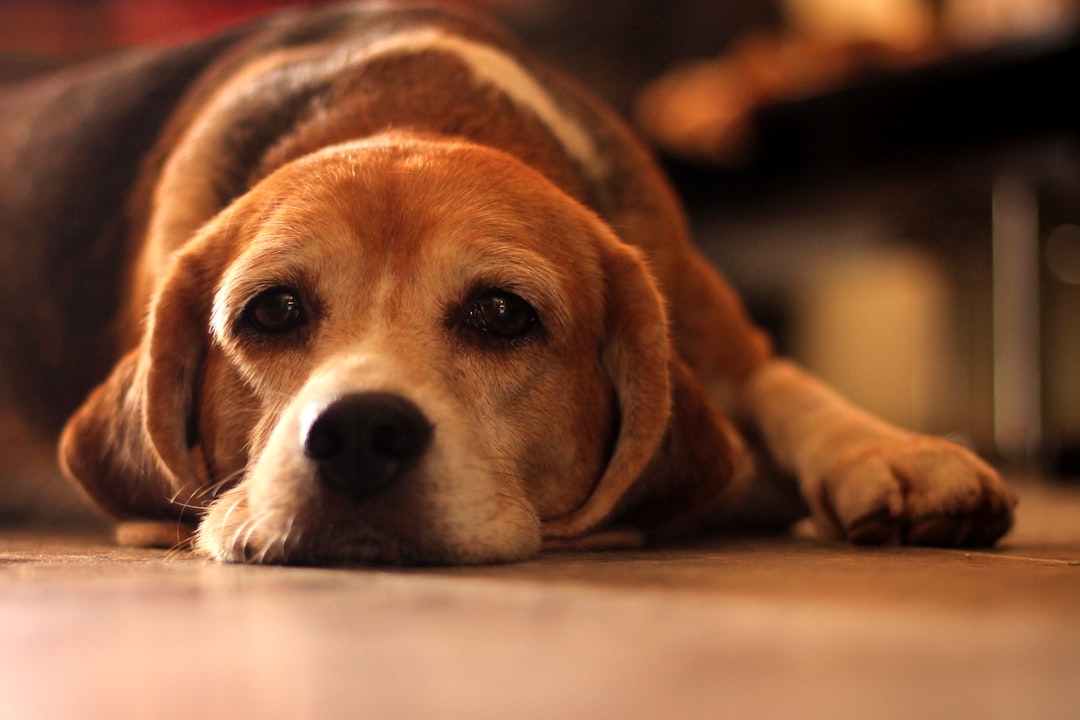
Photo by Jesús Boscán on Unsplash
If you own a breed at risk for IVDD, the best time to start prevention was the day you brought them home — and the second-best time is right now.
Most of what gets written about IVDD is aimed at owners who are already in crisis mode: a dog that can’t walk, decisions about surgery, weeks of crate rest. And I get it — that’s where the urgency is. But if you’re reading this because you have a dachshund, a French bulldog, a corgi, or another at-risk breed who is currently healthy, you’re asking exactly the right question at exactly the right time.
This article is specifically about primary prevention — what you can do before a first episode ever happens. If your dog has already had an IVDD episode and you’re trying to prevent a second one, the strategies overlap significantly, but I’d also point you toward IVDD Recurrence: The Odds & How to Prevent a Second Episode and Preventing IVDD Relapse: 5 Rules I Follow, which address the specific concerns of secondary prevention after a disc injury.
Why Do Certain Breeds Get IVDD?
IVDD risk is heavily genetic, and in many at-risk breeds it’s tied to a genetic mutation called CDDY (chondrodystrophy), which causes the discs in the spine to age and degenerate far faster than they should. In a healthy disc, the center (nucleus pulposus) stays gel-like and absorbs shock well. In a chondrodystrophic dog, those discs can begin calcifying in puppyhood and may herniate under surprisingly normal circumstances — a jump off the couch, a stumble on the stairs, even just sleeping in an awkward position.
You can read the full breakdown of the genetics in IVDD Genetics: CDDY, FGF4, and Chondrodystrophy Explained. What matters for prevention purposes is this: if your dog carries this mutation, their discs are structurally different. You can’t change that — but you can reduce the mechanical stresses that trigger a herniation.
- Dachshunds (highest known risk)
- French bulldogs and other brachycephalic breeds
- Corgis (Pembroke and Cardigan)
- Basset hounds
- Beagles
- Shih Tzus and Pekingese
- Cocker spaniels
- Chihuahuas
- Poodles and some poodle mixes
Step 1: Keep Your Dog Lean — This One Matters More Than Anything Else
Maintaining a healthy weight is the single most impactful thing you can do to reduce IVDD risk. Every extra pound your dog carries adds compressive load to their spine with every step, every landing from a jump, every turn of their body. For a dog whose discs are already structurally vulnerable, that cumulative stress matters.
The challenge is that the breeds most prone to IVDD — dachshunds especially — are also champion food-motivated dogs who can look perpetually underfed even when they’re at a healthy weight. Many owners, often with the best intentions, are unknowingly keeping their dogs overweight for years.
Ask your vet to do a body condition score (BCS) at every visit. This is a hands-on assessment of your dog’s fat coverage, scored on a 9-point scale. A score of 4 or 5 is ideal. You should be able to feel your dog’s ribs easily but not see them prominently. If weight is an issue, the Weight Loss Protocol for an IVDD Dog article covers this in much more detail.
## How Do Ramps and Furniture Access Reduce IVDD Risk?
Ramps reduce IVDD risk by eliminating the impact load that occurs every time a dog jumps down from a height. The landing force when a dog jumps from a bed or sofa can be several times their body weight, and that force travels directly through the spine. For a dog with vulnerable discs, repeated daily exposures to that impact add up over months and years.
The practical goal is simple: your dog should never jump on or off furniture unsupported. That means ramps or stairs to the bed, the couch, the car seat — every elevated surface they use regularly. This sounds straightforward, but implementation takes some adjustment, especially for dogs who have been jumping freely for years. Many dogs take a few days to accept a ramp; some need treats and patient coaxing.
A few things I hear from owners in the at-risk-breed community:
- For beds: A low-profile ramp with a non-slip surface works better than dog stairs, which encourage a similar launch-and-land pattern.
- For cars: This one is often overlooked. Getting in and out of an SUV is a significant landing impact. A ramp secured to the bumper is worth it.
- Gates: Block access to staircases, especially unsupervised. Even if your dog is careful going up, they’re rarely careful coming down.
- Allowing jumping on and off furniture “just this once”
- Using dog stairs instead of ramps — stairs still involve landing impact
- Forgetting the car as a daily impact source
- Assuming a young, healthy dog doesn’t need these modifications yet
Step 2: Switch From a Collar to a Harness
This one is simple and costs almost nothing to fix. A standard neck collar concentrates all leash pressure on the cervical (neck) spine whenever your dog pulls, lunges, or is corrected. For breeds prone to cervical disc disease — Yorkies, Chihuahuas, Shih Tzus, and others — this is a real concern. Even for thoracolumbar (mid-back) IVDD dogs, there’s no upside to that neck stress.
A well-fitted harness distributes pressure across the chest and shoulders instead. The one caveat is harness design: avoid harnesses with a chest strap that crosses directly over the shoulder joint, as these can interfere with normal gait mechanics. A Y-shaped chest piece that allows full shoulder movement is the better design. The Help ‘Em Up Harness is one we’ve used and recommend if you want something that distributes load well and gives you a handle for added support on walks.
## What Kind of Exercise Is Safe for IVDD-Prone Dogs?
Low-impact, controlled exercise is safe and beneficial for IVDD-prone dogs. The goal is building core and paraspinal muscle strength — those muscles act as a natural brace for the spine — while avoiding the sudden, high-impact movements most likely to trigger a herniation.
Good activities:
- Leash walks on flat surfaces: Steady, controlled movement that builds muscle without jarring impact
- Gentle swimming: Excellent core and hindquarter conditioning with essentially zero spinal impact — if your dog tolerates water
- Cavaletti exercises: Walking over low poles placed on the ground, which promotes body awareness and engages stabilizing muscles
- Controlled sniff walks: Letting your dog explore at a slow pace is lower impact than fast-paced play
Activities to limit or avoid:
- Off-leash fetch: The sudden acceleration, turning, and landing from catches is exactly the kind of movement that stresses vulnerable discs
- Rough play with other dogs: Hard to control and often involves sudden twisting and jumping
- Agility courses: The jumps and weave poles are high-impact, especially for chondrodystrophic breeds
- Repetitive stair use: Going up is less concerning than coming down, but neither is zero-risk
Short, regular walks are generally better than one long run. Consistent muscle conditioning is the goal — not cardiovascular intensity.
- Daily 15–20 minute leash walks on flat ground
- Ramps to all elevated surfaces, consistently enforced
- Harness instead of collar every time, even for short trips
- Body weight check every 3–4 months
- No jumping — not even “just once”
Step 3: Consider Genetic Testing
If you own a breed where IVDD is common but you’re not sure of your individual dog’s actual risk, genetic testing can provide useful information. The CDDY (chondrodystrophy) mutation is the primary genetic marker associated with Hansen Type I IVDD — the fast-onset, explosive disc herniation most commonly seen in small breed dogs.
A DNA test can tell you whether your dog carries zero, one, or two copies of the FGF4 retrogene insertion that causes chondrodystrophy. Dogs with two copies (homozygous) have both a higher risk of IVDD and a higher likelihood of earlier onset. This doesn’t change what you do — the prevention strategies above apply regardless — but it can sharpen your vigilance and inform decisions about exercise intensity, insurance, and whether to pursue more aggressive prevention habits.
Genetic testing is also critical for breeders. Breeding two CDDY-positive dogs dramatically increases the odds of producing puppies at elevated IVDD risk. The IVDD DNA Testing article covers this in much more detail if you’re considering breeding or purchasing a puppy from an at-risk breed.
A Word on What Prevention Can and Can’t Do
I want to be honest with you here, because I think false reassurance doesn’t help anyone. If your dog carries the CDDY mutation, no amount of ramp training or weight management erases that risk entirely. Some dogs with perfect preventive care will still have an episode. The genetics matter, and they’re not something you can lifestyle away completely.
What you can do is shift the odds. You can reduce the frequency of high-impact loading on discs that are already structurally compromised. You can make sure that when a herniation does happen, it’s happening in a body that’s lean and muscular rather than one that’s deconditioned. You can remove preventable risk factors so that if your dog does get IVDD, there’s less reason to wonder what you could have done differently.
That peace of mind is worth something. And for some dogs, consistent prevention genuinely delays or prevents a first episode entirely.
Related Reading
- Dachshund IVDD: At What Age Does It Start?
- IVDD Recurrence: The Odds & How to Prevent a Second Episode
- What Causes IVDD in Dogs?
Frequently Asked Questions
Can IVDD be completely prevented in at-risk breeds?
Not entirely — IVDD has a strong genetic component, especially in chondrodystrophic breeds like dachshunds and French bulldogs. But lifestyle changes like maintaining a healthy weight, using ramps, and avoiding high-impact jumping can meaningfully reduce the risk and delay onset.
At what age should I start IVDD prevention habits?
Start immediately, regardless of your dog’s age. The earlier you implement ramps, weight management, and low-impact exercise habits, the better. For puppies of at-risk breeds, these habits should be in place before the dog ever learns to jump on furniture.
Is a harness really safer than a collar for IVDD-prone dogs?
Yes — especially for cervical (neck) disc protection. A collar concentrates leash pressure on the neck, which can stress the cervical spine. A well-fitted harness distributes that force across the chest and shoulders instead, with no downside for spinal health.
Does genetic testing for IVDD actually help prevent the disease?
Genetic testing identifies whether your dog carries the CDDY mutation associated with chondrodystrophy and Hansen Type I IVDD. It doesn’t prevent the disease, but it clarifies your dog’s true risk level so you can make informed decisions — and it’s especially valuable for breeders trying to reduce the mutation’s prevalence across generations.
This guide is based on real experience and should be used alongside professional veterinary care. Always consult your veterinarian before starting any new treatment or making changes to your dog’s care plan.