Hansen Type I vs Type II IVDD: The Two Very Different Diseases
Type I IVDD strikes fast in small breeds; Type II creeps up in large dogs. What I learned about why they differ — and why treatment isn't one-size-fits-all.
Hansen Type I and Type II IVDD are not just two ends of the same spectrum — they are mechanically different diseases that tend to strike different breeds, at different ages, in different ways.
When Heidi was diagnosed with IVDD, the neurologist used terms I’d never heard before. Hansen Type I. Disc extrusion. Chondrodystrophic. I nodded along and then went home and spent hours trying to understand what any of it actually meant. If you’re in the same boat, this article is what I wish someone had handed me.
What Actually Happens Inside the Disc?
To understand the two types, you need a quick picture of what a healthy disc looks like. Every disc in your dog’s spine has two main parts: a tough fibrous outer ring called the annulus fibrosus, and a gel-like center called the nucleus pulposus. Together, they act as shock absorbers between the vertebrae.
In IVDD, those discs degenerate — they harden, weaken, or change in ways that make them fail. But how they fail is where Type I and Type II part ways completely.
Type I: The Sudden Rupture (Disc Extrusion)
In Hansen Type I, the disc’s inner gel hardens prematurely — a process called chondroid metaplasia. The nucleus essentially calcifies. When that hardened material finally breaks through the outer ring, it doesn’t ooze — it explodes. Disc material is forcefully ejected into the spinal canal, often very suddenly, sometimes from something as minor as a sneeze or jumping off the couch.
The spinal cord doesn’t just get compressed. It gets hit, rapidly, by material that was never supposed to be there. That concussive element is part of why Type I can cause such severe, rapid neurological damage.
Type II: The Slow Bulge (Disc Protrusion)
In Hansen Type II, the outer fibrous ring of the disc gradually weakens and bulges outward — like a tire developing a slow leak. The inner nucleus stays mostly contained, but the disc itself pushes into the spinal canal over weeks, months, or even years.
Because this pressure builds slowly, the spinal cord has more time to adapt. This is why Type II dogs often don’t show obvious symptoms until the compression has become quite significant — and why owners frequently describe looking back and realizing their dog had been “off” for a while before any clear crisis.
Which Breeds Get Which Type?
The breed pattern for each type is so consistent that a neurologist can often make an educated guess about the type before imaging is even done — based purely on the dog in front of them.
Chondrodystrophic breeds (Type I):
- Dachshunds: by far the most commonly affected — they account for a disproportionate share of Type I cases
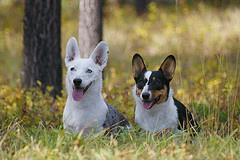
- Corgis and Basset Hounds: long-backed and similarly predisposed
- French Bulldogs and Beagles: also carry elevated risk
- Shih Tzus, Pekingese, and Cocker Spaniels: particularly prone to cervical (neck) disc extrusions
Chondrodystrophic dogs were selectively bred for shortened limbs — but the same genetic mutation that changes their bone structure also affects how their disc cartilage ages. Their discs can begin degenerating as early as 1–2 years old, which is why Type I IVDD so often strikes dogs in their prime.
If you have one of these breeds, our complete breed-by-breed risk guide covers the data in more detail.
Large and giant breeds (Type II):
- German Shepherds: probably the most cited large-breed example
- Labrador and Golden Retrievers
- Doberman Pinschers (particularly prone to cervical Type II)
- Rottweilers, Mastiffs, and similar large-bodied breeds
Type II can also occur in non-chondrodystrophic small breeds as they age — it’s not exclusively a large-dog disease. But the typical picture is an older large-breed dog with a gradual onset of weakness. For a deeper look at how this plays out in large-breed dogs specifically, the article on IVDD in large breeds covers it well.
How Do the Symptoms Differ?
The speed of symptom onset is the biggest real-world clue.
Type I symptom pattern:
- Often appears within hours, sometimes overnight
- Dog may have been fine yesterday and is now unable to walk
- Yelping, hunching, trembling, reluctance to move
- Can progress rapidly through the IVDD grades — from mild pain to paralysis within 24–48 hours in severe cases
- Loss of deep pain sensation is possible in the most severe extrusions
Type II symptom pattern:
- Weeks to months of subtle changes: slower on walks, reluctant to use stairs, slightly wobbly in the rear
- Owners often attribute early signs to “normal aging”
- Pain may be less prominent than weakness
- Rarely reaches full paralysis as quickly as Type I — but long-standing compression can cause permanent damage if ignored
- A dog that seems “stiff” or “slowing down” for weeks deserves a vet check — not just rest
- Gradual weakness in the hind legs is never just aging — it warrants neurological evaluation
- By the time a Type II dog is obviously struggling, the compression may have been building for months
Why Does the Type Matter for Treatment?
Type I, with its acute compression and concussive spinal cord injury, is more likely to require emergency surgery — especially if the dog is rapidly declining or has lost the ability to walk. Time matters enormously. Our article on IVDD surgery vs. conservative care walks through the decision framework, but in general: the faster the decline, the stronger the case for surgical decompression.
Type II, because it compresses more slowly, is more often managed conservatively — at least initially. Anti-inflammatory medications, activity restriction, weight management, and physical therapy are commonly tried first. Surgery is still an option if function is significantly impaired or the dog continues to decline despite medical management, but it’s rarely the first conversation.
- Type I: sudden onset, disc extrusion, chondrodystrophic breeds, ages 3–7, often surgical
- Type II: gradual onset, disc protrusion, large breeds, ages 7+, often conservative first
- Both types require professional diagnosis — imaging (usually MRI) confirms the location and severity
- Both types can recur — prevention matters regardless of which type your dog has
How Are They Diagnosed?
Neither type can be confirmed by physical exam alone. Your vet can assess neurological function — reflexes, deep pain sensation, ability to walk — and assign a grade (1 through 5) based on severity. But to actually see where the disc is, what type of compression is occurring, and whether surgery is possible, imaging is required.
MRI is the gold standard for both types. It shows soft tissue detail that X-rays simply can’t provide. CT myelogram is another option. You can read about how each imaging type works if you want the full breakdown before your vet visit.
Understanding the 5 IVDD stages is also worth doing before any specialist appointment — it helps you understand what your vet means when they describe your dog’s current function and prognosis.
Does Prognosis Differ Between Type I and Type II?
In broad terms, yes — though the individual dog’s situation (which grade they’re at, how fast they declined, whether deep pain sensation is present) matters more than the type alone.
Type I carries a wider range of outcomes. A Grade 1 or 2 Type I dog who’s caught early and managed conservatively often does very well. A Grade 4 or 5 dog who lost deep pain sensation rapidly has a more guarded prognosis, and the window for surgical intervention is narrow.
Type II dogs, because the compression has been slower and the spinal cord has had more time to adapt, sometimes recover more function than you’d expect from the degree of visible disability. However, long-standing compression can cause permanent cord changes that don’t fully reverse even after surgery.
- If your dog has sudden onset weakness, yelping, or dragging legs: treat it as an emergency and call your vet immediately
- If your dog is showing subtle rear-end weakness over weeks: schedule a neurological evaluation — don’t wait
- Know your breed’s risk profile so you’re watching for the right pattern
- Ask your vet specifically whether Type I or Type II is suspected — it changes the treatment conversation
A Note on Prevention and Recurrence
One thing both types share: once a dog has had an IVDD episode, the risk of future episodes is real. Chondrodystrophic dogs typically have multiple discs that have undergone the same degeneration — so a dachshund who herniated one disc at age 4 still has other discs that could follow. Large-breed dogs with Type II may develop compression at multiple levels over time.
Weight management, avoiding high-impact activities, and appropriate home modifications all apply regardless of type. The mechanics differ, but the caregiving principles often overlap.
Related Reading
- Which Dog Breeds Get IVDD Most? The At-Risk Breed List
- IVDD in Large Breeds: The Slow-Onset Type II Most Owners Miss
- The 5 IVDD Stages Explained: Symptoms & Recovery Odds
Frequently Asked Questions
What is the main difference between Hansen Type I and Type II IVDD?
Type I involves sudden disc material extrusion into the spinal canal, mostly in young to middle-aged small breeds like dachshunds. Type II involves slow disc protrusion in older large-breed dogs. The speed of onset, severity, and treatment approach differ significantly between the two.
Which dog breeds are most at risk for Hansen Type I IVDD?
Chondrodystrophic breeds — those bred with shortened limbs — carry the highest risk. Dachshunds, Corgis, Basset Hounds, French Bulldogs, Beagles, Shih Tzus, and Cocker Spaniels are among the most commonly affected.
Can Type II IVDD be treated without surgery?
In many cases, yes. Because Type II progresses slowly and often causes moderate rather than severe deficits, conservative management with activity restriction, anti-inflammatory medications, and physical therapy is frequently attempted first. Surgery becomes more likely if the dog’s function is significantly impaired or declining.
Is Type I or Type II IVDD more serious?
Type I is generally considered more acute and potentially more dangerous in the short term because it can cause sudden paralysis and rapid loss of deep pain sensation. However, Type II’s gradual progression can lead to significant long-term disability if not managed. Both types deserve prompt veterinary attention.
Understanding the difference between these two types won’t make a diagnosis any easier emotionally — but it will help you have a better conversation with your vet, ask the right questions, and understand why your dog’s care plan looks the way it does. That knowledge matters. It’s one of the first things I wish I’d had.
This guide is based on real experience and should be used alongside professional veterinary care. Always consult your veterinarian before starting any new treatment or making changes to your dog’s care plan.