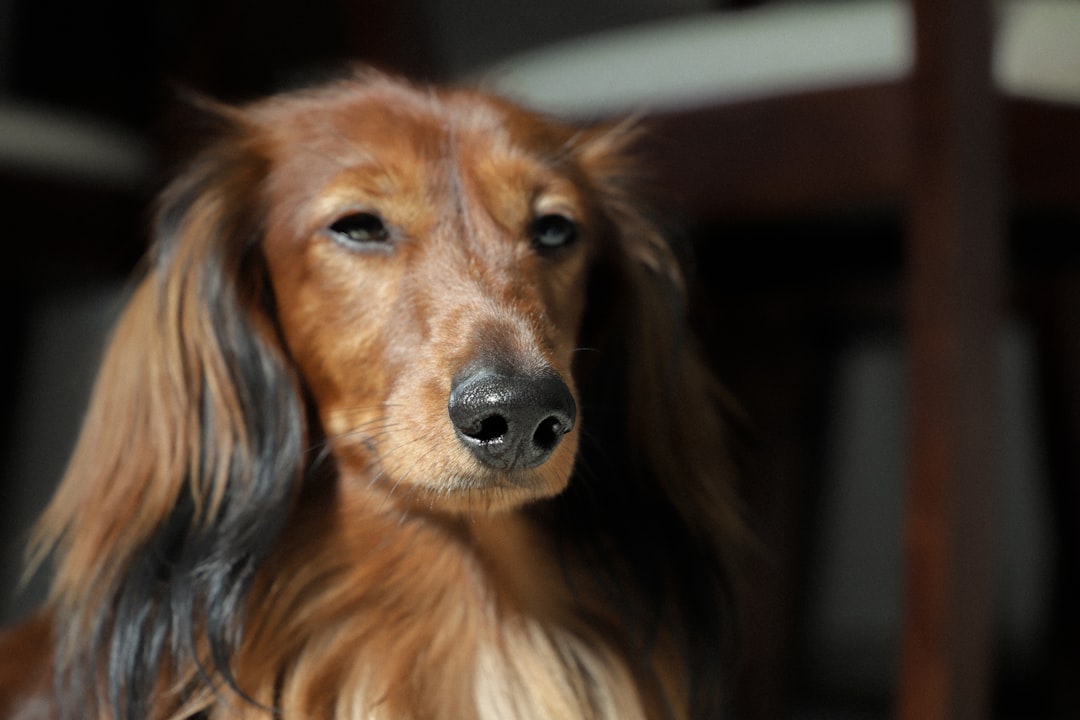
If your rescue’s DNA test came back with dachshund in the mix, that result carries real medical weight — and most owners have no idea what to do with it.
So your rescue mutt came back as 38% dachshund on a DNA test, or maybe you can just tell from looking at her — the long body, the short stubby legs, that unmistakable low-rider silhouette. Now you’re wondering: does that mean she could get IVDD? The short answer is yes, it’s a real possibility. The longer answer is more nuanced, and getting it right matters.
Why Does Dachshund Ancestry Specifically Matter for IVDD?
Dachshunds have some of the highest IVDD rates of any breed because of a specific genetic mutation — not just because of their body shape. The mutation is called CDDY (chondrodystrophy, associated with the FGF4 retrogene insertion). As the American College of Veterinary Surgeons explains, chondrodystrophic breeds are predisposed to Hansen Type I IVDD, where discs calcify early and can rupture suddenly with significant force.
CDDY is a dominant trait. You only need one copy to have calcified discs. That’s the part that surprises most mixed-breed owners: the dachshund genetics don’t get “watered down” in a predictable, proportional way. If your dog inherited a CDDY allele from their dachshund parent, their discs behave like a chondrodystrophic dog’s discs — period.
This is explained in much more detail in our article on the genetics of IVDD: CDDY, FGF4, and chondrodystrophy explained, which is worth reading if you want the full science. The short version for mixed-breed owners: your dog’s percentage of dachshund ancestry on a breed panel tells you about coat color, ear shape, and general proportions. It doesn’t tell you whether they inherited the disc-calcification gene.
How Do I Know If My Doxie Mix Carries CDDY?
The only way to know for certain is a specific genetic test — not just a breed identification panel. Standard breed DNA tests (like the basic Embark or Wisdom Panel breed kits) identify ancestry, not disease-linked variants. To check for CDDY specifically, you need a health-focused panel.
Embark’s health kit tests for the FGF4 retrogene insertion associated with CDDY, and the UC Davis Veterinary Genetics Laboratory offers targeted testing as well. Your vet can help you order or interpret these results. The test will return one of three results:
- CDDY/CDDY: Two copies of the mutation. Highest disc calcification risk.
- CDDY/N: One copy (heterozygous). Disc calcification still occurs; this is what most dachshund mixes with one dachshund parent would carry.
- N/N: No copies. The dog did not inherit the CDDY variant and has a non-chondrodystrophic disc type.
If your dog tests CDDY/N or CDDY/CDDY, have a direct conversation with your vet about IVDD prevention and monitoring. It’s also worth discussing whether your dog qualifies for IVDD genetic testing resources to understand what the result means for their individual care.
- CDDY testing tells you whether your dog’s discs are predisposed to early calcification
- It does not predict when, whether, or how severely IVDD will actually occur
- A CDDY/N result means real risk — not half the risk of a CDDY/CDDY dog
- Breed percentage from ancestry panels is not a substitute for targeted health testing
Chihuahua-Doxie vs. Lab-Doxie: Does Body Size Change the Risk?
This is one of the most common questions I hear from owners of doxie mixes, and the honest answer is: yes, but not in the way you might expect.
The Small-Mix Picture (Chihuahua, Rat Terrier, Pomeranian Crosses)
A chihuahua-dachshund mix (sometimes called a “chiweenie”) is often small-bodied, relatively low to the ground, and may look structurally similar to a dachshund. If this dog inherits CDDY, the calcified discs are sitting inside a body that already shares a lot of the mechanical stresses of a purebred doxie. The risk profile here can be quite high.
Additionally, chihuahuas are themselves sometimes affected by disc problems. So a chiweenie may have disc vulnerability coming from two directions in the family tree, depending on the individual genetic lottery.
The Large-Mix Picture (Lab, Golden, Shepherd Crosses)
A lab-dachshund mix is a different story structurally. These dogs are often medium to large, with longer legs and a less exaggerated spine-to-leg ratio. That body structure means there’s less of the mechanical pressure concentration that makes dachshunds so vulnerable.
But — and this is important — if the dog inherited CDDY, their discs are still calcified. A heavier body sitting on top of calcified discs creates its own kind of risk. Many rehab vets note that larger chondrodystrophic dogs sometimes present with Type I IVDD that looks more “atypical” because owners (and sometimes vets) aren’t expecting it. The dog doesn’t look like a dachshund, so the presentation surprises everyone.
The practical takeaway: a lab-doxie mix with CDDY is not at the same risk level as a purebred dachshund, but they’re not safe either. They’re in a genuinely middle category that deserves real attention.
- Reluctance to jump onto furniture or go down stairs
- Hunched or roached posture along the back
- Yelping or flinching when touched along the spine
- Wobbling, stumbling, or dragging a back paw
- Sudden inability or refusal to move
Reading Your Dog’s DNA Test Results for IVDD Risk
Most owners get a breed ancestry report and assume that’s the full picture. Here’s how to actually interpret what you’ve got:
Breed percentage: Tells you what breeds contributed to your dog’s ancestry. Useful for understanding body type, temperament, and what health conditions to research. Does not tell you which specific variants were inherited.
Health markers (if included): Some test kits include disease-variant testing. Check whether your kit tested for “CDDY” or “chondrodystrophy” specifically. If the report doesn’t mention it, it probably wasn’t tested.
Body conformation: Look at your actual dog. Short legs relative to body length, a noticeably elongated torso, and low-slung build are all signs of chondrodystrophic body type — and those physical traits correlate with (though don’t perfectly predict) CDDY inheritance.
Family history: If you adopted from a rescue and have any information about the dog’s parents or siblings, ask. A litter that included obviously dachshund-shaped puppies suggests CDDY was in the mix.
If you’re working with incomplete information — which is most rescue situations — discuss your specific dog’s proportions, breed results, and health history with a vet who’s familiar with chondrodystrophic breeds. A brief neurological screening exam can sometimes catch subtle signs you’d miss at home.
- Ask your vet specifically about CDDY testing if not included in your kit
- Start implementing low-impact lifestyle habits now: ramp access, no jumping, controlled play
- Learn the early IVDD warning signs so you catch anything quickly
- Make sure your pet insurance is in place before any symptoms appear
What to Do With This Information Right Now
Knowing your dog might carry CDDY doesn’t mean living in fear — it means living smart. The same prevention principles that protect purebred dachshunds apply to doxie mixes: keep your dog at a lean body weight, avoid repetitive high-impact jumping, use ramps or steps to access furniture and car seats, and learn what early IVDD symptoms look like.
IVDD symptoms in dogs is a good place to start — bookmark it and check back if you ever notice your dog acting “off” around their back or neck. Early intervention makes a significant difference in outcomes.
It’s also worth having a frank conversation with your vet about the five IVDD stages so you understand the spectrum of what IVDD can look like. A dog caught at Stage 1 or 2 has very different options than one who presents at Stage 4 or 5.
For doxie mixes who need support during any mobility challenges, a good rear-support harness like the Help ‘Em Up Harness is worth keeping in mind — it’s what we used with Heidi and it made a real difference in her post-episode care.
One last thing: don’t let a DNA test result spiral you into anxiety. Plenty of doxie mixes live long, healthy lives with no IVDD episodes at all. The goal here is informed ownership — catching problems early if they happen, and reducing risk where you can.
Related Reading
- Genetics of IVDD: CDDY, FGF4, and Chondrodystrophy Explained
- Dachshund IVDD Guide: Risk, Signs & Prevention
- IVDD Symptoms in Dogs: Early Warning Signs to Catch Now
Frequently Asked Questions
If my dog is only 25% dachshund, do they still have IVDD risk?
Yes, potentially. CDDY is a dominant trait, which means inheriting even one copy from a dachshund parent can affect disc calcification — regardless of what the other 75% of the mix contributes. A vet evaluation and possibly genetic testing is worth discussing.
What DNA test results should I look for to assess IVDD risk?
Look for CDDY/CDDY or CDDY/N results, which indicate your dog carries at least one copy of the chondrodystrophy mutation linked to Type I IVDD. Embark and the UC Davis Veterinary Genetics Laboratory both offer testing for these variants.
Can a large-breed doxie mix (like a lab-dachshund) still get IVDD?
Yes, though the picture is more complicated. A larger body size puts more mechanical stress on the spine differently than a dachshund’s body does, but if the dog inherited CDDY from the dachshund side, their discs may still calcify early. The risk profile is genuinely different from a purebred dachshund, but it is not zero.
What are the earliest signs of IVDD in a dachshund mix I should watch for?
Early signs include reluctance to jump up or go down stairs, a hunched or roached back posture, yelping when touched along the spine, and subtle changes in gait like wobbling or toe-dragging. If you notice any of these, contact your vet promptly — IVDD can escalate quickly.
This guide is based on real experience and should be used alongside professional veterinary care. Always consult your veterinarian before starting any new treatment or making changes to your dog’s care plan.