Dog Suddenly Won't Jump or Do Stairs? Could Be IVDD
Refusing the couch, hesitating at the stairs, pausing before that one jump — the early disc-pain signs most owners miss until it's too late.
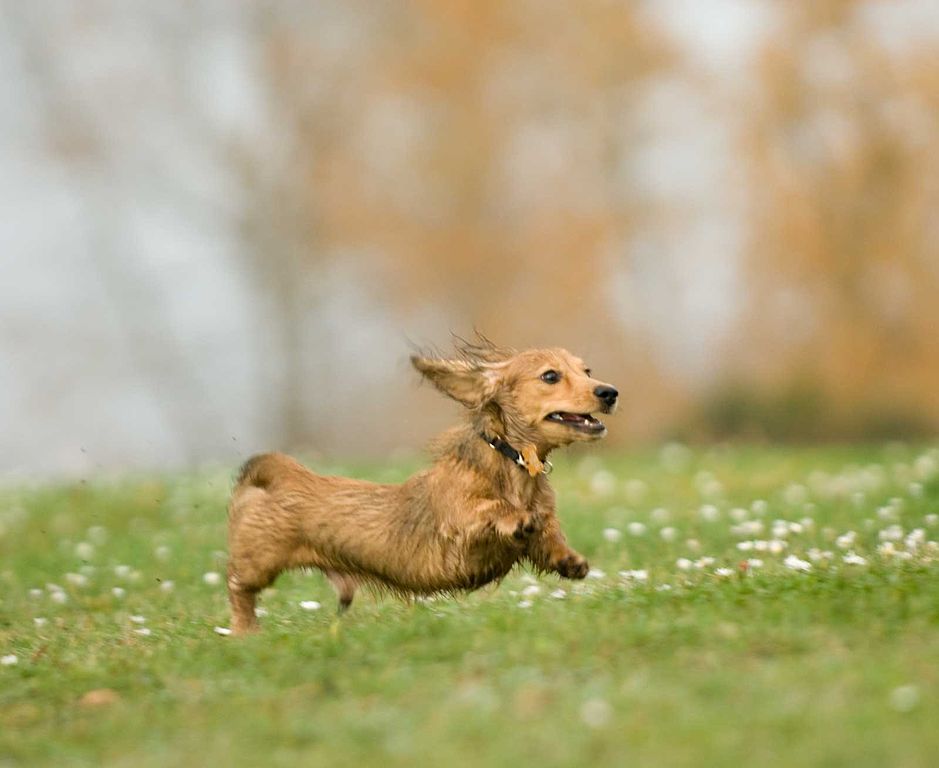
A dog who suddenly refuses to do the thing they did a hundred times last week is telling you something — and ignoring it is one of the most common ways IVDD gets caught too late.
This is the article I wish I’d read three years ago. Heidi started hesitating at the couch about a week before her IVDD episode. She’d put her front paws up, look at me, and then drop back down. I assumed she was being weird. I made jokes about it. Then one morning she couldn’t stand at all, and I spent the next eighteen months understanding what my dog had been trying to tell me that whole time.
The thing about IVDD is that it almost never starts with paralysis. It starts with little behavioral changes that read as quirky to an owner and as urgent to a neurologist. Refusing a jump they used to make. Pausing at the bottom of the stairs. Walking around the bed instead of getting on it. These are the early disc-pain signs, and they are the cheapest tickets to catching IVDD before it becomes an emergency.
Why a Refusal to Jump Is a Real Symptom
When a dog jumps, their spine compresses and flexes through the takeoff and landing. When a dog goes up or down stairs, the spine repeatedly extends and contracts. Both motions stress the intervertebral discs. A healthy dog doesn’t notice this. A dog whose disc is starting to bulge notices acutely — and after a few painful tries, they learn to avoid the motion that hurts.
That avoidance behavior is what an owner sees as “weird,” “lazy,” or “she just doesn’t feel like it today.” From the dog’s side, it’s pure self-protection. They are trying to tell you, in the only language they have, that something hurts when they move that way. This is the window to act.
Refusing to jump is one way this surfaces. A sudden change in how a dog actually walks is another, and it carries a much wider differential — why is my dog suddenly wobbly runs through the other causes of an abrupt gait change, several of which are not a disc at all and are handled very differently.
The earliest disc-pain behaviors I see in the disabled-dog community look something like this:
Refusing to jump up onto furniture they used to clear easily. This is often the first sign. The dog approaches, gauges the jump, and then walks away. Sometimes they whimper softly. Often they don’t — they just give up.
Hesitating at stairs, especially going down. Going up is hard work but doesn’t usually trigger pain; going down requires controlled spinal flexion and that’s where the disc-bulge dog flinches.
Walking around the bed or couch. A dog who used to leap onto the bed for sleep, now circling the room, finding a different spot, settling on the rug. Easy to read as “weird mood.” Often something else.
Refusing to look up or down. A neck-disc bulge makes the dog reluctant to extend their neck. Watch how they take a treat from your hand held high vs held low. If they used to look up and now they back away from a held-up treat, that’s a neck-disc signal.
Backing away from being picked up. Picking a dog up around the middle puts pressure on the spine. A dog who used to want to be held and now ducks the lift is telling you something.
The Other Signs That Should Push You Toward a Vet Today
The refusal to jump or do stairs is most concerning when paired with other signs. Alone, it could be a sore muscle, a bad sleep, or the start of arthritis. With any of the following, treat it as an active spinal issue:
- Hunched or arched back posture, especially around the middle
- Trembling that looks like full-body shivering even when warm
- Yelping when picked up, even gently
- Stiff neck, refusing to look up or down
- Reluctance to eat — pain takes appetite first
- Any actual weakness in the back legs (knuckling, dragging, collapsing)
- Loss of bladder or bowel control
If you see the jump refusal plus any of these, this is not “wait and see” territory. Read the full IVDD emergency signs guide and get to a vet immediately, ideally a neurologist.
What Else Could It Be?
Not every reluctant jumper has IVDD. There are real alternatives, and a good vet visit is what sorts them out. A few honest possibilities:
Aging joints and early arthritis. Senior dogs slow down. A 10-year-old who has always jumped to the couch and now thinks twice is showing normal aging. The tell is gradual onset over months and no associated pain signs.
A pulled muscle or strain. Dogs absolutely strain themselves the same way we do. A weekend of hard play, an awkward landing, a slip on the floor — any of these can cause a brief muscle soreness that resolves in 1-3 days. The tell is short duration and no recurrence.
Hip dysplasia. Especially in young large breeds. The dog avoids motions that load the hip joint. The tell is hip pain on examination and visible bunny-hopping. Covered in detail in IVDD vs Arthritis & Hip Dysplasia.
Cruciate ligament tear. A torn knee ligament makes jumping painful. The tell is usually a visible limp on the affected leg, not bilateral reluctance.
Anxiety or association. If a dog hurt themselves on a specific jump once, they may avoid that exact jump forever even after they’ve healed. The tell is a very specific avoidance rather than a general reluctance.
The reason the IVDD answer matters so much is that all the other causes give you days or weeks to figure it out. IVDD can give you hours. The asymmetric cost of waiting on the wrong diagnosis is why this article exists.
What to Do Right Now if You’re Seeing This
If your dog is suddenly refusing jumps or stairs but seems otherwise normal, you have a few smart moves to make before the vet visit:
- Restrict jumping and stairs entirely. No couch, no bed, no car jumps. Carry the dog or block access.
- Watch for any of the same-day vet signs (hunching, trembling, yelping, weakness) and escalate immediately if they appear.
- Note when the refusal started, what motions trigger it, and any associated behaviors. This is gold for the vet visit.
- Keep the dog calm and minimize all stress on the spine until you have a diagnosis.
- Book a vet appointment. Same-day or next-day for a chondrodystrophic breed; within a week for any other breed if symptoms are mild and isolated.
The hardest part is that “wait and see” feels reasonable when the dog seems mostly fine. The dog ate breakfast, wagged when you came home, did everything normal except that one jump. The brain rationalizes. The dog seemed weird for a day and then was normal again. Months later, after a serious episode, you remember that one weird day and realize that was the early warning you missed.
I am not trying to scare you. I am trying to give you the article I needed three years ago. If your dog just started refusing a jump, your job is not to panic. Your job is to take it seriously enough that you’ll find out what’s going on — and to keep them off the stairs and the furniture until you do.
Related Reading
- IVDD Emergency Signs: When to Rush Your Dog to the Vet
- Dog Suddenly Dragging Back Legs? Causes, Urgency, and What to Do
- IVDD vs Degenerative Myelopathy: Two Different Roads
Frequently Asked Questions
How long after refusing to jump should I see a vet?
Same day if you also see signs of pain — hunched posture, yelping, trembling, reluctance to eat, or any rear-leg weakness. Within a few days if it’s just the reluctance and your dog seems otherwise normal, but don’t let it stretch into a “wait and see” that lasts weeks. Catching IVDD early gives you the most options.
Could it just be aging or a sore muscle?
It could, especially in a senior dog. Aging joints, a strained muscle, or even a bad sleep can all cause a one-day jump refusal. The difference is duration and pattern: a sore muscle resolves in 1-3 days. Aging changes are gradual. A persistent new refusal that lasts beyond a week, or one that’s paired with any other sign of pain, deserves a vet visit.
Should I let my dog jump again once they seem better?
Not until you’ve ruled out a disc problem. If it really was just a muscle strain, normal activity is fine after a few days of rest. But if it was an early disc bulge, jumping again can push the disc further and turn a small problem into a surgical emergency. When in doubt, restrict jumping and stairs until a vet has examined the dog.
Are some breeds more at risk for this?
Yes. Chondrodystrophic breeds — dachshunds, corgis, beagles, basset hounds, French bulldogs, shih tzus — are at significantly higher IVDD risk and at younger ages. Larger breeds can also develop IVDD but tend to get the slower Type II form. Any sudden refusal to jump in one of these breeds is worth treating seriously even if everything else looks normal.
This guide is based on real experience and should be used alongside professional veterinary care. Always consult your veterinarian before starting any new treatment or making changes to your dog’s care plan.