Dachshund IVDD: At What Age Does It Start?
When dachshunds typically develop IVDD, early warning signs by age, and prevention strategies through each life stage.
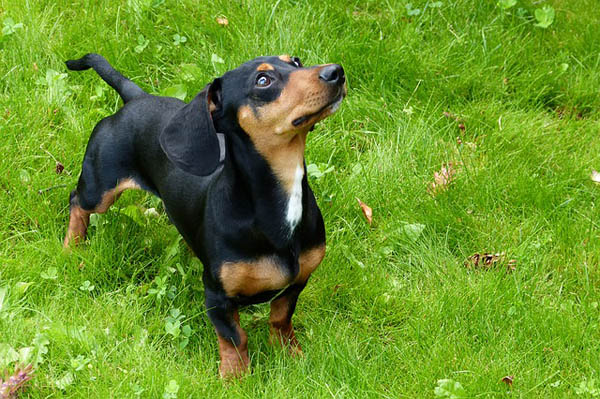
Photo by Artem Beliaikin on Unsplash
If you share your home with a dachshund, IVDD isn’t a distant possibility. It’s a real risk that every owner deserves to understand before a crisis happens.
Heidi is a Smooth dachshund, and I’ll be honest: I didn’t fully understand what I was getting into when I brought her home. I knew dachshunds had “back problems,” but nobody explained why, or what the warning signs looked like before a crisis. This guide is what I wish I’d had on day one.
Why Are Dachshunds So Prone to IVDD?
Dachshunds are prone to IVDD because of a genetic mutation, called CDDY (chondrodystrophy), linked to an FGF4 retrogene insertion on chromosome 12, that causes the soft, shock-absorbing centers of their spinal discs to calcify and harden prematurely, sometimes before age 2. Once calcified, those discs can no longer absorb impact properly, and when one finally ruptures under pressure, the disc material pushes into the spinal cord.
This is called a Hansen Type I herniation: a sudden, often violent rupture that can cause anything from pain to full paralysis. It’s different from the slower, age-related disc degeneration seen in larger breeds (Hansen Type II).
The mutation behind chondrodystrophy is actually the same one responsible for the dachshund’s short legs. It’s a defining feature of the breed, which means every dachshund carries some degree of this disc vulnerability. There’s no version of a dachshund that’s genetically immune to IVDD.
Does Coat Type Change the Risk?
Research suggests it does, at least somewhat. Based on published studies, including work cited by VCA Hospitals and others in veterinary literature, Standard Smooth dachshunds appear to have the highest lifetime IVDD risk, with some estimates around 24%. Standard Wire-haired dachshunds appear to be at the lower end, with some studies citing rates closer to 7%. Long-haired dachshunds fall somewhere in between.
The reasons aren’t fully understood, but the wire-haired variety may have slightly different disc calcification patterns. That said, lower risk is not no risk — every dachshund owner should take IVDD seriously regardless of coat type.
- Lifetime prevalence: roughly 19–25% across all dachshunds
- Standard Smooth: highest risk, estimated ~24% in some studies
- Standard Wire-haired: lowest risk, estimated ~7% in some studies
- Typical onset: first episode most often between ages 4–7
- Disc changes begin: as early as age 1–2, before symptoms appear
What Does IVDD Actually Feel Like for a Dachshund?
IVDD in dachshunds typically presents first as pain, often before any obvious weakness or wobbling appears. The spinal cord compression causes inflammation and pressure that dogs experience as neck or back pain, which they can’t communicate the way we would.
Here’s what that tends to look like in practice:
- Hunched or “roached” back: Your dog’s spine curves upward, like they’re bracing against pain. This is one of the most consistent early signs.
- Reluctance to jump or use stairs: A dog who used to leap onto the couch without a second thought suddenly hesitates or refuses entirely.
- Yelping when touched: Especially along the spine, when picked up, or seemingly out of nowhere.
- Stiff, slow, or wobbly gait: They may look drunk in the back end, or place their paws unevenly.
- Sudden refusal to move: Some dogs just stop. They plant themselves and won’t budge.
- Hind-leg weakness or crossing: Wobbling, stumbling, or crossing the back legs while walking.
- Loss of bladder or bowel control: A later sign indicating more serious spinal cord compression.
- Dragging or knuckling of the back paws
- Sudden inability to stand or walk
- Loss of bladder or bowel control
- Complete paralysis of hind legs
- No response when you pinch between the back toes (loss of deep pain sensation)
These are emergencies. See the IVDD emergency signs guide immediately and get to a vet — hours matter.
How Do I Protect My Dachshund From an IVDD Episode?
You can’t change your dog’s genetics, but you can absolutely change their daily risk profile. The goal of prevention is reducing the forces that compress those already-vulnerable discs, and the habits below are consistently recommended by rehab veterinarians and neurologists for chondrodystrophic breeds.
1. Eliminate Jumping — Completely
This is the single most important daily change you can make. Jumping down from furniture or out of cars creates a jarring, high-impact landing that puts enormous stress on calcified discs. One bad landing can be enough to trigger a rupture.
Teach “no jump” as a household rule from puppyhood. If your dachshund has already had an episode, the rule becomes even more non-negotiable.
2. Install Ramps for Every Access Point
Ramps (or low steps designed for small dogs) for the sofa, bed, and car let your dachshund get where they want to go without the impact of jumping. Read our detailed guide on IVDD dogs and stairs for setup advice.
3. Keep Their Weight Lean — It’s Not Optional
Excess weight puts constant load on the spine. A dachshund who’s even a pound or two overweight is carrying extra strain across all those compromised discs, every single hour of every day. Weight management is one of the clearest ways to directly reduce spinal stress. If you’re not sure what Heidi, or your own dachshund, should weigh, ask your vet for a target body condition score. We also cover what we feed Heidi if you’re looking for practical food guidance.
4. Use a Harness, Never a Collar
Walking a dachshund on a collar puts traction force directly on the neck when they pull, exactly where you don’t want pressure on a spine that’s already at risk. A well-fitted harness distributes force across the chest and shoulders instead. After Heidi’s IVDD diagnosis, switching to a harness became permanent. The Help ‘Em Up Harness was what we used during her recovery, and we’ve never gone back to a collar for walks.
5. Support Their Back When Lifting
Always support both the chest and hind end when picking up your dachshund — never let their body dangle or spine sag. This applies to every person in your household, including kids and guests.
- No jumping on or off furniture, beds, or vehicles
- Ramps installed at all regular access points
- Body condition checked — dachshund at a lean, healthy weight
- Harness (not collar) for all walks and outings
- Proper two-point lift support every time you pick them up
- Hard floors covered with rugs or mats for traction
What to Do at the First Sign of Symptoms
The moment you suspect IVDD, even if your dog is just acting stiff or hunched, the right move is to restrict activity immediately and call your vet. Do not “wait and see” for more than a few hours.
Here’s the basic protocol:
- Restrict movement now. No running, jumping, stairs, or play. Crate rest if you have it set up; confined to a small, safe area if you don’t.
- Call your vet. Describe exactly what you’re seeing: the posture, the gait, any yelping. Most vets will want to see a dog showing neurological signs same-day.
- Don’t give human pain medication. No ibuprofen, no acetaminophen — these are toxic to dogs. Only give medication prescribed by your vet.
- Carry them carefully. Support both ends. No leash-walking to the car.
If your dog is already showing hind-leg weakness or loss of bladder control, that’s an emergency, not a “call in the morning” situation. See our first aid guide for IVDD and our ER vet decision guide for help making that call.
IVDD caught early, before significant spinal cord damage has occurred, gives your dog the best odds for a full recovery, whether through conservative management or surgery. Speed genuinely matters here.
Living with a dachshund means accepting that IVDD will always be somewhere in the back of your mind. That’s not doom and gloom — it’s just reality, and knowing what to watch for puts you miles ahead of where most owners are when the first episode hits. Heidi has taught me more about dachshund spines than I ever expected to know. I hope what we’ve learned together saves someone else from the panicked midnight googling that I did.
Related Reading
- IVDD Emergency Signs: When to Rush Your Dog to the Vet
- Preventing IVDD Relapse: 5 Rules I Follow
- Just Diagnosed with IVDD: What to Do in the First 72 Hours
- It’s worth knowing where your nearest board-certified neurologist is before you need one — our IVDD specialist finder lets you search by state.
Frequently Asked Questions
What percentage of dachshunds get IVDD?
Research suggests somewhere between 19% and 25% of dachshunds will experience a clinically significant IVDD episode in their lifetime, making it the highest-risk breed by a significant margin. Standard Smooth dachshunds appear to be at the higher end of that range, while Standard Wire-haired dachshunds show lower rates — around 7% in some studies.
At what age does IVDD typically show up in dachshunds?
Most dachshunds who develop IVDD show their first episode between ages 4 and 7, though it can occur outside that window. Disc degeneration actually begins much earlier, often before age 2, but symptoms don’t usually appear until middle age when a disc finally herniates.
What are the first signs of IVDD in a dachshund?
Early IVDD signs in dachshunds include a hunched or roached back, reluctance to jump or use stairs, yelping when touched along the spine, suddenly refusing to move, and a stiff or wobbly walk. Many owners first notice their dog seems “off” before any obvious limb weakness appears.
Can IVDD in dachshunds be prevented?
IVDD cannot be fully prevented in dachshunds because the underlying genetic mutation affects every disc in the spine. However, daily management, including keeping the dog lean, eliminating jumping, using ramps instead of stairs, and using a harness instead of a collar, is widely believed to reduce the risk of a disc rupturing and causing a crisis.
This guide is based on real experience and should be used alongside professional veterinary care. Always consult your veterinarian before starting any new treatment or making changes to your dog’s care plan.