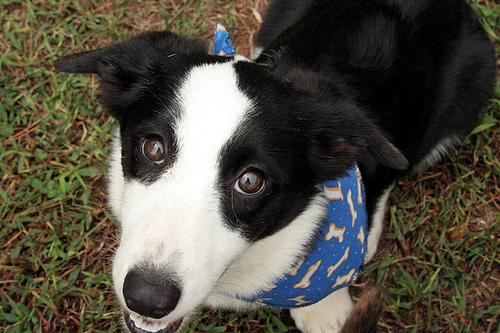
If you share your life with a corgi, IVDD is one health risk you cannot afford to ignore — their beautiful long backs and short legs are the exact combination that puts their spines at serious risk.
Why Are Corgis So Vulnerable to Spinal Problems?
Corgis are chondrodystrophic dogs — a category that includes Dachshunds, French Bulldogs, and Basset Hounds — meaning their bodies carry a mutation that affects how cartilage develops throughout their entire body, including the cartilage inside their spinal discs. In healthy discs, a jelly-like inner core (called the nucleus pulposus) absorbs shock between vertebrae. In chondrodystrophic dogs, that core starts calcifying — turning hard and brittle — often before the dog is even five years old. When a disc hardens, it loses its shock-absorbing ability and becomes far more likely to bulge or rupture under normal daily stress.
Now add the corgi’s body shape: a long spine stretched over short, stumpy legs. That length means more vertebrae, more discs, and more mechanical stress distributed along a back that wasn’t built for it. Every jump off the couch, every sprint across the backyard, every excited leap at the front door is loading a spine that’s already working against a genetic disadvantage.
What makes corgis a particular concern — more so than many other chondrodystrophic breeds — is that they carry risk at both ends of the spinal disease spectrum. They’re vulnerable to IVDD and they’re one of the breeds most commonly affected by degenerative myelopathy. These two conditions can look similar in some respects, and sorting out which one you’re dealing with matters enormously.
- Chondrodystrophic genetics cause early disc degeneration — often starting before age 5
- Long spine increases the number of discs at risk across the thoracolumbar (mid-to-lower back) region
- Peak IVDD risk is typically between ages 3 and 8
- Corgis are also one of the high-risk breeds for degenerative myelopathy (DM)
What Are the Early Warning Signs of Corgi IVDD?
The earliest IVDD signs in corgis are easy to dismiss as a minor muscle strain or a “bad day” — which is exactly why so many owners don’t catch it until things escalate.
The most telling early signs include yelping or flinching when touched along the back or neck, a hunched posture where the dog holds its back tense and arched, reluctance to jump onto furniture or go up stairs, and subtle weakness or wobbliness in the hind legs. Some corgis will slow down on walks, seem “off” without any obvious reason, or repeatedly look back at their hindquarters.
Signs That Require an Immediate Vet Visit
If any of the following appear, don’t wait for a morning appointment. These suggest moderate to severe disc herniation and can worsen within hours.
- Dragging or knuckling the back paws: The paw folds under rather than landing flat — a sign of nerve involvement
- Loss of bladder or bowel control: Sudden incontinence in a previously house-trained dog is a serious neurological red flag
- Complete hind-leg paralysis: The dog cannot support its own weight on its back legs at all
- Severe, inconsolable pain: Shaking, panting, refusing to move, crying without relief
For a full breakdown of what each escalation point means, the 5 IVDD stages explained walks through the grading system that vets use to assess severity and guide treatment decisions.
- Sudden hind-leg paralysis or inability to bear weight
- Complete loss of bladder or bowel control
- Your corgi cannot feel you pinching its back toes (loss of deep pain sensation)
- Severe, worsening pain that won’t settle
IVDD vs. Degenerative Myelopathy: The Overlap That Confuses Everyone
This is where corgi owners face a genuinely complicated situation. Both IVDD and DM can cause hind-leg weakness and eventual paralysis in corgis — but they are completely different diseases with very different treatment approaches, and mixing them up leads to the wrong care plan.
IVDD is a mechanical problem: a disc ruptures or bulges, compressing the spinal cord. It typically comes on fast — sometimes over the course of a single afternoon — and it’s usually painful. Dogs yelp, guard their backs, and may deteriorate rapidly. It’s treatable, either through strict crate rest and medication in milder cases, or surgery in more severe ones.
Degenerative myelopathy is a progressive neurodegenerative disease. It usually starts with subtle hind-end weakness that creeps in slowly over weeks to months, and it is generally painless. There is no cure, and the focus shifts to maintaining quality of life and mobility for as long as possible. For an overview of how DM unfolds in affected dogs, understanding degenerative myelopathy is a good starting point.
Here’s the honest complication: a corgi can have both. An older corgi with known DM may also develop an IVDD episode. A younger corgi showing hind-leg weakness might have early DM being mistaken for a mild disc issue, or vice versa. This is exactly why a veterinary neurologist and MRI — not just an X-ray — are often necessary to get a clear answer. X-rays can show calcified discs, but they can’t show the actual disc herniation or its effect on the spinal cord. MRI is the gold standard.
| Feature | IVDD | Degenerative Myelopathy |
|---|---|---|
| Onset speed | Sudden (hours to days) | Gradual (weeks to months) |
| Pain present? | Usually yes | Usually no |
| Age of onset | Often 3–8 years | Usually 8+ years |
| Treatable? | Yes (surgery or crate rest) | No cure; supportive care |
| Affects bladder? | Yes, in moderate-severe cases | Yes, in later stages |
 disableddogcare.com
How Can I Reduce My Corgi’s IVDD Risk?
No amount of prevention eliminates the genetic reality, but there are concrete steps that reduce stress on your corgi’s spine and may help delay or reduce the severity of an episode.
Weight management: Extra pounds mean extra load on every disc in that long back. Keeping your corgi lean is probably the single highest-impact lifestyle choice you can make. Even a pound or two of excess weight on a small dog adds measurable strain over years of daily activity.
Ramp and step access: If your corgi regularly jumps off the couch, bed, or car — teach them to use a ramp instead. The impact of landing from even a modest height multiplies the force on the lumbar discs. From what I’ve seen in the disabled dog community, this habit change is the one most owners wish they’d made earlier.
Avoid high-impact activities: This doesn’t mean no exercise — it means choosing lower-impact activities. Leash walks, gentle play, and controlled movement are far better for a long back than fetch, rough wrestling, or agility jumps.
Harness over collar: For walks, a well-fitted harness distributes pressure across the chest instead of concentrating it at the neck. For dogs who need physical support during a recovery or wobbly phase, a good rear-support harness like the Help ‘Em Up Harness gives you something solid to hold without putting strain on the spine.
Learn to handle your corgi correctly: When lifting a corgi, support the full length of the body — front and rear together. Never let the back legs dangle. This matters more than many owners realize.
- Use ramps or steps to all furniture your corgi uses regularly
- Keep your corgi at a healthy weight — ask your vet what the ideal range is
- Switch to a harness for all walks and outdoor time
- Support front and back when lifting your corgi
- Skip high-impact play (fetch, jumping, rough wrestling)
What Happens If My Corgi Is Diagnosed with IVDD?
The treatment path depends on the severity grade at diagnosis. Mild cases (Grade 1 and some Grade 2) are typically managed with strict crate rest — genuinely strict, meaning 4–6 weeks of highly restricted movement — combined with anti-inflammatory medications and pain management. This is harder than it sounds; corgis are active, social dogs who do not take kindly to confinement.
More severe cases, especially Grade 3 and above, are more likely to need surgical decompression for the best chance of recovery. Surgery removes the disc material pressing on the spinal cord and is most effective when performed quickly after the episode. The window matters — that’s why getting to a neurologist fast when signs escalate is so important.
For families weighing those options, IVDD surgery vs. conservative care lays out the clinical comparison honestly, without pushing one path over the other.
If your corgi does lose bladder or bowel function during an episode, that part of care becomes its own challenge. Bladder expression for IVDD dogs walks through the hands-on technique that many caregivers end up needing to learn.
- Hind-leg weakness or paralysis of any kind
- Loss of bladder or bowel control
- Rapidly worsening symptoms over a few hours
- Uncertainty about whether you’re seeing IVDD or early DM
Related Reading
- The 5 IVDD Stages Explained: Symptoms & Recovery Odds
- IVDD Symptoms in Dogs: Early Warning Signs to Catch Now
- Understanding Degenerative Myelopathy in Dogs
- It’s worth knowing where your nearest board-certified neurologist is before you need one — our IVDD specialist finder lets you search by state.
Frequently Asked Questions
Are corgis prone to IVDD?
Yes. Both Pembroke Welsh Corgis and Cardigan Welsh Corgis are chondrodystrophic breeds, meaning they carry a genetic mutation that causes abnormal cartilage development — including in the spinal discs. This puts them at significantly higher lifetime risk for IVDD compared to most other breeds.
How do I know if my corgi has IVDD or degenerative myelopathy?
IVDD typically comes on suddenly — often over hours — and usually causes pain, yelping, and a hunched posture. DM progresses slowly over months and is typically painless. A neurological exam and MRI are the most reliable ways to distinguish the two, but the speed of onset is your first clue.
What are the earliest signs of IVDD in corgis?
Early signs include reluctance to jump or climb stairs, yelping when touched along the back, a hunched or tense posture, and subtle hind-leg wobbliness. Many owners initially think their corgi just overdid it at the park — which is why it’s worth calling your vet any time these signs appear together.
Can IVDD in corgis be managed without surgery?
In milder cases (Grades 1–2), strict crate rest combined with anti-inflammatory medication is often effective. More severe cases — especially Grade 3 and above — are more likely to need surgery for the best chance of a full recovery. Your vet or a veterinary neurologist can help you weigh the options based on your dog’s specific grade.
Corgis are resilient, spirited dogs — and that spirit can actually work against them, because they’ll push through discomfort that should be a signal to slow down. Knowing what you’re looking for, keeping their weight in check, and having a vet you can call quickly when something feels off: those three things together make a real difference. You don’t have to be an expert — you just have to be paying attention.
This guide is based on real experience and should be used alongside professional veterinary care. Always consult your veterinarian before starting any new treatment or making changes to your dog’s care plan.