Back Pain or Hips? IVDD vs Arthritis & Hip Dysplasia
Stiff, slow, reluctant to jump — symptoms overlap heavily. How to tell IVDD from arthritis or hip dysplasia, and why the right diagnosis matters.
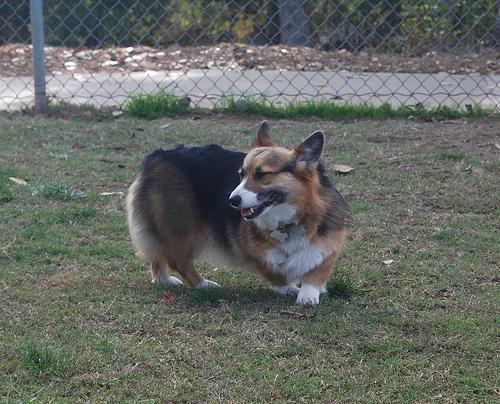
A stiff senior dog who hesitates on stairs can be telling you three different stories, and the right one determines whether you have weeks to work this out or hours.
The first time I noticed Heidi being slow on the couch, I assumed it was age. She was eight, after all. A friend had a dachshund who turned creaky around the same age, and her vet had called it “early arthritis.” So I shrugged it off. Two weeks later, I was driving to an emergency neurologist at midnight because she could not stand up. The thing I thought was arthritis was actually IVDD, and the difference between those two cost me time I did not have.
The hard part about back pain, hip pain, and disc disease in dogs is how much they look like each other from the outside. The dog moves slower. They hesitate at stairs. They are reluctant to jump on the bed. Maybe they yelp once when you pick them up. Most owners and even many general-practice vets default to “it’s probably arthritis.” Sometimes that’s right. Sometimes it’s a miss that costs a dog their mobility.
Why the Three Conditions Look So Similar at First
All three end up affecting how a dog moves, and the early symptoms read almost the same to an untrained eye. A reluctant jumper. A slow walker. A dog who used to bound up the stairs and now waits at the bottom. Owners notice the behavior change before they notice the underlying mechanism, and the behavior change is identical across all three diseases.
The underlying problem is wildly different, though.
Arthritis is joint inflammation. It builds up over years from wear-and-tear, prior injuries, weight stress, or just being a large breed dog who has used their joints a lot. The cartilage that cushions the joint thins and roughens. Movement hurts because bone is grinding closer to bone. The classic pattern is stiffness after rest that loosens up as the dog warms up.
Hip dysplasia is structural. The hip joint did not form correctly during growth, so the ball doesn’t sit cleanly in the socket. This causes early arthritis in the affected joint, plus mechanical instability. It often shows up in young large-breed dogs (a 2-year-old lab walking like a senior) but can also creep in over time. The classic pattern is “bunny hopping” with the rear legs and a reluctance to use stairs. Owners often ask whether they can confirm it by hand at home — can you feel hip dysplasia in a dog answers that, and the short version is that what you can feel is suggestive but never diagnostic.
IVDD is a spinal disc problem. The cushioning disc between two vertebrae bulges or ruptures, and the material presses on the spinal cord. This causes pain at the affected spot in the back or neck, and quickly can cause neurological symptoms — weakness, dragging, paralysis — because the spinal cord controls everything below it. The classic pattern is sudden onset, hunched posture, and yelping when touched. Read more in the IVDD emergency signs guide.
Getting the distinction right matters because treatment diverges immediately afterwards. A hip dysplasia dog may be a candidate for conservative options like acupuncture for hip dysplasia, while an acute IVDD dog needs confinement and a vet the same day — and applying the wrong plan costs time that the disc case does not have.
The Three Signals That Help You Tell Them Apart
How fast did it come on?
Arthritis builds. If you can pinpoint the moment your dog “started being slow,” it was almost certainly building for months and you just noticed it on that day. Hip dysplasia in young dogs is gradual too, though usually obvious by age 1 to 2. IVDD strikes. Dogs go from fine to dragging in hours, sometimes in minutes. If your dog was running yesterday and unable to stand today, you are not looking at arthritis.
Is there pain, and where?
Arthritis hurts at the affected joint and shows up as stiffness, reluctance, and gradual mood changes. Hip dysplasia hurts when the hip is moved through its range — extending or rotating the back leg. IVDD hurts along the spine, especially when the back or neck is palpated, and dogs often cry out when picked up around the middle. A dog who flinches when you touch their spine, hunches their back, refuses to look up, or trembles with no obvious cause is sending a strong IVDD signal.
Does it look like weakness, or like reluctance?
This is the most important distinction and the most overlooked. Arthritis makes dogs slow. They can still bear weight on the affected legs; they just don’t want to. Hip dysplasia makes dogs awkward and weak in specific ranges of motion. IVDD makes dogs neurologically weak — the legs collapse, the paws knuckle over, the dog drags their back legs because the spinal cord can’t get the signal through. If you see actual weakness rather than reluctance, suspect a spinal cause and act fast.
- Sudden onset over hours, not weeks
- Yelping or crying when picked up
- Hunched, arched back posture
- Knuckling over on the back paws when walking
- Dragging the back legs entirely
- Loss of bladder control
- Trembling, hiding, or refusing food because of pain
Why Getting the Right Diagnosis Matters So Much
The treatment paths are completely different. Arthritis is managed long-term with weight control, joint supplements where appropriate, anti-inflammatories, low-impact exercise, and home modifications. Hip dysplasia ranges from medical management to specialized surgeries depending on severity and age. IVDD is potentially a surgical emergency — and the surgical window for the best outcomes is usually within the first 24 to 48 hours of severe symptoms.
A dog with arthritis put on the wrong “wait and see” plan loses maybe a week of comfort. A dog with IVDD put on the wrong “wait and see” plan can lose the surgical window and end up permanently paralyzed. The asymmetry of cost is huge, and it pushes the responsible answer toward “image early when in doubt.”
This is also where general-practice vets sometimes miss. Without a neurology workup or imaging, IVDD in a senior dog with concurrent arthritis can look exactly like the arthritis getting worse. If your gut says something is different from the normal slow decline, push for the workup. Ask specifically: “Could this be a disc problem rather than the arthritis getting worse?”
- “Is there pain when you palpate the spine, separate from the hips?”
- “If we suspect hip dysplasia, can we x-ray today to confirm?”
- “If the hips are clear and the dog is still weak in the rear, what’s the next step?”
- “When do we consider imaging the spine — MRI or CT?”
- “Should this be a neurology consult rather than just orthopedic?”
The Senior Dog Trap
Most senior dogs have arthritis. That’s just the math of aging joints. The trap is assuming that any new mobility issue in an old dog is just the arthritis getting worse. Senior dogs are also at risk for IVDD (especially the chondrodystrophic breeds — dachshunds, corgis, beagles, Frenchies), for degenerative myelopathy, for spinal tumors, and for a long list of less common but real conditions.
A 10-year-old dachshund with stiffness almost certainly has some arthritis. The question is whether something acute and disc-related is also happening underneath. The arthritis is the noise; you need to listen for the new signal. When that signal comes — when the change feels different, faster, or paired with new pain — you escalate. Better to image and find nothing than to assume and miss something.
When to Move Fast vs When You Have Time
Sudden onset with pain? That’s the IVDD pattern. Go now. Do not wait until tomorrow morning. Slow build with stiffness that improves as the dog warms up? That’s the arthritis pattern. Book a vet visit this week, but you have time. Young large-breed dog with bunny-hopping or visible awkwardness in the rear? That’s the hip dysplasia pattern. Book the orthopedic workup.
The hardest call is the middle ground — a senior dog with mild new weakness that isn’t obviously painful or obviously gradual. In that case, the safer move is to push for the more thorough workup. Spinal imaging gives you a definitive answer about IVDD; hip x-rays give you a definitive answer about dysplasia; and you don’t want to be guessing on either.
Related Reading
- Dog Suddenly Dragging Back Legs? Causes, Urgency, and What to Do
- IVDD Emergency Signs: When to Rush Your Dog to the Vet
- The arthritis care hub
- The hip dysplasia hub
Frequently Asked Questions
Can my dog have both arthritis and IVDD?
Yes, and it’s very common in senior dogs. Arthritis develops with age in most dogs; IVDD can hit any chondrodystrophic breed at any age. A 10-year-old dachshund with stiffness almost certainly has some arthritis, but the question is whether something acute and disc-related is also happening underneath. When in doubt, image.
How do vets tell IVDD from hip dysplasia?
On exam, hip dysplasia typically shows pain on hip manipulation — extending or rotating the hip joints. IVDD shows pain on spinal palpation along the back or neck. X-rays show hip dysplasia clearly. IVDD requires MRI or CT, since discs don’t show on plain x-rays. A neurology workup is needed if the hips look fine but the dog is still weak in the rear.
Does arthritis cause rear-leg weakness or just stiffness?
Arthritis mostly causes stiffness and reluctance to move, especially after rest. True rear-leg weakness — where the legs collapse, knuckle over, or drag — is unusual for arthritis alone and usually points to a neurological cause like IVDD or DM. If your arthritic dog suddenly can’t bear weight, get them seen quickly.
What’s the fastest way to know if it’s an emergency?
Look for sudden onset and pain together. Arthritis and hip dysplasia develop over months. IVDD can hit in hours. If your dog was fine yesterday and is in obvious pain or unable to walk today, treat it as a spinal emergency and get to a vet now. If the symptoms have been creeping in for weeks, you have time to book a proper workup but should still go.
This guide is based on real experience and should be used alongside professional veterinary care. Always consult your veterinarian before starting any new treatment or making changes to your dog’s care plan.