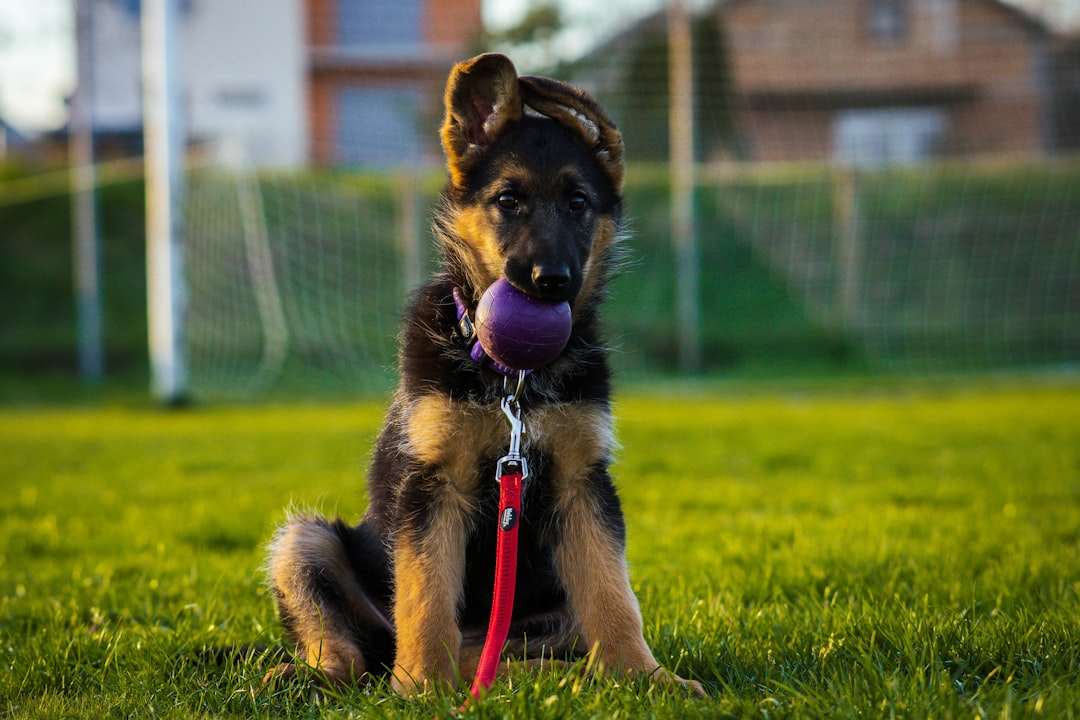
Working from home with a DM dog isn’t a perk — it’s a lifeline, and it comes with its own set of logistical challenges that nobody prepares you for.
There’s a version of this that sounds idyllic: working from home, dog at your feet, the two of you keeping each other company. And honestly, that part is real. The proximity matters — for your dog’s comfort and for your ability to monitor a condition that changes daily. But the reality also includes interrupted Zoom calls, bathroom schedules that run your mornings, and the low-grade emotional weight of watching someone you love decline from three feet away.
This article is for anyone trying to figure out how to actually do both — hold down a job and care for a dog with DM — without losing their mind or dropping the ball on either.
Setting Up Your Desk for a DM Dog
The single most practical thing you can do is get your dog’s rest area and your work area close enough that you don’t have to leave the room to check on them.
A DM dog in the early-to-mid stages can usually reposition themselves, but they’re slower about it and may get stuck. By the time they’re non-ambulatory, they can’t reposition at all. If your dog is out of eyeline, you won’t notice when they’ve been lying on one hip for two hours — and that’s when pressure sores start.
What works in practice:
- Dog mat or bed beside your desk: Position it so you can glance down without turning your head. An orthopedic memory foam bed is worth the investment here — a DM dog may spend 18+ hours a day lying down, and surface quality matters.
- Baby gate to define a safe zone: If your workspace is an open room, a gate lets you create a defined area for your dog without confining them to a crate. They stay near you; they don’t wander into a hallway and get stuck.
- Non-slip mat under the bed: DM dogs often try to stand or shift and slip on hard floors. Keeping the resting area on a textured mat prevents a lot of scrambling and falls. For more on this, the DM flooring and traction guide is worth reading.
- Leash clipped and hung nearby: When it’s time for a bathroom break, you want to be moving in 20 seconds, not hunting for gear.
The goal isn’t a perfect setup. It’s one where you can respond in under a minute and see your dog without standing up.
How Do You Build a Bathroom Schedule Around a Workday?
Most DM dogs in the early-to-mid stages need a bathroom trip roughly every 2–3 hours during the day, and that window shrinks as incontinence progresses. The tricky part is fitting those trips around a schedule you don’t fully control.
Here’s a framework that many DM caregivers land on:
- First trip before you sit down — before coffee, before email. This sets the clock.
- Mid-morning break around the 2-hour mark.
- Lunch break trip, which doubles as your own mental reset.
- Mid-afternoon break.
- End-of-workday trip before the evening routine starts.
That’s five trips across a standard workday. For some dogs, it’s enough. For others, especially those showing early incontinence signs, you’ll need to add one or two more or lean on belly bands or diapers between outdoor breaks.
- Put bathroom breaks on your calendar like meetings — block 10–15 minutes each
- Set a recurring phone alarm, not just a calendar notification, so you hear it away from your desk
- Add a 5-minute buffer before video calls for a quick trip so you’re not anxious mid-meeting
- Track the timing of any accidents to find your dog’s real threshold — it’s often shorter than you think
The calendar approach sounds overly structured, but it works. Once you stop trying to mentally track it and just have the alarm, the anxiety drops considerably.
Scheduling Meetings Around Your Dog’s Needs
This is where remote work gives you something in-office caregiving can’t: flexibility. You don’t have to ask permission to step away for eight minutes. But you do need to plan for it so you’re not making panicked choices mid-call.
A few things that help:
- Block the 30 minutes before any long or important meeting: Use that time for a bathroom trip, a position check, and making sure your dog has water. If something goes sideways — a fall, an accident — you have time to handle it.
- Keep calls to blocked windows when you can: If you have calendar control, batch your meetings in the morning or afternoon so you have a stretch of uninterrupted break-friendly time on the other end.
- Know your “pause” move: If your dog yelps or needs immediate attention during a call, have a one-sentence explanation ready. “I have a dog with a progressive neurological condition — I may need to step away for 60 seconds.” Most people receive this with immediate grace. You don’t owe anyone a long explanation, but having the sentence ready means you don’t freeze.
The Explaining DM Caregiving to Coworkers and Family guide goes deeper on this — including how to navigate a manager who isn’t getting it.
- Sudden yelping or whimpering (pain or distress)
- Visible straining without producing a bowel movement
- Getting stuck in a position they can’t get out of
- Abnormal breathing or panting at rest
- Any new or sudden neurological change — contact your vet same day
The Emotional Reality of Being This Close
Here’s something nobody tells you going in: being home with your DM dog all day is a gift and a weight at the same time.
The gift is real. You see the good moments. You’re there when your dog has a strong morning and wants to sniff around the yard. You catch the wobble before it becomes a fall. You give medications on time because you’re not racing home from an office. From what I’ve heard consistently from DM caregivers in this community, the dogs who have someone home with them tend to be less anxious and more comfortable — proximity is genuinely therapeutic for a dog who is scared and increasingly uncertain about their body.
The weight is also real. You’re never off. There’s no commute that gives you a natural break from it. The dog is always there, always needing something, and the decline is always visible. Some days you’ll look up from your screen and feel the grief arrive unexpectedly, right in the middle of a Tuesday.
- Give yourself one “off” period per day where caregiving is handled but you’re mentally released — even 30 minutes
- Name what you’re feeling without judgment; anticipatory grief is real and common with DM
- Connect with other DM caregivers online — the DM-specific caregiver forums are full of people who understand the particular weight of this
- If you’re hitting a wall, the article on anticipatory grief with a DM dog is worth reading
Boundaries That Actually Help
Working from home with a sick dog can blur into never not caregiving, which is unsustainable. A few practical limits help:
- Defined work hours: Not for your dog’s sake — for yours. When work ends, close the laptop. The boundary signals to your brain that it’s okay to shift modes.
- A “do not disturb” window: Pick one hour per day where you’re in focused work and your dog is settled, comfortable, and monitored passively. This only works if you’ve set your dog up well — a recent bathroom trip, a comfortable position, water within reach.
- Ask for help: If there’s another person in the house, even occasionally, split the midday trips. The physical act of handing off one break per day creates psychological breathing room.
- Don’t skip your own meals: Caregivers who are home all day often forget to eat because the dog’s schedule takes over. Your ability to care for your dog is contingent on your own function. That’s not a feel-good platitude — it’s logistics.
What Changes Stage by Stage
DM progresses, and your WFH setup needs to evolve with it. What works in Stage 1 — a mat near your desk, regular outdoor trips — won’t be sufficient in Stage 3.
| DM Stage | Key WFH Adjustment |
|---|---|
| Early (hind-end weakness, knuckling) | Eyeline positioning, traction underfoot, 3-hour bathroom schedule |
| Mid (significant weakness, partial incontinence) | Add belly bands or diapers, shorten break intervals, begin position-change timer |
| Late (non-ambulatory, full incontinence) | Full-time mat/bed setup, position changes every 90 min, pressure sore prevention as a daily task |
 disableddogcare.com
The DM progression timeline gives you a fuller picture of what to expect and when, so you can adjust your setup before you’re reacting.
Working from home doesn’t make DM easier to live through. But it does mean you’re there — for all of it, the hard parts and the good ones — and that counts for more than any perfect system.
Related Reading
- DM Dog Home Setup: Flooring, Ramps & Safe-Room Fixes
- Explaining DM Caregiving to Coworkers and Family
- Anticipatory Grief With a DM Dog: The Long Goodbye
Frequently Asked Questions
How often does a DM dog need a bathroom break during a workday?
Most DM dogs in the early-to-mid stages need a bathroom break every 2–3 hours. As incontinence progresses, you may need to schedule trips every 90 minutes or switch to diapers or belly bands between outdoor breaks. Watching for restlessness or circling is your best real-time cue.
Is it better to keep my DM dog in the same room while I work?
For most DM dogs, yes — proximity reduces anxiety and lets you catch changes in posture or distress quickly. A comfortable mat or orthopedic bed within eyeline of your desk is the practical sweet spot. If your dog is a loud sleeper or tends to demand attention, a nearby open-door adjacent room can work too.
How do I handle video calls when my DM dog needs me?
Block the 30 minutes before any important meeting for a bathroom trip, feeding, and a position check. Keep a sticky note on your monitor with your next scheduled break so you’re not mentally tracking it mid-call. Most coworkers are more understanding than you’d expect — and a brief explanation goes a long way.
What’s the biggest mistake WFH caregivers make with DM dogs?
Waiting too long between position changes. A DM dog that can’t reposition itself will develop pressure sores faster than you’d think — sometimes within a few hours on one side. Setting a recurring timer on your phone, even every 90 minutes, prevents a lot of skin problems down the line.
This guide is based on real experience and should be used alongside professional veterinary care. Always consult your veterinarian before starting any new treatment or making changes to your dog’s care plan.