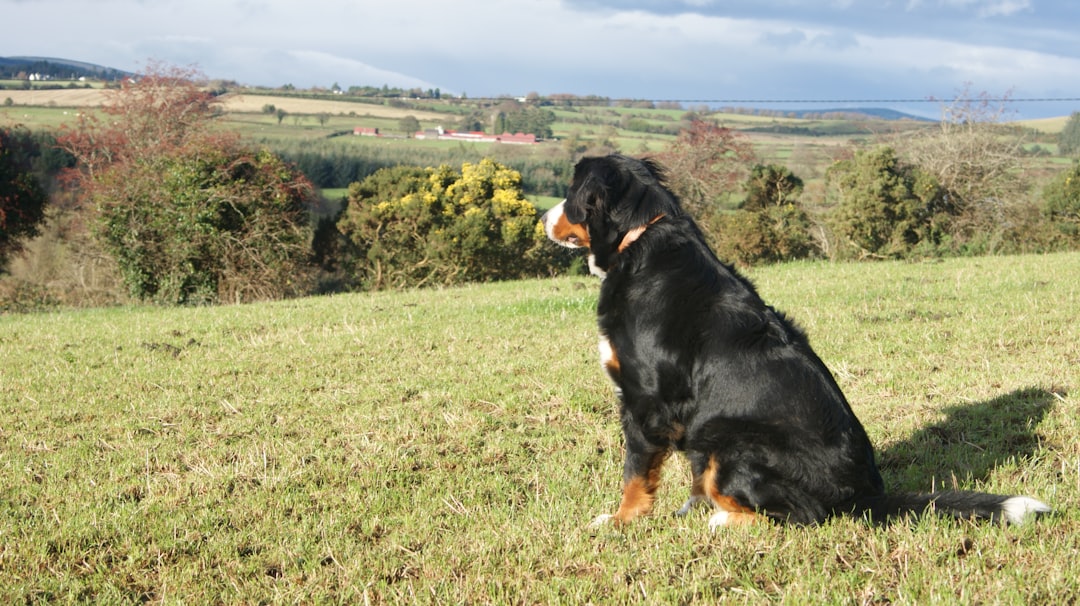
There is no universally right answer to the second dog question — only the answer that’s right for your dog, your grief, and your actual life right now.
The question comes up in two very different forms. The first: your DM dog is still here, still loved, still fighting, and someone suggests a companion might help — or you find yourself wondering. The second: your dog is gone, the house is too quiet, and you’re trying to figure out whether wanting another dog means you’ve grieved enough or not enough. Both versions deserve a real answer, not a platitude.
Should You Get a Second Dog While Your DM Dog Is Still Alive?
The short answer is: maybe — but it depends more on your current dog’s personality and stage than on whether companionship is generally good for dogs. A calm adult companion can offer gentle social enrichment for a DM dog who is still social and mobile. A bouncing puppy in the middle of late-stage DM care is a different story entirely.
Before you consider adding a dog to the household, it helps to think through a few honest questions about where you and your DM dog actually are right now.
What Stage Is Your DM Dog In?
Early-stage DM dogs — those who are still walking, still interested in the world, still have good days — are the best candidates for a companion introduction. Many DM dogs at this stage still enjoy gentle social interaction, and a calm second dog can add low-key company without stress.
Mid-to-late-stage DM changes the picture significantly. A dog who is non-ambulatory, managing incontinence, or dealing with end-stage respiratory decline needs stability and calm above almost everything else. Adding a new animal — with all the noise, energy, and adjustment that involves — can genuinely disrupt that calm. This doesn’t mean it’s impossible, but it means you need to be realistic.
The Honest Pros and Cons
Potential benefits of a second dog during DM progression:
- Social enrichment: A calm companion can offer your DM dog gentle presence and low-key interaction on good days.
- Caregiver support: Many owners find that having another dog to care for helps them stay emotionally anchored during an incredibly hard time.
- Transition: A second dog who is already in the home before a loss can ease the silence afterward.
Real risks to weigh:
- Caregiver bandwidth: DM caregiving is already intensive. Managing the full care routine — slings, bladder care, pressure sore prevention, medication schedules — leaves limited energy for a new dog’s training and adjustment period.
- Stress on your DM dog: A poorly matched companion, or one introduced too abruptly, can add anxiety to a dog who is already dealing with a degenerating nervous system.
- Timing regret: Some caregivers who add a dog during late-stage DM find themselves feeling guilty that they couldn’t give the new dog full attention. Others feel the opposite. Be honest about which camp you’re more likely to fall into.
- Ask your vet whether your DM dog’s current stress tolerance and social interest support a new companion
- Choose a dog with a known, calm temperament — ideally one that has been tested with senior or disabled dogs
- Plan the introduction carefully: neutral territory first, slow supervised meetings, separate feeding and sleep spaces
- Have a realistic plan for who covers DM care if the new dog requires extra attention in the first weeks
The Puppy Question: Is a Young Dog Ever a Good Match for a Senior DM Dog?
A puppy is almost never the right companion for a dog in active DM progression, and it’s worth being direct about that. Puppies need enormous amounts of supervision, training time, and physical energy — all of which are already stretched thin when you’re providing full disability care. More practically, puppies don’t read signals well. A DM dog who can no longer move away from an overeager puppy is in a genuinely stressful situation, even if nothing bad happens physically.
From what I’ve heard from many DM caregivers, the introductions that go best tend to involve adult dogs — ideally two to five years old, with a known history of calm behavior around older or disabled dogs. Rescue organizations that do thorough behavioral assessments can be genuinely helpful here because they can tell you how a dog actually behaves with vulnerable animals, not just how they behave in general.
If you have your heart set on a puppy, the more honest timing is usually after your DM dog has passed — when you have the bandwidth and the grief-softened perspective to give a young dog the full attention they need.
How Do You Know When You’re Ready for a New Dog After Loss?
Readiness after losing a DM dog isn’t a feeling that arrives cleanly. It usually shows up as a shift — from the acute, raw grief of the early weeks toward something softer. Not gone, but survivable. Many caregivers describe reaching a point where they can think about their dog with love instead of only with pain, and that’s often when the idea of a new dog starts to feel like something other than an escape hatch.
There is no correct number of months. Grief after a DM dog is complicated by the fact that anticipatory grief often begins long before the actual loss — which means some owners have done significant grieving before their dog even passes. For them, readiness may come sooner than it would for someone whose dog declined very quickly. Neither timeline is wrong.
What tends to be a useful internal check: Are you drawn to a new dog because you genuinely want to love another dog? Or because you can’t tolerate the quiet and the guilt and want something to fill it? The second reason isn’t shameful — it’s very human — but it’s worth naming honestly, because a new dog won’t actually resolve grief. What it can do is exist alongside grief, and eventually, alongside something that feels more like healing.
- You find yourself comparing every dog you meet unfavorably to the one you lost
- You’re considering a dog specifically because it resembles your previous dog
- You’re still in the phase where seeing other dogs causes acute pain rather than bittersweet warmth
- You haven’t yet processed the caregiving exhaustion — DM caregiving is depleting, and rest matters
The Guilt About “Replacing” Your Dog
Nearly every DM caregiver who considers getting another dog hits this wall. The feeling that wanting a new dog is a betrayal. That moving forward means leaving your previous dog behind. That the love you gave them had an expiration date.
It doesn’t work that way, and the caregivers I’ve spoken with in the DM community — the ones who have been through it — will tell you the same thing. A new dog doesn’t occupy the space your previous dog held. That space stays exactly as it is. What happens is that your heart turns out to be bigger than you thought.
The guilt tends to ease quickly once a new dog is actually in your home — not because you’ve stopped grieving, but because you realize that loving this new animal is completely compatible with still loving and missing the last one. In fact, many caregivers describe a new dog as feeling like an extension of what DM caregiving taught them: how to love patiently, how to stay present, how to find meaning in hard days.
- Give yourself permission to grieve without a deadline
- Talk to other DM caregivers who have been through loss — the community is genuinely understanding
- When you do feel ready, consider adult rescue dogs who need exactly the kind of steady, attentive care you already know how to give
- Let your previous dog’s memory inform how you love the next one — not replace it
A Note on Energy and Bandwidth
One thing that often gets underestimated: DM caregiving is exhausting in a way that takes time to recover from. If you spent months — sometimes years — managing a full disability care routine, you may be more depleted than you realize when the caregiving ends. Some owners rush into a new dog and find themselves overwhelmed not because they don’t love the dog, but because they haven’t yet rebuilt the reserves that intensive caregiving used up.
This isn’t a reason not to get a dog. It’s a reason to be kind to yourself about timing and to choose a dog whose needs match your current energy, not your peak-caregiver energy. An adult dog with a calm temperament who is already house-trained is a gentler re-entry than a puppy who needs to learn everything from scratch.
Related Reading
- Anticipatory Grief With a DM Dog: The Long Goodbye
- End-of-Life Planning for DM Dogs: A Honest Guide
- When You Resent the Caregiving: An Honest Piece
There’s no version of this decision that’s free of doubt. But if you’ve spent months or years caring for a DM dog — learning their signals, adapting your whole life around their needs, loving them through something genuinely hard — then you already know something important about yourself: you have more capacity for this kind of love than most people ever find out they do. Whatever you decide about a second dog, that capacity doesn’t go away. It’s yours to give, whenever you’re ready.
This guide is based on real experience and should be used alongside professional veterinary care. Always consult your veterinarian before starting any new treatment or making changes to your dog’s care plan.
Frequently Asked Questions
Is it okay to get a second dog while my DM dog is still alive?
It can be, but timing and your dog’s personality matter a lot. A calm, well-matched companion can offer your DM dog gentle enrichment, but a high-energy puppy may add stress to an already compromised dog. Talk honestly with your vet about your dog’s current comfort level and energy before committing.
How soon after losing a DM dog should I get another dog?
There’s no right timeline — some caregivers feel ready within months, others need a year or more. What matters is that the decision comes from genuine readiness, not from trying to escape grief. Many owners find that waiting until the acute grief softens (rather than disappears) is a helpful benchmark.
Will getting a new dog feel like I’m replacing my old one?
Almost every owner asks this, and the short answer is no — a new dog doesn’t replace your previous dog any more than a second child replaces the first. The guilt is real, but it tends to ease once you realize your capacity for love isn’t finite. Many DM caregivers find that loving a new dog feels like honoring what their last dog taught them.
Should I get a puppy or an adult dog after a DM dog?
Adult dogs (especially 2–5 years old) are often a gentler re-entry than puppies — they’re past the destructive phase and more predictable in temperament. Puppies demand enormous time and energy that you may still be rebuilding after a long DM caregiving stretch. Either can work, but be honest about your current bandwidth.