Stairs and DM Dogs: When to Block Them and What to Use Instead
Stairs become a real danger as DM progresses. Here's when to block them, which baby gates actually work, and how to manage a multi-level home as mobility…
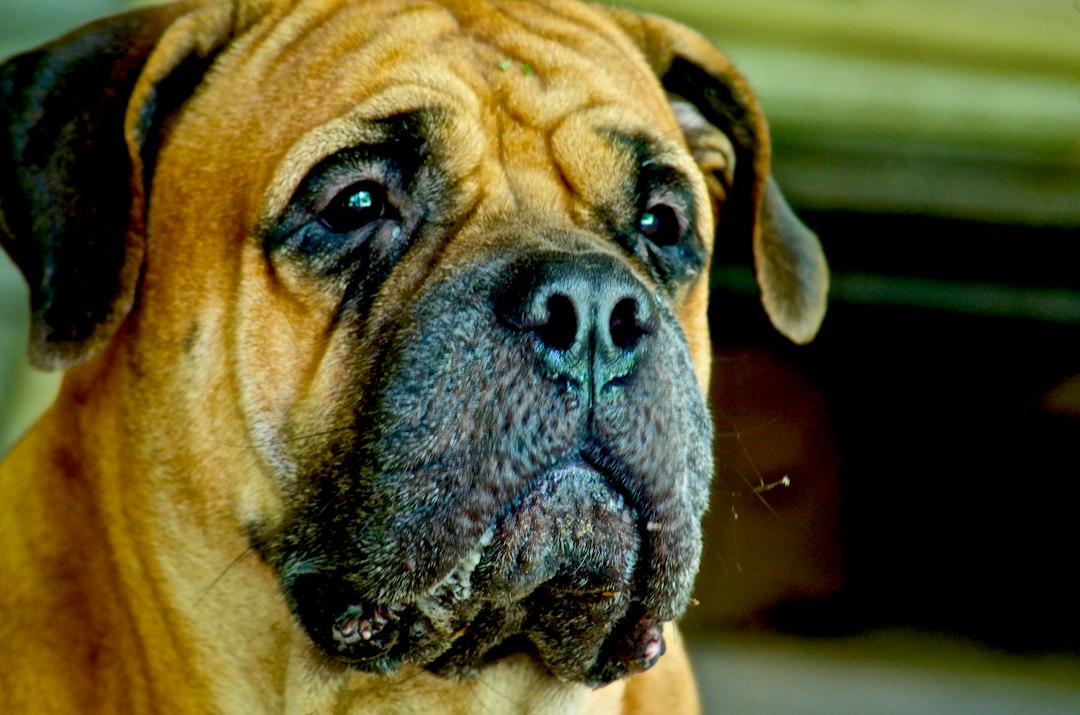
Photo by Nilu Gunaratne on Unsplash
When a DM dog hits the stairs, the math changes — what used to be a morning routine can become the most dangerous moment in your dog’s day.
When Should You Actually Block the Stairs?
Block the stairs the moment you see any hind-leg unreliability — stumbling, toe-dragging, or a single unexplained fall — not after a serious injury. DM progression is gradual, which makes it easy to rationalize “she made it today” one too many times.
The tricky part is that many DM dogs can still physically attempt stairs well past the point when it’s safe for them to do so. Muscle weakness and proprioceptive loss (meaning the brain’s awareness of where the feet are in space) combine to create a dog who wants to climb but can’t reliably stick the landing. That combination is what causes falls. If you’ve noticed knuckling on flat ground, the stairs are already beyond what that dog should be navigating independently.
The Rough Timeline to Watch For
DM typically follows a stage-by-stage progression. Here’s where stairs tend to become a concern:
- Early Stage 1: Dog moves normally but may wobble slightly on slippery surfaces. Stairs are generally still manageable with supervision.
- Early Stage 2: Hind-leg weakness becomes visible. This is when most caregivers should seriously consider blocking stairs or adding support.
- Mid-to-Late Stage 2: Dragging and knuckling are regular occurrences. Stairs should be blocked at this point, period.
- Stage 3 and beyond: Dog is non-ambulatory or close to it. Stairs are no longer relevant — full carrying or wheelchair use takes over.
Don’t wait for a fall to make the call. Falls in DM dogs can cause additional spinal trauma, paw abrasions from scrambling, or injured caregivers who reach for a falling dog at an awkward angle.
- Stumbling or slipping on any step
- Knuckling (walking on the tops of the back paws) anywhere in the house
- A fall or near-miss on the stairs in the past week
- Visible hind-leg fatigue after a short walk
- Difficulty backing up or turning on flat ground
Baby Gate Options: What Actually Works
Baby gates are the first tool most caregivers reach for, and for good reason — they’re immediate, affordable, and don’t require construction. But not all gates are equally useful for DM situations.
Pressure-Mounted vs. Hardware-Mounted
Pressure-mounted gates work by tension against the wall. They’re easy to install and reposition, which makes them handy for doorways and at the bottom of stairs. The downside: they’re not secure enough for the top of a staircase. A dog who leans into one or a caregiver who trips could knock it free.
Hardware-mounted gates screw directly into the wall or stair banister. They’re harder to install but far more secure. At the top of any staircase, use hardware-mounted only. The stakes of a gate failure at the top are much higher than at the bottom.
What to Look for in a Gate
- Walk-through door: You’ll be passing through dozens of times a day carrying things, a sling, your dog. A gate without a door becomes a daily obstacle.
- Low step-over threshold: Gates with a high bar at the bottom are a tripping hazard for caregivers who are often carrying or supporting a dog at the same time.
- Height at least 30–36 inches: DM dogs in early-to-mid stage may still try to put their front paws up on a gate. A taller gate reduces the risk of them toppling forward trying to get over.
- Wide span options: Many stairway openings are wider than a standard baby gate. Look for gates with extension panels or wide-opening models.
Where to Put Them
At minimum, block the bottom and top of every staircase your dog can access. If your dog has been sleeping on a floor other than where you’ve set up their main living area, block that access point too. The goal is to make it physically impossible for them to attempt stairs unsupervised, not just to redirect them when you’re watching.
Ramp Alternatives: How Long Do They Buy You?
A ramp is most useful in the transition period — early Stage 2, when your dog is losing confidence on stairs but still has enough hind-leg strength to push themselves up a gradual incline.
The key word is gradual. A ramp that’s steep enough to be practical for a standard couch height (8–10 inches) needs to be long enough that the rise per inch of run is low. Most caregivers find that a 4–5 foot ramp to couch or bed height is the minimum for a DM dog — anything shorter creates an incline the dog has to actively push against, which defeats the purpose.
A bed ramp like the PetSafe CozyUp works well for furniture access in early DM. It’s fully planked (no slats for paws to slip between), which matters a lot when a dog already has unreliable footing.
What ramps cannot do: compensate for significant hind-leg weakness. Once your dog is regularly dragging or knuckling, a ramp gives them a different surface to fall on, not a safer route. At that point, hands-on support with a sling or harness becomes necessary even on a ramp.
- Add a non-slip surface (carpet tape, yoga mat strips, or rubber mesh) to any smooth ramp surface
- Keep the ramp in place full-time so the dog doesn’t have to relearn the route each time
- Support the hind end with a sling or towel even on the ramp once Stage 2 weakness appears
- Ramps to the yard work well early on — a gentle slope to ground level is easier than steps
Carrying vs. Sling-Lifting: Matching the Method to the Dog
Small Dogs (Under ~25 lbs)
For small dogs, a full carry up a short flight of stairs is usually the simplest solution. Support the hind end with one hand and the chest with the other — never lift from the belly alone or let the back half dangle. The spine should stay roughly level during the carry.
Medium Dogs (25–50 lbs)
This is the gray zone. A full carry is technically possible but becomes hard on your back quickly, especially multiple times a day. A rear-support sling lets the dog use whatever hind-leg strength they have while you guide and stabilize. From what caregivers in the DM community consistently describe, a sling and harness setup preserves more of the dog’s dignity and active engagement than a full carry — they’re participating in the movement rather than being transported.
Large Dogs (50+ lbs)
Full carries are not realistic for large DM dogs over any sustained period, and they’re risky for caregiver backs and shoulders. A properly fitted rear-support harness with handles is the standard approach. Two people make the operation safer and significantly less physically taxing. If stairs are unavoidable and you’re alone, the safest method is to go slowly, one step at a time, with the sling taking the hindquarter weight while you keep your own center of gravity low.
- Keep the dog’s spine level — hind end should not sag below the head
- Bend at the knees, not the waist, when lifting a heavier dog
- Use a rear-support sling or harness daily so the dog is accustomed to it before it becomes critical
- Two-person carries for dogs over 50 lbs whenever possible
Managing a Multi-Level Home as DM Progresses
Multi-level homes present the biggest challenge, and the honest answer is that you’ll need to consolidate your dog’s living space to one floor before they completely lose ambulatory function. Planning this early is far less chaotic than scrambling to do it mid-crisis.
Setting Up a Single-Floor Living Zone
Identify which floor has: the most accessible outdoor exit, enough space for a dog bed and feeding station, and proximity to wherever you spend most of your time. For many families that’s the ground floor. Block all staircase access, and move feeding, sleeping, and play areas to that level.
The home modifications article covers the full room-by-room setup in detail — but for stairs specifically, the sequence is: block early, consolidate before it’s urgent, and build the single-floor routine while your dog can still participate in the transition.
The Bedroom Question
Many DM caregivers wrestle with this: the dog has always slept in the bedroom upstairs, and now they can’t get there. For some dogs, being separated from their sleeping spot causes real distress. Options:
- Move your own sleeping area to the ground floor temporarily (a surprising number of caregivers do this)
- Set up a comfortable ground-floor sleeping area and spend the transition period helping the dog adjust
- Use a camera monitor so you can hear and respond to the dog overnight without making the trip upstairs unnecessary
Consistency matters more than the specific solution. What dogs struggle with most is unpredictability — being carried upstairs some nights and left downstairs others, for example, tends to create more anxiety than a clear, consistent new routine.
- A DM dog who has found a way around a gate or barrier — re-evaluate immediately
- Any unsupervised access to a staircase at Stage 2 or beyond
- Relying on a ramp for a dog who is actively dragging back legs — switch to sling support
- A caregiver attempting to solo-carry a large DM dog repeatedly — get help or equipment before an injury happens
Related Reading
- DM Dog Home Setup: Flooring, Ramps & Safe-Room Fixes
- Knuckling in DM Dogs: What It Is and When It Gets Serious
- Slings & Harnesses for DM Dogs: Full Guide
The hardest part of managing stairs with a DM dog isn’t the logistics — it’s accepting that every adaptation you’re making is real, and it’s okay to grieve that a little even as you keep moving forward. Blocking the stairs doesn’t mean giving up. It means you’re paying attention, you’re ahead of the next fall, and you’re keeping your dog as safe as possible for as long as possible.
Frequently Asked Questions
When should I start blocking stairs for a DM dog?
Block stairs as soon as you notice stumbling, dragging, or knuckling on any surface — not just stairs. Waiting until a fall happens is waiting too long. Early blocking is far safer than reactively retrofitting after an injury.
Can a DM dog use a ramp instead of stairs?
Yes, but with limits. In early DM, a gradual ramp can extend independence and reduce fall risk. By mid-stage, when hind-leg weakness is significant, most dogs need hands-on support even on a ramp — the ramp buys time but doesn’t replace a sling or harness assist.
How do I carry a large DM dog safely up a single flight of stairs?
Use a rear-support sling or harness on the hindquarters and have a second person stabilize the front if your dog is over roughly 40 pounds. Never lift by the back legs alone. For very large dogs, a stair-negotiation plan with a sling is safer than a full carry for both dog and caregiver.
What baby gate works best for a large dog with DM?
Look for a pressure-mounted or hardware-mounted gate with a walk-through door and a low step-over threshold. Extra-tall gates (36 inches or higher) prevent larger dogs from attempting to jump or lean over. Hardware-mounted gates are more secure at the top of stairs where a failure means a fall.
Not a substitute for your veterinarian's advice. How these guides are written