Night Routine for a DM Dog: What Helps Both of You Sleep
A real DM dog night routine — potty timing, bladder expression, bedding setup, repositioning, and how to survive broken sleep without losing your mind.
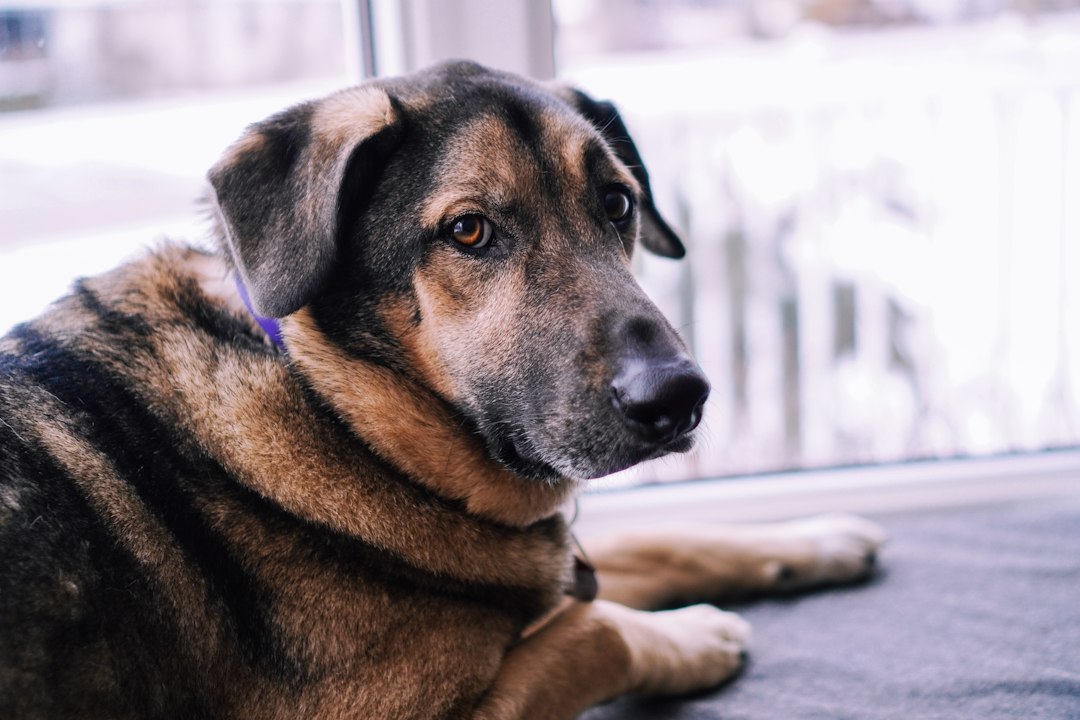
Photo by Daniel Salgado on Unsplash
A good night routine for a DM dog is not about achieving perfect sleep — it’s about creating enough structure that both of you can rest between the interruptions.
Nobody tells you how hard the nights get. The days are exhausting enough — the sling walks, the expressions, the physiotherapy exercises — but nighttime with a DM dog is its own kind of relentless. The dog can’t tell you what’s wrong. You’re half asleep when the crying starts. You don’t know if it’s pain or a full bladder or just disorientation. And then you’re both awake at 2 a.m., staring at each other.
This is a real guide to the night routine. Not the cheerful version — the one that acknowledges that DM caregiving at night is genuinely hard, and that “rest” becomes a negotiation.
What Should the Last Hour Before Bed Look Like?
The hour before you turn off the lights is the most important part of your DM dog’s night routine. A consistent wind-down sequence reduces nighttime disruptions for both of you.
Here is what that last hour generally looks like for a DM dog, depending on their stage:
Last potty trip or outdoor express (60 minutes before bed): If your dog can still walk with support, a slow, supported trip outside gives them a chance to urinate and defecate on their own terms. If they’re non-ambulatory, this is a supported sling walk or a grass-pad visit. Fresh air and a change of position help settle a dog who’s been lying down all evening.
Final hydration check (45 minutes before bed): Offer water, but don’t force it. A dog who drinks a large amount right before bed is more likely to need a middle-of-the-night expression. Many caregivers offer a smaller water portion in the final hour. Talk to your vet about what’s right for your dog’s kidney function and any concurrent conditions.
Bladder expression (30 minutes before bed): If your dog has reduced or absent bladder control, a manual expression before bed is worth doing. Timing it 30 minutes — rather than immediately before lights-out — gives you a moment to check that nothing leaks before you settle them. The bladder and bowel care guide for DM dogs covers expression technique in detail if you’re still getting the hang of it.
Diaper or belly band check and change: Put on a fresh diaper or belly band for the night. This is also your moment to check the skin — urine scald can develop faster than you expect, especially in dogs who are immobile for hours. Apply a thin barrier like petroleum jelly over any areas that look pink or irritated.
Settle into the sleep space: Give your dog a few minutes to get comfortable before you leave the room or turn off the light. Some dogs relax faster with quiet, low background noise — a fan or white noise machine can help.
- Potty trip or supported outdoor time
- Offer water (reduced portion if your dog tends to drink heavily)
- Bladder expression if incontinence is present
- Fresh diaper or belly band, with skin check
- Barrier cream on any at-risk skin
- Settle in sleep space before lights out
How Do I Set Up the Bed for a DM Dog at Night?
The best nighttime setup for a DM dog is close to you, easy to access, and washable in the middle of the night.
An orthopedic foam bed is widely considered the best base for a DM dog. The foam distributes body weight more evenly than a fiberfill bed, which helps reduce pressure point loading on hips, elbows, and shoulders. A waterproof cover is non-negotiable — you will be washing this, often. The sleep and bedding guide for DM dogs goes deeper on foam density and sizing.
Many caregivers layer a washable reusable pee pad on top of the orthopedic bed. When there’s a nighttime leak, you swap the pad and not the whole bed — a significant time and energy saver at 3 a.m. A washable reusable pee pad is one of those purchases that pays for itself within a week.
Keep the sleep space close to your bed. Not necessarily on your bed — a DM dog who can’t reposition can roll against a wall or the edge of a mattress in ways that create pressure problems. But a floor setup right beside your bed means you hear them immediately when something is wrong, and you don’t have to walk far in the dark.
Avoid bedding with raised edges or bolsters. These feel cozy but can trap a dog who can’t reposition themselves. A flat orthopedic surface with a non-slip bottom is safer.
Nighttime temperature matters. Dogs who are non-ambulatory generate less body heat through movement. Many caregivers find their DM dogs sleep better — and show less stiffness in the morning — with some added warmth. A low-wattage, thermostat-controlled heated pad can help here, especially in cooler months.
Repositioning: The Task Nobody Warns You About
Non-ambulatory DM dogs cannot shift their own weight during sleep. A dog who sleeps on one side all night is at serious risk of developing pressure sores over bony prominences — hips, elbows, shoulders, and the side of the head.
Most rehab specialists recommend repositioning every 2–4 hours for dogs who cannot self-shift. That means waking up at least once during the night — and sometimes twice — to gently roll your dog from one side to the other.
The technique matters. You’re not just flopping them over; you’re supporting the spine as a unit and moving them slowly. Slide one hand under the ribcage and one under the hips, and roll them gently onto the opposite side. Make sure the new position doesn’t leave a leg folded awkwardly beneath them. Check for any soaked bedding while you’re at it.
- Bony areas most at risk: hips, elbows, shoulders, sides of hocks, and the side of the head
- Pink or red skin that doesn’t fade when you release pressure is an early warning sign
- Sores can develop within hours in a dog who can’t move — check at every reposition
- See pressure sores prevention for DM dogs for full prevention and treatment details
What If My DM Dog Cries or Vocalizes at Night?
Nighttime vocalization in a DM dog almost always has a physical cause — check those first before assuming it’s behavioral.
When your dog cries at night, run through this sequence: Is the diaper soaked or leaking? Does the bedding feel wet? Has it been more than 3–4 hours since the last expression? Is the dog in an awkward position that may be causing discomfort? Is there any visible sore or irritated skin? Are they too hot or too cold?
If all of those check out and your dog is still restless, pain is the next possibility to consider. DM is generally described as non-painful, but many DM dogs also have concurrent arthritis or other musculoskeletal issues that do cause pain — especially after lying in one position for hours. If nighttime restlessness is increasing, it’s worth a conversation with your vet about pain management. The DM pain management and comfort care guide covers the layered approach many caregivers use.
If your dog also has signs of canine cognitive dysfunction — confusion, staring at walls, unusual night-waking — that’s a separate conversation. DM plus canine cognitive dysfunction can complicate nighttime management significantly.
- A consistent routine — same timing, same sequence — helps many DM dogs settle faster
- Sleeping close to you (floor beside the bed) reduces anxiety-based waking
- A white noise machine can reduce startling from household sounds
- Pain addressed consistently during the day tends to result in calmer nights
How Do You Manage Your Own Sleep?
This is the part of the DM night routine that caregiver guides tend to skip over, and it’s the part that matters most for your ability to keep doing this.
Broken sleep across many months is genuinely hard on your body and your mental state. Many caregivers report that the nighttime demands — more than anything else — are what bring them to the edge of burnout.
A few things that actually help:
Accept that sleep will be fragmented and stop fighting it. Lying awake between repositioning sessions waiting to hear something stresses the nervous system more than the interruption itself. Some caregivers use a soft alarm set for every 2–3 hours so they’re not in a hypervigilant listening state all night.
Nap when you can. Even a 20-minute rest in the afternoon helps offset nighttime losses. This is not laziness — this is how you maintain the capacity to care.
Take shifts when possible. If you have a partner or family member in the house, splitting the night into two halves — even a few nights per week — can make a meaningful difference. Many caregivers I’ve spoken with say the partner night-shift arrangement was what allowed them to continue caregiving for months longer than they could have managed alone.
Ask for help before you reach the wall. The piece on caregiver burnout with a DM dog is worth reading if you’re already feeling depleted — and it’s worth reading before you hit that point, not after.
- You are not sleeping more than 4 hours total, most nights
- You feel unable to make basic decisions or feel emotionally numb
- You are resenting your dog or feeling trapped
- You are making errors in your dog’s care routine due to exhaustion These are signals to reach out — to family, to your vet team, or to a DM caregiver community. You cannot care well for a sick dog when you are running on empty.
Related Reading
- Sleep and Bedding for a DM Dog
- DM Dog Bladder & Bowel Care: Expression, Skin, Routines
- Caregiver Burnout With a DM Dog: You’re Not Alone
Frequently Asked Questions
How often do I need to reposition a non-ambulatory DM dog at night?
Most caregivers and rehab specialists recommend repositioning every 2–4 hours for dogs who cannot shift their own weight. This helps prevent pressure sores from forming over bony prominences like hips, shoulders, and elbows.
Should I express my DM dog’s bladder right before bed?
Yes — if your dog has reduced bladder control or is fully incontinent, a last expression 30–45 minutes before you go to sleep can reduce the chance of a soaked bed at 2 a.m. Ask your vet to confirm your dog’s bladder function and expression technique.
What kind of bedding works best for a DM dog at night?
An orthopedic foam bed with a washable, waterproof cover is the practical standard. Many caregivers layer a washable pee pad on top so they can swap just the pad during nighttime changes without disturbing the dog’s whole sleep setup.
What if my DM dog cries or vocalizes at night?
Nighttime vocalization can mean discomfort, disorientation, anxiety, or a full bladder. Rule out physical needs first — check the diaper or bedding, express if needed, and reposition. If crying is frequent and no physical cause is found, talk to your vet about pain management or, if your dog also has cognitive changes, canine cognitive dysfunction.
The nights with a DM dog are long, and there is no version of this that is easy. But a consistent routine — potty timing, expression, clean bedding, repositioning — does reduce the chaos. And giving yourself permission to sleep in fragments, to ask for help, and to rest when you can is not optional. It’s part of the care plan, for both of you.
This guide is based on real experience and should be used alongside professional veterinary care. Always consult your veterinarian before starting any new treatment or making changes to your dog’s care plan.