Managing a Multi-Dog Home With a DM Dog
Running a multi-dog household when one dog has DM is exhausting in ways nobody warns you about. Here's what actually works for feeding, walking, siblings, and…
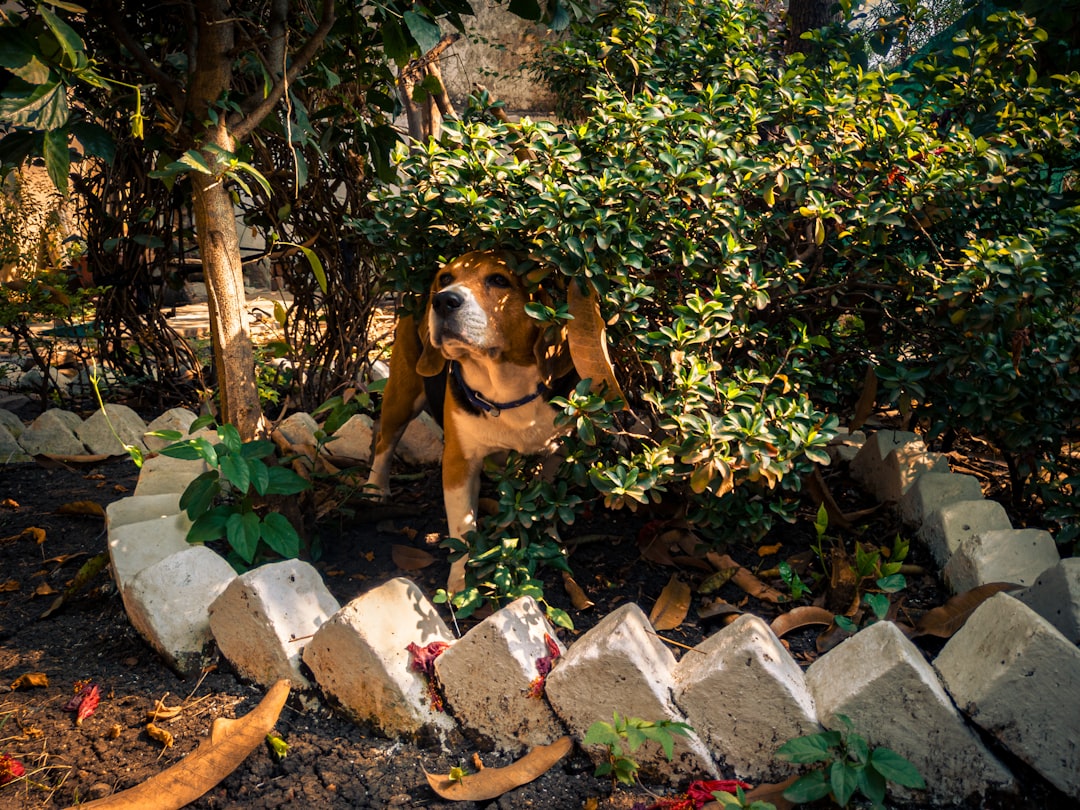
Photo by Utkarsh Tiwari on Unsplash
Running a multi-dog household when one of them has degenerative myelopathy is a different kind of hard — not because DM is new information to you, but because every system you built around your dogs has to be renegotiated.
The feeding routine that worked for years suddenly doesn’t. Walks need to split. The dog who used to wrestle with her housemates needs protection she never needed before. And you’re trying to manage all of it while also grieving what’s changing.
Why the Multi-Dog Dynamic Shifts With DM
A dog with degenerative myelopathy loses hind-end strength and coordination progressively. In early stages, this might look like occasional stumbling or reluctance to go up stairs. By mid-stage, knuckling and wobbling are constant, and a single body-check from an enthusiastic housemate can send your DM dog sprawling onto hard flooring.
The trouble is, your healthy dogs don’t know that. They still see the same dog they’ve always lived with. They still want to play, jostle for position at the food bowl, spin in excitement at the leash, and pile onto the same couch. Managing that gap — between what your healthy dogs want to do and what your DM dog can safely tolerate — is the daily work of a multi-dog DM household.
- A body slam from a 40-pound dog can cause a fall that fractures a limb or injures the spine in a dog with no hind-end stability
- Excited pile-ons at doorways are high-collision moments — use a baby gate or leash to stage your DM dog’s entries and exits separately
- Rough greeting behavior at mealtimes is often where injuries happen first — separate before you open the food
Managing Rowdy Siblings: Practical Strategies That Actually Work
The goal isn’t to punish your healthy dogs for being healthy. It’s to restructure the environment so collisions become unlikely rather than relying on constant supervision.
Baby gates and ex-pens: These are your best tools. A baby gate across a doorway lets your DM dog have a supervised zone where other dogs can’t rush in. An ex-pen can create a temporary safe space in the middle of a shared room.
Leashed management during high-energy moments: If your healthy dog does zoomies every evening, keep them on a house leash during that window. This isn’t forever — it’s a phase-based tool you adjust as your DM dog’s needs change.
Staged greetings: When you come home, bring your healthy dogs inside or into another room first. Then bring in your DM dog, or let them settle before the reunion happens. Threshold excitement is a real collision risk.
Teach your healthy dogs “place”: A solid “place” cue (go to your mat and stay) is genuinely life-changing in a multi-dog home. You can use it to park your healthy dog while you get your DM dog settled, slinged, or out of a wheelchair.
Redirect rough play before it escalates: Catch the pre-play bow before it turns into a chest-bump. A cheerful “uh-uh” and a redirect to a toy is enough for most dogs. You’re not teaching your healthy dog that play is bad — you’re teaching them that playing at your DM dog is not an option.
How Do You Handle Feeding in a Multi-Dog DM Home?
The safest, most sustainable approach is complete separation at mealtimes — every dog in a different space, door or gate closed, until everyone is finished.
Feed your DM dog first in a quiet room. This does two things: it removes the scramble competition, and it lets you monitor how much your DM dog is actually eating, which matters because appetite changes are an important quality-of-life signal you don’t want to miss.
Raised feeders: Many DM dogs do better with a slightly elevated bowl as neck and front-end compensation increases. Test this with your individual dog — some find it easier, some don’t.
Slow down mealtime stress: If your DM dog was always a fast eater worried about other dogs stealing food, they may eat more calmly in a separate room. A slow-feeder bowl isn’t always necessary once the competition pressure is removed.
Supplement management: If your DM dog is on specific supplements (and many are — see our supplements for DM dogs guide for what’s worth considering), separated mealtimes mean you can mix them into the food without worrying about another dog eating them instead.
- Feed each dog in a separate room with a physical barrier (door or gate)
- Feed your DM dog first while others are contained
- Wait until all dogs are fully finished before releasing anyone
- Pick up bowls immediately — don’t leave food accessible between meals
The Walking Reality
This is where most multi-dog caregivers hit a wall, because the honest answer is: you probably cannot walk your DM dog and your healthy dogs on the same outing — at least not past early stage DM.
A DM dog’s walk is slow. It involves a sling or harness for rear support, monitoring for knuckling, stopping to rest, and your full attention on their footfall and stamina. A healthy dog’s walk is about burning energy. These two goals are incompatible on the same leash.
The options most caregivers land on:
Split the walks: Walk the healthy dogs first (or have someone else walk them), then do a slower, separate outing with your DM dog. This respects both dogs’ needs without compromising either.
Stagger them: If you have a partner or family member, one person handles the healthy dogs while the other handles the DM dog. Even a 15-minute slow walk matters for the DM dog’s physical and mental wellbeing.
Backyard time for healthy dogs: If full separate walks aren’t feasible every day, a vigorous backyard play session can substitute for a healthy dog’s walk on days when your DM dog needs more of your time.
Use a rear-support harness: For the DM dog’s outings, a good supportive harness makes the walk safer and less exhausting for you. This is one of the most important pieces of gear you’ll buy — the sling and harness guide for DM dogs covers what to look for in detail.
- Two short DM dog walks (morning and evening) often work better than one long one
- Let the DM dog set the pace and distance — some days will be shorter than others
- If your DM dog uses a wheelchair, cart walks can happen separately from sling-assist walks
- Healthy dogs who are under-exercised become harder to manage around your DM dog — their exercise matters too
The Second Dog Question: Should You Get a Puppy for Your DM Dog?
I want to address this directly because it comes up constantly, and the instinct behind it is genuinely kind. The thinking goes: my DM dog seems lonely or bored, maybe a puppy would lift their spirits.
From what I’ve seen and heard from many DM caregivers, this is one of those ideas that sounds good and often backfires operationally. We’ve covered the broader decision-making around this in The Second Dog Question, but here’s the practical summary:
A puppy’s defining characteristics — unpredictable movement, relentless energy, body-slamming affection, shrieking excitement — are exactly the things a mid-to-late stage DM dog cannot safely tolerate. A puppy does not modulate. It does not notice that its new friend is wobbling. It will crash into your DM dog repeatedly, enthusiastically, and with no malice whatsoever.
If your DM dog is still in early stage and genuinely enjoys other dogs, a calm, adult dog with a settled temperament is a different calculation than a puppy. But “a companion for the DM dog” is rarely the right reason to add any dog during active DM caregiving — because you will be managing that new dog’s needs on top of everything else you’re already doing.
Keeping Your DM Dog’s Identity Intact in a Pack
This is the part that doesn’t get talked about enough. When a dog goes from being an active pack member to needing constant support, there’s a risk of them losing their role and sense of agency. The healthy dogs may start ignoring them, or your DM dog may withdraw because interactions have become unpredictable and tiring.
Some things that help:
One-on-one time: Give your DM dog time that isn’t about care tasks. Sit with them. Let them sniff. Let them make a choice about which direction to walk, even if it’s slow.
Let them participate where safe: If your dogs get a group treat, your DM dog should be part of that — just in a position where they won’t be jostled. They still want to be included.
Don’t over-protect to the point of isolation: A DM dog who is always behind a gate or in a separate room can lose social connection with their housemates. Supervised group time, where you’re present and can redirect rowdy behavior, matters for their quality of life.
Watch for pack dynamic shifts: Sometimes healthy dogs pick up on weakness and their behavior toward the DM dog changes in ways that are harder to manage than simple rowdiness. If you notice your healthy dogs becoming dismissive, pushy, or unkind to your DM dog, that’s worth addressing directly — with management, not just hope that it will self-correct.
The DM dog is still a dog. They still want to smell interesting things, get the first treat, and lie in the best spot. Your job in a multi-dog home is to make sure the disease doesn’t strip that away faster than it has to.
Related Reading
- The Second Dog Question: New Dog During or After DM
- DM Dog Home Setup: Flooring, Ramps & Safe-Room Fixes
- Kids Around a DM Dog: Household Rules
Managing a multi-dog home through DM is genuinely hard, and it asks a lot of every dog in the house — including the healthy ones who are just trying to be dogs. The caregivers I’ve seen do this well are the ones who build structure early, adjust it often, and give themselves grace when it isn’t perfect. Some days you’ll drop the ball on one dog’s walk or lose your temper at the one who knocked over your DM dog for the third time. That’s not failure. That’s Tuesday. Keep going.
Frequently Asked Questions
Can my other dogs catch degenerative myelopathy from my DM dog?
No. Degenerative myelopathy is a genetic, neurodegenerative condition — it is not contagious. Your other dogs cannot contract DM through contact, shared food bowls, or any other means of transmission.
Should I get a puppy to keep my DM dog company?
Most caregivers and behaviorists advise against it at mid-to-late stage DM. A puppy’s physical energy creates real collision risk, and the noise and chaos can stress a dog who is already coping with significant neurological decline. If your DM dog is still in early stages and genuinely enjoys other dogs, some owners find a calm adult dog a better fit than a puppy.
How do I stop my healthy dogs from eating my DM dog’s food?
Separate feeding in different rooms with a door or baby gate closed is the most reliable solution. Feed your DM dog first while the others are contained, then release them to their own bowls. Trying to supervise three dogs eating in the same space is a losing battle — physical separation is easier than you think.
How do I walk a DM dog and healthy dogs at the same time?
Realistically, you often can’t — at least not on the same outing. Most caregivers find it works better to walk the healthy dogs first or at a separate time, then give the DM dog a slow, supported outing tailored to their current stage. Trying to manage a sling, a wheelchair, and a leash-pulling healthy dog simultaneously is a safety risk.
This guide is based on real experience and should be used alongside professional veterinary care. Always consult your veterinarian before starting any new treatment or making changes to your dog’s care plan.