DM vs IVDD: How to Tell the Difference (DM Owner's Angle)
DM and IVDD look alike at first — wobbly legs, dragging paws. Here's how to spot the real difference before the wrong diagnosis costs you weeks of the wrong…
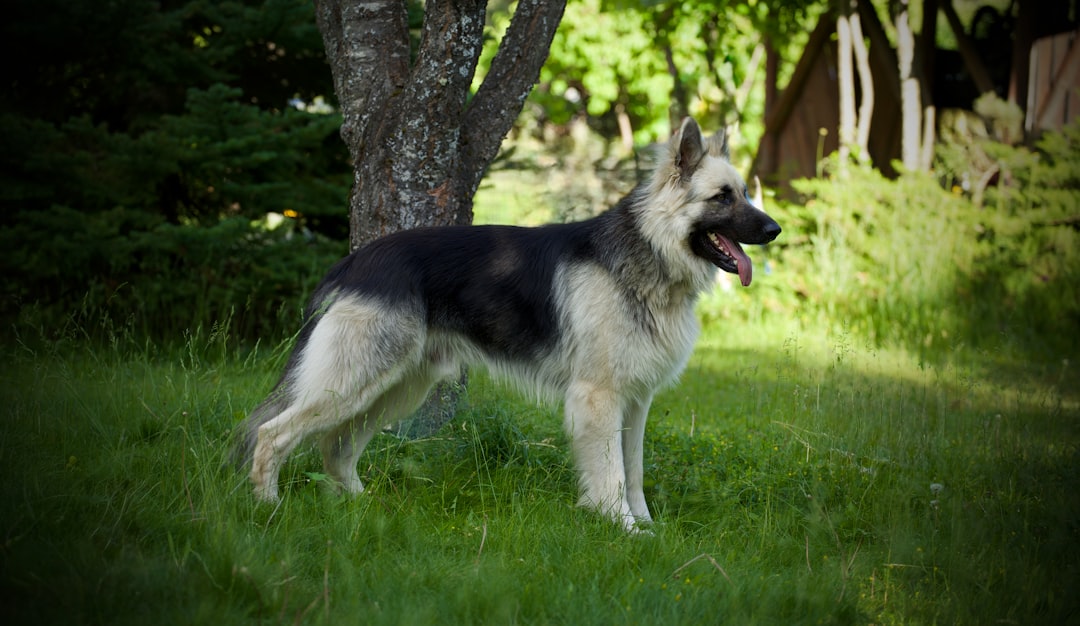
Photo by Troy Olson on Unsplash
If your dog’s back legs are giving out, the most important question isn’t how bad it is — it’s which disease you’re actually dealing with.
If you’ve landed here, you’re probably staring at a dog who is stumbling, dragging a paw, or struggling to get up — and you’re trying to figure out what you’re actually dealing with. The IVDD community has a lot of resources covering this comparison from the disc-disease angle. This article approaches it from the DM owner’s perspective, because the two diseases look surprisingly alike early on, and a wrong assumption wastes time, money, and sometimes the window for treatment that actually helps.
The Core Difference: Pain vs. No Pain
The single clearest distinguishing feature between IVDD and DM is pain. IVDD causes pain — sometimes intense, obvious pain. DM does not.
In IVDD, a disc ruptures or bulges and physically compresses the spinal cord. That compression is painful. Dogs with an IVDD episode often yelp when picked up, hunch their back, refuse to move, cry when touched along the spine, or become suddenly reluctant to jump or climb stairs. The pain can be the first sign that something is wrong, even before any wobbliness appears.
In DM, the myelin sheath — the protective coating around nerve fibers — gradually degenerates. There is no compression, no rupture, no sudden mechanical event. Most DM dogs don’t yelp. They don’t guard their spine. They don’t cry when touched. They simply become weaker, quietly and progressively, until one day the weakness is impossible to miss.
- Press gently along your dog’s spine from shoulders to tail — does your dog flinch, turn to look, or pull away?
- Try gently lifting your dog — does it yelp or tense up?
- A pain response points strongly toward IVDD. No pain response does not rule out IVDD entirely, but it is a meaningful clue toward DM.
- Neither test replaces veterinary evaluation — this is just information gathering.
How Does Onset Pattern Help Tell Them Apart?
IVDD tends to strike suddenly — often within hours. DM unfolds over months.
An IVDD episode can go from “fine at breakfast” to “can’t walk by dinner.” A disc herniates, spinal cord compression begins, and neurological signs appear fast. Owners often describe it as a dog that seemed totally normal the day before. The rapid onset is one of the reasons IVDD is considered a potential emergency — the IVDD emergency signs article covers when to go to the vet immediately and why waiting even a few hours can matter.
DM has no such moment. There is no rupture event. Most owners with DM dogs describe looking back and realizing the wobbling had been there for months before they noticed it was getting worse. The gradual, insidious onset is one of DM’s most consistent features. The early signs of DM that owners often miss article goes deeper on this, because those early signs are easy to attribute to aging, arthritis, or a sore hip.
Symmetry: One Side or Both?
IVDD often starts asymmetrically — one leg dragging more than the other, one side weaker than the other — because the disc may compress the cord more on one side. This asymmetry isn’t universal, but it’s common enough to be a useful clue.
DM classically presents symmetrically. Both hind legs weaken at roughly the same rate. Owners often describe it as the back end “going together” rather than one side collapsing first. That bilateral, symmetric progression is a hallmark of DM that neurologists look for during clinical examination.
If your dog’s left rear leg is noticeably worse than the right, that asymmetry leans toward IVDD or another focal spinal problem. If both legs are weakening at about the same pace, DM moves up the list.
Age of Onset: When Did This Start?
IVDD typically strikes earlier in life, particularly in chondrodystrophic breeds. Dachshunds can have their first episode at 3 or 4 years old. The highest-risk window for many predisposed breeds is roughly 3 to 7 years, though it can happen at any age.
DM is overwhelmingly a disease of older dogs. Most cases present in dogs 8 years old or older. A 4-year-old dog with hind-leg weakness is almost certainly not dealing with DM. An 11-year-old German Shepherd with slowly progressing hind-leg weakness and no apparent pain? DM goes to the top of the differential list.
Age alone won’t give you a diagnosis, but combined with breed and onset pattern, it narrows things down significantly.
Breed Risk: Where the Overlap Gets Complicated
This is where things get genuinely tricky, because some breeds carry meaningful risk for both conditions.
| Breed | IVDD Risk | DM Risk |
|---|---|---|
| Dachshund | Very High | Very Low |
| German Shepherd | Low | Very High |
| Corgi (Pembroke & Cardigan) | High | High |
| Labrador Retriever | Low-Moderate | Moderate |
| Boxer | Low | Moderate |
| Chesapeake Bay Retriever | Low | High |
 disableddogcare.com
Dachshunds are almost always an IVDD story. Their chondrodystrophic genetics — the same trait that gives them their long body and short legs — causes early disc degeneration. If a dachshund’s back legs go out, IVDD is the overwhelming probability. The dachshund IVDD guide covers the specifics of that breed’s risk in depth.
German Shepherds are one of the highest-risk DM breeds — it’s essentially the opposite of the dachshund situation. GSDs rarely develop IVDD but are among the breeds most commonly affected by DM. If a 9-year-old GSD is losing function in the rear end with no pain signs, DM is the leading suspect.
Corgis are the complicated case. Both Pembroke and Cardigan Welsh Corgis carry significant risk for IVDD because of their chondrodystrophic genetics, and they also appear on the DM high-risk list. A corgi with hind-leg problems genuinely could have either condition — or both. That breed complexity is exactly why thorough diagnostics matter.
Why Getting the Diagnosis Wrong Costs You
This is the practical stakes section, and it’s worth sitting with.
If your dog has IVDD and you assume it’s DM, you might skip imaging and surgery consultation — and miss the window where decompression surgery could restore function. IVDD can progress from moderate weakness to permanent paralysis within 24 to 48 hours in severe cases. Waiting because you assume it’s the “slower disease” can cost your dog the chance to walk again.
If your dog has DM and you pursue aggressive spinal surgery, you’re putting your dog through a major procedure that will not stop the underlying nerve degeneration. DM is not a compression problem — there’s nothing to decompress. Surgery won’t help. Your dog faces recovery stress and surgical risk with no meaningful benefit to show for it.
The wrong diagnosis also routes you to the wrong management strategy. DM is managed with exercise therapy and mobility support designed to maintain function as long as possible. IVDD is managed with strict rest, possible surgery, and a completely different rehabilitation approach. These are not interchangeable care plans.
- Hind-leg weakness with no obvious cause warrants a veterinary evaluation, not watchful waiting
- If your vet suspects either DM or IVDD, a board-certified veterinary neurologist is the right next step
- Neurologists can perform the hands-on assessment and order the right imaging — general practice vets often refer these cases out
- The American College of Veterinary Internal Medicine maintains a referral directory to find a board-certified neurologist near you
What Does the Diagnostic Path Actually Look Like?
For IVDD, the gold standard is MRI. It will show exactly which disc has herniated and how much spinal cord compression exists. X-rays can suggest disc disease but can’t show soft tissue compression. If MRI isn’t accessible or affordable, CT myelogram is a reasonable alternative. The diagnosis can move quickly because there’s an identifiable structural problem to find.
For DM, the path is more frustrating. There is no test that definitively diagnoses DM in a living dog. Diagnosis is reached by ruling out everything else — IVDD, tumors, other compressive lesions, inflammatory conditions — through MRI and sometimes spinal fluid analysis. The SOD1 genetic test can show whether your dog carries the mutation associated with DM, which supports the diagnosis, but it doesn’t confirm it. Some dogs carry the gene and never develop DM. A definitive DM diagnosis can only be made by examining spinal cord tissue after death.
- Record a short video of your dog walking — neurologists find this incredibly useful for seeing gait patterns
- Note exactly when you first noticed anything unusual, even if it seemed minor
- Write down whether you’ve ever seen your dog yelp in pain, guard its back, or resist being touched
- Bring a list of the dog’s current age, weight, and any past spinal episodes
- Mention any breeds in the lineage if your dog is a mixed breed
How Does DM Progress Compared to IVDD?
IVDD can reach maximum severity within hours of onset. The trajectory is often rapid, then either stabilizes (with treatment) or continues to worsen without intervention. Recovery — when it happens — can take weeks to months. The disease is an event followed by recovery, not a straight-line decline.
DM progresses relentlessly and cannot be halted. From first signs to loss of ambulation typically takes 6 months to 2 years, though it varies by individual dog. Eventually DM spreads beyond the hind legs to affect bladder, bowel, and eventually the front limbs. There is no recovery phase in DM because there is no mechanical problem to fix — only a degenerative process to manage and slow through exercise. The DM progression timeline breaks down what each stage typically looks like.
- Type II IVDD (common in large breeds) also develops slowly and can mimic early DM closely
- A gradual onset does not rule out IVDD — it rules out the classic acute Type I presentation
- If your dog is a large breed with slow-onset weakness, imaging is still essential
- Never use onset speed alone to self-diagnose between these two conditions
Related Reading
- Early Signs of DM That Owners Often Miss
- IVDD vs Degenerative Myelopathy: Two Different Roads
- Getting a DM Diagnosis: What the Process Actually Looks Like
Both of these diseases deserve — and require — an accurate diagnosis before you build a care plan around them. If you’re sitting in that uncertain space right now, the most useful thing you can do is document what you’re seeing (a phone video of your dog walking is worth a thousand words to a neurologist), book a veterinary appointment, and ask specifically about the pain assessment and whether a neurology referral makes sense. You don’t have to figure this out alone, and you don’t have to guess.
Frequently Asked Questions
Can a dog have both DM and IVDD at the same time?
Yes, a dog can have both conditions simultaneously, especially in breeds like German Shepherds and Corgis that are genetically predisposed to both. When that happens, the diagnostic picture gets complicated and MRI combined with genetic testing is usually needed to sort out which disease is driving which symptoms.
Is DM painful for dogs?
Degenerative myelopathy is generally considered painless. The nerve degeneration that causes weakness and paralysis in DM does not produce the spinal pain typical of IVDD. A dog with DM typically doesn’t yelp when touched along the spine or resist movement the way an IVDD dog in crisis does.
What breeds are at risk for both DM and IVDD?
German Shepherds and Corgis are the clearest examples of breeds that carry meaningful risk for both conditions. Dachshunds are almost exclusively an IVDD breed. German Shepherds rarely get IVDD but are among the highest-risk DM breeds.
How is degenerative myelopathy definitively diagnosed?
DM has no definitive test during a dog’s lifetime. Diagnosis is based on ruling out other causes (via MRI and spinal fluid analysis), combined with the SOD1 genetic test and clinical presentation. A definitive diagnosis can only be confirmed through spinal cord tissue examination after death.
This guide is based on real experience and should be used alongside professional veterinary care. Always consult your veterinarian before starting any new treatment or making changes to your dog’s care plan.