DM Plus Canine Cognitive Dysfunction (Dementia)
When DM and dementia collide, nighttime becomes chaos and care doubles overnight. What caregivers report about sundowning, anxiety meds, and QoL when both…
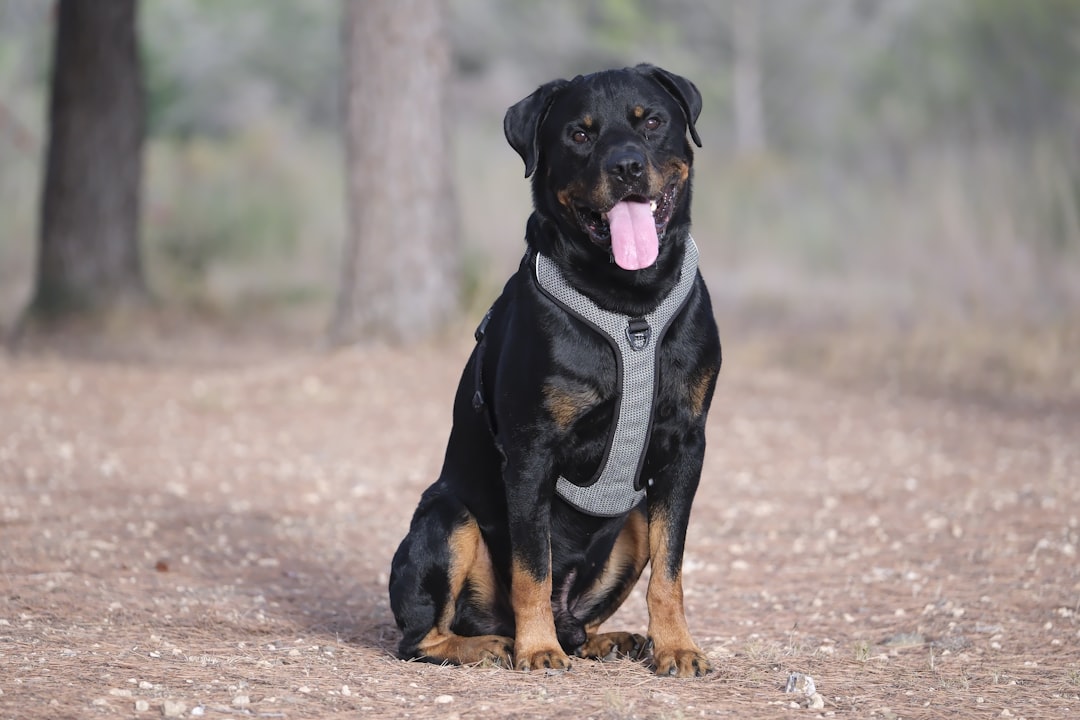
Photo by Eduard Constantin Zoita on Unsplash
When degenerative myelopathy and canine cognitive dysfunction occur together, the combination is harder than either condition alone — and most caregivers are completely unprepared for it.
What Is Canine Cognitive Dysfunction, and How Common Is It in DM Dogs?
Canine cognitive dysfunction (CCD) is a brain-based condition in older dogs that causes changes in memory, awareness, learned behaviors, and sleep-wake cycles — roughly analogous to dementia in humans. It is not caused by DM, but the two conditions share a patient population: older, large-to-medium-breed dogs. Any dog living long enough into DM’s progression is also in the age range where CCD becomes common.
The acronym vets often use is DISHA — a shorthand for the main symptom clusters:
- Disorientation: getting stuck in corners, staring at walls, failing to recognize familiar people or places
- Interactions: reduced engagement with family, loss of interest in greetings or play
- Sleep-wake changes: sleeping heavily during the day, restless or vocal at night
- House soiling: accidents in dogs that were previously reliable — though this overlaps significantly with DM-related incontinence
- Activity changes: repetitive behaviors, aimless wandering, or a marked drop in activity
The challenge with a DM dog is that several DISHA signs can masquerade as DM progression — and vice versa. A dog who stops greeting you at the door might have DM-related fatigue, CCD-related disinterest, or both. Sorting out which is driving each symptom takes time and honest observation.
- Bring a written log of nighttime behaviors — times, duration, what the dog was doing
- Note which symptoms appeared first and how quickly each has progressed
- Mention any recent medication changes, since some drugs can affect cognition
- Ask specifically whether a CCD screening questionnaire would be useful
How Does Sundowning Show Up in a Dog Who Can’t Walk?
Sundowning — the late-afternoon and evening worsening of confusion and agitation — is one of the most disruptive features of CCD in any dog. In a DM dog, it has a particular shape that caregivers describe over and over: the dog begins to seem distressed as the light changes, starts trying to reposition constantly, may vocalize, and cannot settle no matter what you do.
A dog in mid-to-late DM who can no longer stand may still make repeated attempts to move, drag herself toward walls, or push against her bedding for minutes or hours at a stretch. It looks like discomfort, and sometimes it is — but when the pattern reliably starts at dusk and resolves by late night or morning, CCD-driven sundowning is likely playing a role.
From what I’ve heard from caregivers managing this combination, the exhaustion that comes from nights like these is its own crisis. You’re already giving everything to physical care — expressing bladder, repositioning every few hours, managing incontinence — and now you’re also dealing with a dog who won’t stop vocalizing at 2 a.m. That’s a level of depletion that sneaks up on you fast.
A few things many caregivers find helpful for sundowning specifically:
- Consistent evening routine: same feeding time, same low-key activity window, same bed position every night
- Dim, warm lighting: harsh or bright lights in the evening can worsen disorientation
- White noise or soft music: some dogs settle better with background sound that reduces startling
- Daytime light exposure: brief time outside during daylight hours may help regulate the sleep-wake cycle
- Limiting daytime napping: counterintuitive, but keeping the dog engaged during the day may reduce nighttime wakefulness
- Vocalization that lasts more than an hour and doesn’t respond to repositioning or comfort
- Signs of pain alongside confusion — whimpering when touched, rigid posture
- Sudden onset rather than gradual worsening (sudden changes in mental status warrant urgent evaluation)
- The dog appears not to recognize you or her environment at all
What Medications Help — and What to Watch When Your Dog Is Already on DM Drugs?
Selegiline (sold as Anipryl) is the only medication FDA-approved for canine cognitive dysfunction. It works by inhibiting an enzyme called MAO-B, which is involved in dopamine breakdown in the brain. Many dogs show modest improvement in nighttime settling and daytime engagement within four to eight weeks, though results vary and the drug does not stop CCD’s progression.
The complication with a DM dog is that the medication list is often already long. Pain management, anti-inflammatory drugs, and supplements can all interact with selegiline. According to the Merck Veterinary Manual, selegiline has notable interactions with several drug classes — including some opioids and tricyclic antidepressants — so your veterinarian needs the complete list before prescribing.
Other approaches your vet might discuss:
- Melatonin: often tried for nighttime settling; generally considered low-risk, but check with your vet on timing and dose
- Anxiolytic medications: trazodone or gabapentin are sometimes used off-label to reduce nighttime anxiety; again, your vet will weigh these against existing medications
- Dietary supplements: there is some discussion in veterinary circles about antioxidant-rich diets and supplements (like SAMe and medium-chain triglycerides) possibly supporting brain health, but the evidence in dogs is early and limited — frame these as “worth asking about” rather than established treatments
- Prescription CCD diets: some veterinary prescription diets are formulated with brain-supportive nutrients; your vet or a board-certified veterinary nutritionist can advise
- Bring every medication and supplement to the appointment — including over-the-counter items
- Ask specifically about selegiline interactions before agreeing to start it
- Request a written updated medication schedule after any changes
- Give new medications at least four weeks before assessing whether they’re helping
How Do You Assess Quality of Life When Both Conditions Are Progressing?
This is the question that sits at the center of the whole conversation, and it deserves an honest answer.
When a dog has DM alone, quality-of-life assessment focuses largely on mobility, pain, and engagement. When CCD enters the picture, you add a second axis: mental distress, confusion, and fear. A dog can have acceptable physical comfort but be experiencing significant cognitive distress — and vice versa. The combination means you’re watching two deteriorating systems simultaneously.
From what caregivers describe, the breaking point often comes when nighttime distress becomes unrelieved and the dog no longer has periods of calm, contentment, or recognition. A dog who is confused and frightened most of the time, cannot be comforted, and has lost most of the physical capacity that DM took is in a very different situation from a dog whose cognitive symptoms are mild and manageable.
Practical questions to ask yourself and your vet:
- Good hours vs. bad hours: is your dog having more genuinely comfortable, aware, connected moments than distressed ones across a full day?
- Response to comfort: when you sit with your dog, does she seem to recognize you and settle, or is the distress relentless?
- Sleep quality: is anyone in the household sleeping? Prolonged sleep deprivation for both dog and caregiver is a quality-of-life issue on both sides
- Physical markers from DM: is she still able to eat and drink comfortably, is pressure sore management staying ahead of new sores, is incontinence being managed without skin breakdown?
The quality-of-life framework outlined at Tufts Cummings School of Veterinary Medicine and similar scales can give you a structured way to approach this conversation with your vet rather than trying to hold it all in your head at once. Our article on DM dog quality of life walks through how to use these frameworks practically.
- Unrelieved nighttime distress most nights, lasting hours, not responding to positioning, medication, or comfort
- The dog shows signs of fear or confusion the majority of her waking hours
- New pressure sores developing faster than they heal due to inability to reposition
- Caregiver has not slept more than a few hours in multiple consecutive nights
Related Reading
- DM Plus Arthritis: Managing Two Progressive Conditions
- DM Dog Quality of Life: An Honest Caregiver’s Framework
- End-of-Life Planning for DM Dogs: A Honest Guide
Frequently Asked Questions
Can a dog have both degenerative myelopathy and canine cognitive dysfunction at the same time?
Yes. Both conditions are common in older dogs, so they frequently occur together. DM is a spinal cord disease that causes progressive hind-leg weakness, while CCD is a brain-based condition that affects memory, orientation, and sleep. Having both does not change the diagnosis of either one, but it makes daily management significantly more complex.
What does sundowning look like in a dog with DM?
Sundowning in a DM dog often looks like restlessness, pacing attempts, or repeated repositioning as evening sets in — even when the dog can no longer walk well. You may see confusion, disorientation, excessive vocalization, or an inability to settle, all starting in the late afternoon or evening hours.
What medications are used for canine cognitive dysfunction in a DM dog?
Selegiline (Anipryl) is the only FDA-approved medication for canine cognitive dysfunction. Some vets also use melatonin for nighttime settling or discuss anti-anxiety medications. Because DM dogs may already be on multiple medications, your veterinarian will need to review the full list carefully before adding anything new.
How do I know when quality of life is too compromised when a dog has both DM and dementia?
Quality of life is most compromised when a dog has more bad hours than good ones across multiple days in a row — when nighttime distress is severe and unrelieved, when the dog shows signs of confusion or fear most of the time, and when physical decline from DM has removed most sources of joy. Talking through a formal quality-of-life scale with your veterinarian can help make this conversation more concrete.
If you’re in the thick of this right now, I want you to know that the exhaustion you’re feeling is real, and the fact that you’re still asking these questions means you’re still showing up for your dog in exactly the way she needs. That matters, even on the hardest nights.
This guide is based on real experience and should be used alongside professional veterinary care. Always consult your veterinarian before starting any new treatment or making changes to your dog’s care plan.