DM in Pugs
Pugs can develop DM, but their flat faces complicate exercise, hydrotherapy, and rehab. What pug owners need to know about signs, staging, and safe care.
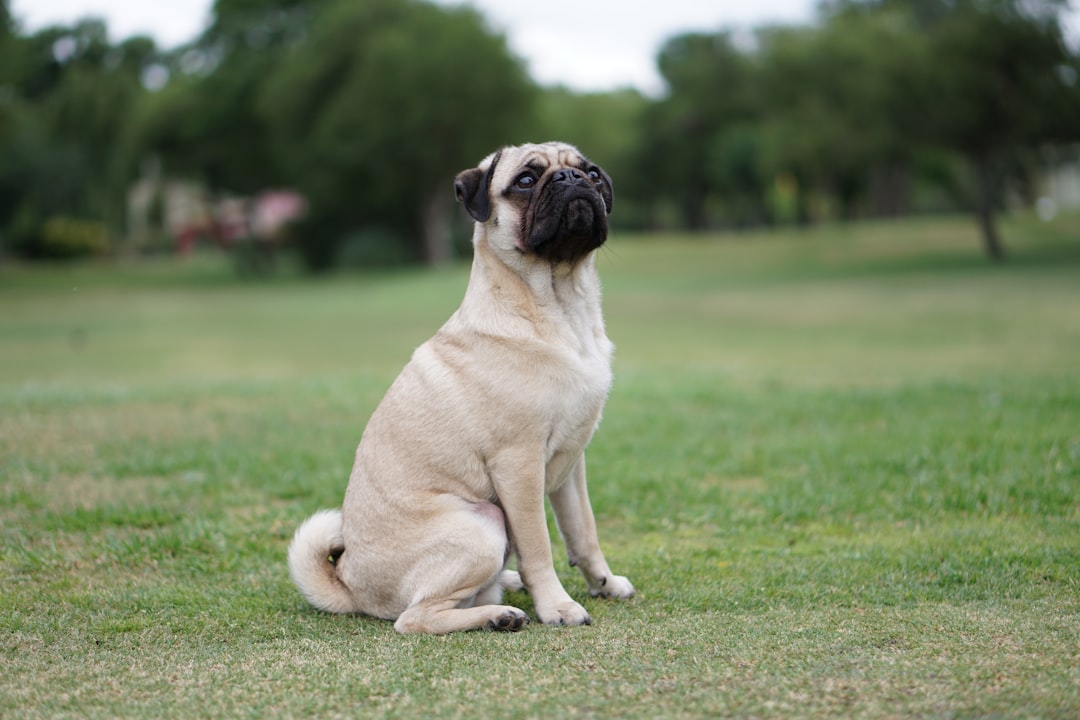
Photo by van pellegrini on Unsplash
Degenerative myelopathy in pugs is real, it’s manageable, and the flat-faced anatomy that makes pugs so lovable adds a layer of complexity that most general DM advice doesn’t account for.
Is Degenerative Myelopathy Common in Pugs?
Pugs are not among the highest-risk breeds for DM, but they are not off the hook either. The SOD1 mutation linked to DM has been documented in pugs, which means any individual pug can carry one or two copies of the gene variant. As the Orthopedic Foundation for Animals notes, breeds with documented SOD1 prevalence should be considered candidates for testing even when the breed isn’t on the classic “high-risk” list.
What makes pug DM tricky is that it often gets mistaken for other things first. Pugs already have a somewhat waddling gait, and hemivertebrae (wedge-shaped vertebrae present in many screw-tailed breeds) can cause spinal cord compression that looks almost identical to early DM. That means a pug owner watching their dog wobble might be looking at a structural vertebral problem, a disc issue, or true DM — and distinguishing between them requires a neurological exam and usually advanced imaging.
If you want to understand the difference between DM and disc disease more broadly, the article on DM vs IVDD: How to Tell the Difference is worth reading before your vet visit. It lays out the key diagnostic distinctions that will help you ask better questions.
What Are the Signs of DM in Pugs?
The early signs of pug DM are hind-leg weakness, wobbling or swaying during walks, and paws that knuckle under — meaning the dog walks on the tops of their toes instead of the pads. These signs typically start around age 7–10, though some dogs present earlier or later.
Here’s what the progression generally looks like, though the pace varies considerably between dogs:
- Hind-leg wobble or swaying: Often the first thing owners notice, especially on slippery floors or when the dog tries to turn quickly
- Knuckling: The paw curls under rather than landing flat — this causes abrasion on the top of the foot quickly if not managed with boots or toe grips
- Dragging one or both hind legs: Usually appears months into the disease once weakness becomes more pronounced
- Loss of bladder and bowel control: A later-stage development as the spinal cord degeneration moves forward
- Muscle wasting in the hindquarters: The rear end loses mass visibly because the nerves driving those muscles are deteriorating
- Sudden onset of hind-leg weakness (DM is slow; sudden weakness suggests a disc event or other emergency)
- Paw knuckling developing over days rather than months
- Any loss of bladder or bowel control
- Signs of pain — DM itself is not painful, so pain signals a different or co-occurring problem
The Brachycephalic Complication Nobody Warns You About
Here’s the part that most general DM content skips over entirely: pugs are brachycephalic dogs, meaning their shortened skull structure creates narrowed airways. This matters enormously for DM care because virtually every standard DM rehabilitation approach involves exercise — and exercise makes pugs breathe harder.
A German Shepherd with DM can do a 20-minute underwater treadmill session with appropriate rests. A pug doing the same session is at real risk of respiratory distress, overheating, and serious stress. What’s therapeutic for one breed can be dangerous for another.
Hydrotherapy and Pugs: Proceed With Expert Help
Hydrotherapy — whether pool swimming or an underwater treadmill — is widely recommended for DM dogs because the buoyancy supports weakened limbs while still allowing movement. Many caregivers and rehab specialists believe it helps maintain muscle mass and supports neurological function longer than land exercise alone.
For pugs specifically, hydrotherapy can still be an option, but only at a facility with staff who are experienced with brachycephalic breeds. Key modifications typically include:
- Shorter sessions: Fewer minutes in the water than a non-brachycephalic dog of similar size
- Lower water temperatures: Warm water raises body temperature faster in dogs who can’t pant effectively
- Closer monitoring of breathing: Staff should watch for labored breathing, excessive gum color changes, or distress
- Elevated head positioning: Pugs should never have their head submerged or near the water surface during pool sessions
If a hydrotherapy facility has never worked with brachycephalic dogs, that’s a meaningful gap. It’s worth asking specifically before you book. Our article on hydrotherapy for DM dogs covers the general approach, but bring the brachycephalic context to any conversation with your rehab vet.
Land Exercise: Cool, Short, and Consistent
For most pug DM dogs, land-based exercise is the safer primary option. Short walks of 10–15 minutes in cool weather, twice daily, are often better tolerated than one longer session. Early morning or evening timing in warmer months keeps temperatures manageable.
Passive range-of-motion exercises — gently moving the hind legs through their natural motion while the dog is lying down — can be done at home and don’t risk overheating at all. These are a staple of home DM care and are something any caregiver can learn to do safely. The DM exercise and physical therapy guide walks through stage-by-stage approaches that adapt as the disease progresses.
- Choose early morning or evening for outdoor exercise to avoid heat
- Keep sessions short — 10–15 minutes of walking, not 30
- Learn passive range-of-motion exercises you can do at home without exertion
- If using hydrotherapy, confirm the facility has brachycephalic experience
- Watch for open-mouth breathing, blue-tinged gums, or distress as stop signs
Hemivertebrae: The Pug-Specific Complication in the Spinal Mix
Pugs — along with French Bulldogs, Boston Terriers, and English Bulldogs — frequently have hemivertebrae, wedge-shaped vertebrae that can cause spinal cord compression. This is completely separate from DM but causes overlapping symptoms: rear weakness, wobbling, ataxia (uncoordinated movement).
A pug presenting with hind-leg weakness needs imaging to sort out whether the cause is hemivertebrae-related compression, a disc herniation, DM, or some combination of all three. This isn’t a situation where a clinical exam alone gives you the answer. Advanced imaging like MRI is usually needed to map exactly what’s happening in the spine — and then genetic testing for the SOD1 mutation helps clarify whether DM is also in the picture.
This distinction matters because the management is different. Hemivertebrae-related compression may be stable or may benefit from surgical decompression. DM has no surgical solution; the goal is maintaining function and quality of life through supportive care for as long as possible.
Paw Protection Is Non-Negotiable
When a pug starts knuckling, the top of the paw is dragging against the ground with every step. Because the skin there is thin and pug skin folds can trap moisture, abrasions and sores develop faster than owners expect. By the time you notice a sore, it’s already been there for a while.
ToeGrips (Dr. Buzby’s) are small rubber rings that fit over the nails and give knuckling dogs more traction and feedback. From what many DM caregivers report, they can help mildly knuckling dogs land more correctly — reducing both abrasion and falls. For moderate to severe knuckling, protective boots that pad and cover the top of the paw become necessary.
Check the tops of both hind paws every single day. This takes thirty seconds and can catch a sore before it becomes an infected wound.
- Inspect paw tops daily for abrasions from knuckling
- Use boots or ToeGrips before sores form, not after
- Keep nails trimmed short — long nails worsen knuckling mechanics
- Place non-slip mats on all hard flooring throughout the house
- Monitor weight closely — even a few extra pounds stress weakened hind legs significantly
Genetic Testing: What to Do With the Information
The SOD1 test for DM tells you whether your pug carries zero, one, or two copies of the mutation. Two copies (homozygous) represents the highest genetic risk; one copy (heterozygous) carries some risk; zero copies means the dog is unlikely to develop DM from this mutation.
A positive result doesn’t mean your dog will definitely develop DM, and it doesn’t mean they’ll develop it soon. But it does mean you should watch for early signs, start a rehab-friendly exercise routine now, and have a candid conversation with your vet about what to monitor. The SOD1 genetic test explainer goes into what the results actually mean in practical terms — worth reading before you test.
Related Reading
- Early Signs of DM That Owners Often Miss
- Wheelchair Timing for DM Dogs: 5 Signs to Watch
- DM vs IVDD: How to Tell the Difference
Frequently Asked Questions
Can pugs get degenerative myelopathy?
Yes, pugs can develop degenerative myelopathy, though they are considered a lower-risk breed compared to German Shepherds or Corgis. The SOD1 mutation linked to DM has been identified in pugs, so genetic testing is possible. Any pug showing progressive hind-leg weakness should be evaluated by a veterinarian to rule out hemivertebrae, disc disease, and other causes.
How is DM in pugs different from DM in larger breeds?
The underlying disease process is the same, but pugs face extra complications because of their brachycephalic (flat-faced) anatomy. Overheating during exercise and breathing stress during hydrotherapy sessions are real risks that require careful management. Pugs may also present with a more complex diagnostic picture because hemivertebrae and disc disease are also common in the breed.
What exercises are safe for a pug with DM?
Short, cool-weather walks on flat terrain, passive range-of-motion movements, and gentle land-based physiotherapy are generally the safest starting points. Hydrotherapy can be beneficial but requires a facility experienced with brachycephalic dogs who can monitor breathing closely. Avoid any activity that causes heavy panting, open-mouth breathing, or visible distress.
When should I get a wheelchair for my pug with DM?
Most rehab specialists suggest considering a rear-support wheelchair when a dog can no longer maintain a functional walking gait for even short distances despite supportive care. For pugs, because of their small size, carts can often be fitted earlier than owners expect — and many dogs adapt to them willingly. Our guide on wheelchair timing for DM dogs walks through the five signs to watch for.
This guide is based on real experience and should be used alongside professional veterinary care. Always consult your veterinarian before starting any new treatment or making changes to your dog’s care plan.