DM in Chesapeake Bay Retrievers: Breed-Specific Risk and Care
Chesapeake Bay Retrievers carry a documented SOD1 mutation linked to DM. What the genetic risk means, when symptoms start, and how their water-dog nature…
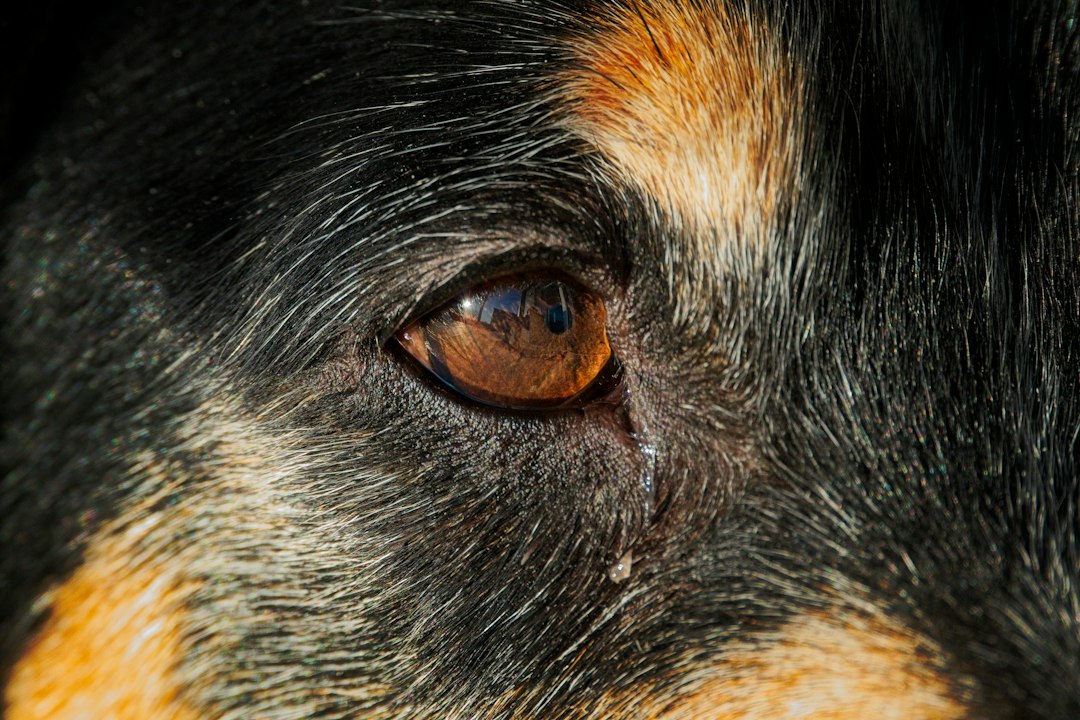
Photo by Julian Zwengel on Unsplash
Chesapeake Bay Retrievers carry a documented genetic mutation linked to degenerative myelopathy, and knowing that before the first symptom appears gives you a real head start on care.
What Is the SOD1 Risk in Chesapeake Bay Retrievers?
Chesapeake Bay Retrievers are among the breeds with confirmed DM cases and a documented SOD1 mutation prevalence tracked by the Orthopedic Foundation for Animals. Only dogs that are homozygous — meaning they inherited one copy of the mutation from each parent — are considered at clinical risk. Dogs with a single copy are carriers and are unlikely to develop DM themselves, but they can pass the mutation on to their offspring.
This matters enormously for breeders and for owners who bought or adopted a Chessie before genetic testing was routine. A dog can look and move perfectly normally for years while carrying two copies of the mutation. The disease doesn’t announce itself early.
The Chesapeake Bay Retriever Club of America has been active in encouraging SOD1 testing as part of responsible breeding practice — which means if you’re buying a Chessie puppy today, a reputable breeder should have test results on both parents. If you have an older dog and don’t know their status, a simple cheek-swab test can clarify it. Results typically take a few weeks and cost roughly the same as a routine office visit.
- Clear (N/N): Two normal copies. The dog cannot develop DM from this mutation and cannot pass it to offspring.
- Carrier (A/N): One mutant copy. Very unlikely to develop DM, but can pass the mutation on. Breeding decisions matter here.
- At-Risk (A/A): Two mutant copies. Considered at significant risk of developing clinical DM, though not all at-risk dogs will develop the disease within their natural lifespan.
What Are the Early Signs of DM in Chessies?
The earliest signs of DM in Chesapeake Bay Retrievers are easy to dismiss as normal aging, which is one reason the disease so often goes unnoticed until it has progressed. The first warning signs are subtle rear-leg changes — a slight wobble on slippery floors, occasional paw knuckling where the dog walks on the top of the foot instead of the pad, and a general loss of drive when climbing stairs or getting into the car.
Because Chessies are stoic, working dogs, they often compensate well for early weakness. Many owners describe looking back and realizing the signs were there for months before they recognized them as neurological rather than just “slowing down with age.”
Common early DM signs to watch in Chesapeake Bay Retrievers:
- Rear-leg wobbling or swaying: Especially noticeable on slippery surfaces like tile or hardwood.
- Knuckling: The paw folds under so the dog walks on the top of the foot. This can cause abrasions quickly.
- Scuffing sounds while walking: Nails dragging slightly with each step.
- Difficulty getting up from rest: Taking longer to find their footing after lying down.
- Reduced willingness to jump: Into the car, onto a dock, anywhere that used to be effortless.
- Asymmetrical weakness: One rear leg may appear weaker than the other in early stages.
The article on early signs of DM that owners often miss goes deeper on how to spot these before they become obvious — worth reading if your Chessie is over 7 and SOD1 at-risk.
How Does DM Progress in Chesapeake Bay Retrievers?
DM in Chesapeake Bay Retrievers follows the same general pathway as in other affected breeds: it begins in the spinal cord of the lower back, progressively destroying the myelin sheath (the protective coating around nerve fibers), and slowly moves forward. What tends to vary by breed and individual dog is the pace of progression.
From what I’ve seen reported in the DM caregiver community, large working breeds like Chessies sometimes progress more slowly than smaller herding breeds, but this is not a rule you can rely on. Some Chessies decline from first wobble to non-ambulatory in under a year. Others manage two years or more of partial function. The DM stages timeline gives a useful framework for understanding what each phase looks like and what care shifts are needed at each point.
- Rear legs crossing during walks (ataxia worsening)
- Frequent falls or inability to rise without help
- Loss of bladder or bowel control
- Muscle wasting visible in the hindquarters
- Front legs beginning to show weakness (late stage)
Why the Chessie’s Water Background Actually Helps
Here is where Chesapeake Bay Retrievers have a genuine advantage over most DM-affected breeds: they were built to work in water, and most of them still love it. That means when hydrotherapy becomes the right recommendation, you are not introducing a frightened dog to an alien environment. For many Chessies, getting into a pool or an underwater treadmill is the easiest part of the whole rehab process.
Hydrotherapy is widely recommended for DM dogs because water supports body weight while allowing muscles to work. For a dog who is losing rear-end coordination on land, buoyancy removes some of the compensation burden and lets weakened muscles contract more freely. Many rehab therapists observe that DM dogs tolerate aquatic exercise better than land-based exercise as weakness progresses — and for Chessies, that advantage is amplified by their comfort in the water.
A few practical notes on water exercise for Chessies with DM:
- Early stage: Supervised swimming in a pond, pool, or hydrotherapy tank can be an excellent primary exercise. Keep sessions short (5–10 minutes) and watch for fatigue carefully — a tired DM dog in water is a safety concern.
- Mid stage: As rear-leg function declines, open-water swimming becomes riskier. An underwater treadmill (where the dog walks through chest-deep water with a therapist present) is generally safer and more controlled.
- Late stage: Water activity requires a fitted canine life jacket and constant hands-on support. Consult your rehab vet before continuing water exercise once the dog can no longer support rear weight at all.
The full breakdown of what hydrotherapy sessions involve for DM dogs is covered in Hydrotherapy for DM Dogs: When to Start and What Helps.
For daily on-land stability, many Chessie caregivers find that a good rear-support harness becomes essential earlier than they expected. Something like the Help ‘Em Up Harness gives you a reliable way to assist a dog who still wants to walk but needs help staying upright — particularly useful for a large-breed dog whose sheer size makes manual lifting difficult.
- Start hydrotherapy early, before significant weakness — the transition is smoother when the dog is still confident in water
- Work with a certified canine rehabilitation therapist (CCRT) who has large-breed DM experience
- Use a properly fitted canine life jacket for any open-water sessions, even in early stages
- Short, frequent sessions outperform long, infrequent ones — aim for consistency over intensity
Breed-Community Resources for Chesapeake Bay Retriever DM
The Chesapeake Bay Retriever community has been more proactive about DM genetic testing than many other breed clubs, in part because the breed’s working and hunting heritage creates tight-knit networks of owners and breeders who share health information. A few places to start:
- Chesapeake Bay Retriever Club of America (CBRCA): The breed’s parent club maintains health committee resources and has historically encouraged SOD1 testing participation. Their health committee is a good first contact if you want breeder referrals or testing guidance.
- OFA DM Registry: The Orthopedic Foundation for Animals maintains a searchable database of dogs with published DM test results. You can check whether a dog’s parents were tested before buying a puppy, or register your own dog’s results.
- Online caregiver communities: Facebook groups focused on DM caregiving (search “degenerative myelopathy support” or “DM dogs”) include owners of Chessies and other large breeds who share real-world experience with timelines, equipment, and day-to-day management.
- Veterinary neurologists: Because DM diagnosis requires ruling out other conditions (spinal tumors, lumbosacral disease, arthritis-driven weakness), seeing a board-certified neurologist is worth the investment, especially for a breed where the SOD1 status is known. The article on when to see a veterinary neurologist for DM walks through how to decide if the timing is right.
Related Reading
- Hydrotherapy for DM Dogs: When to Start and What Helps
- The SOD1 Genetic Test for DM: What It Tells You
- DM Stages in Dogs: Timeline, Symptoms & What to Expect
If your Chesapeake Bay Retriever has just been flagged as SOD1 at-risk, or if you’re watching early rear-leg changes and wondering what you’re dealing with, please know that knowledge genuinely helps here. You have time to build the right support team, make home modifications gradually, and introduce water-based rehab before it becomes urgent. Chessies are tough, joyful dogs who often surprise their caregivers with how well they adapt. Use that resilience — and their love of water — as a foundation.
Frequently Asked Questions
How common is the SOD1 mutation in Chesapeake Bay Retrievers?
The SOD1 mutation associated with degenerative myelopathy appears at a meaningful rate in Chesapeake Bay Retrievers, and the breed is listed among those with confirmed DM cases by the Orthopedic Foundation for Animals. Only dogs that are homozygous for the mutation (two copies) are considered at risk of developing clinical DM, though carriers can pass the mutation to offspring.
At what age does DM typically start in Chesapeake Bay Retrievers?
Most large-breed dogs with DM, including Chesapeake Bay Retrievers, show first signs between 8 and 14 years of age. Earlier onset is possible but less common. The disease tends to progress more slowly in some large breeds than in Corgis or German Shepherds, though this varies considerably between individual dogs.
Can Chesapeake Bay Retrievers with DM still swim?
In early to mid-stage DM, swimming is often one of the safest exercises a Chessie can do — it offloads joint stress while keeping muscles working. As DM advances and rear-leg function declines significantly, swimming requires close supervision and a life jacket to prevent exhaustion or aspiration. Always clear water activity with your vet or rehab therapist at each stage.
How do I find out if my Chesapeake Bay Retriever carries the SOD1 mutation?
A simple cheek-swab DNA test can identify whether your dog is clear, a carrier (one copy), or at-risk (two copies). The Orthopedic Foundation for Animals maintains a DM testing registry, and several accredited labs offer the test. Results are typically returned within a few weeks and cost around the price of a routine vet visit.
This guide is based on real experience and should be used alongside professional veterinary care. Always consult your veterinarian before starting any new treatment or making changes to your dog’s care plan.