DM in Bernese Mountain Dogs: The SOD1B Variant and What It Means
Berners carry SOD1B, a distinct DM variant — and their shorter lifespan compresses the timeline. What the test means, why breed size changes care, and what to…
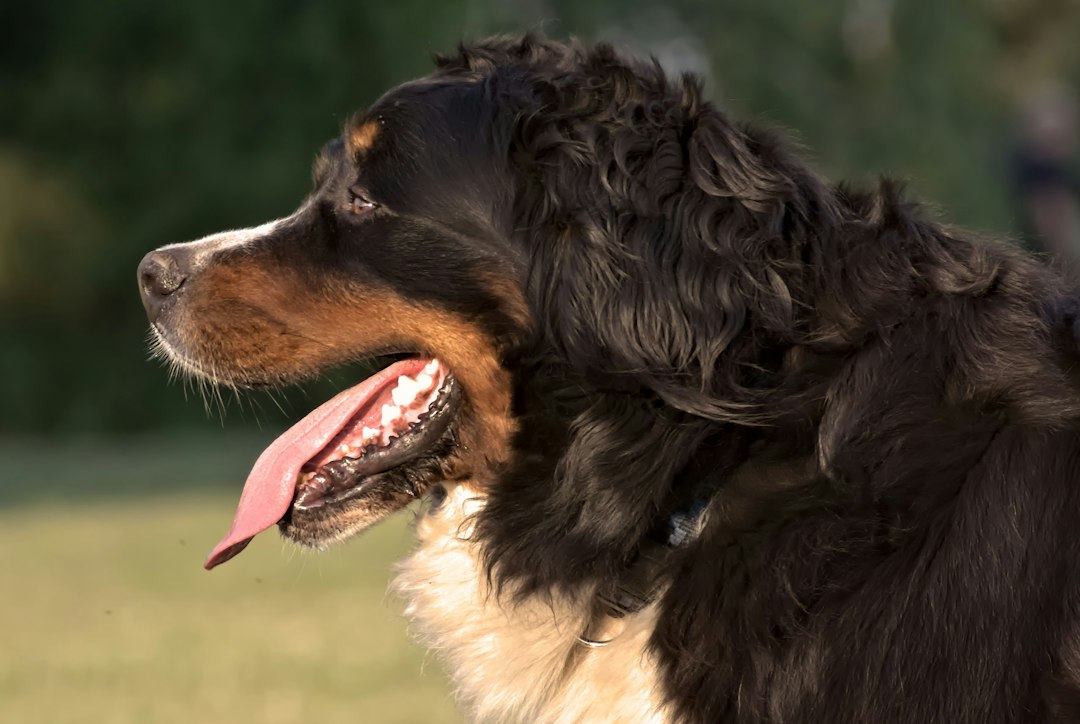
Photo by Gábor Kárpáti on Unsplash
DM in Bernese Mountain Dogs involves a genetically distinct mutation called SOD1B — and caring for a Berner with DM means understanding both what makes this variant unique and what giant-breed size adds to an already demanding disease.
What Makes SOD1B Different From SOD1A?
SOD1B and SOD1A are two separate mutations in the same gene (superoxide dismutase 1), both of which impair the body’s ability to neutralize cellular oxidative stress in motor neurons. The end result — progressive degeneration of the spinal cord — is clinically similar, but the mutations themselves are genetically distinct and require different tests to detect.
The University of Missouri College of Veterinary Medicine, the lab that first characterized the original SOD1 mutation in dogs, has identified SOD1B as the primary variant associated with DM in Bernese Mountain Dogs. The Orthopedic Foundation for Animals lists Berners separately from SOD1A breeds in their DM testing recommendations for exactly this reason.
What this means practically: if you submit a Berner’s DNA to a lab using a test designed primarily for SOD1A breeds, you may receive a misleading “clear” result. Always confirm with the testing lab that their panel explicitly covers SOD1B for Bernese Mountain Dogs.
How the Test Results Are Interpreted
Like SOD1A testing, SOD1B results fall into three categories:
- Clear (N/N): Two normal copies of the gene. The dog is at low risk for DM from this variant.
- Carrier (A/N): One mutant copy. Carriers can pass the variant to offspring but are generally considered low risk for developing DM themselves — though the picture is not fully settled in all research.
- At-Risk (A/A): Two mutant copies. The dog has a significantly elevated risk of developing DM, though not every at-risk dog will develop clinical signs within their lifespan.
Being “at-risk” is not the same as being diagnosed. A positive genetic result tells you the dog has the genetic setup for DM — not that DM has started. Diagnosis still requires clinical signs and, ideally, a neurological workup to rule out other causes. You can read more about that process in Getting a DM Diagnosis: What the Process Actually Looks Like.
- Not all DM genetic tests include SOD1B — confirm with the lab before you submit a sample
- A result that says “clear” on an SOD1A-only panel does not clear a Berner for DM risk
- The OFA’s DM testing panel covers SOD1B; breed-specific labs recommended by your vet or the Bernese Mountain Dog Club of America are your best starting points
How Does the Berner’s Shorter Lifespan Affect the DM Timeline?
DM in Bernese Mountain Dogs most often appears between ages 7 and 9. In most DM-affected breeds — German Shepherds, Corgis, Boxers — that age range falls well into the middle of a dog’s expected lifespan, leaving owners time to plan. For Berners, it arrives at the tail end.
The breed’s median lifespan is roughly 7 to 8 years, meaning a Berner who develops DM at age 8 may be managing two simultaneous realities: early-stage neurological decline and the general frailty that comes with being a geriatric giant breed.
This compression matters for planning. There is less runway between “first signs” and late-stage care than owners of longer-lived breeds might expect. Many Berner caregivers report that by the time they identified early DM signs, their dog was already showing other age-related changes — reduced stamina, some joint stiffness, weight fluctuation. Sorting out what’s DM and what’s something else is genuinely harder in this breed.
The early signs of DM that owners often miss are worth reading before you reach a diagnosis — not after — because the window for physical conditioning that may slow functional decline is widest at the very beginning.
- DM onset in Berners often coincides with the senior phase of the breed’s lifespan
- Concurrent conditions — arthritis, hypothyroidism, heart disease — are common in older Berners and can complicate DM symptom interpretation
- Earlier genetic testing (before signs appear) gives caregivers and breeders more lead time to plan
What Does Giant-Breed Size Actually Change About DM Care?
The neurological progression of DM is the same regardless of breed size. What changes with a 90-to-115-pound Berner is everything physical about delivering care.
Repositioning: A paralyzed small dog can be gently turned with one hand. A non-ambulatory Berner requires two people, proper body mechanics, and potentially a lift assist. Caregivers managing alone often reach burnout faster than those with a partner in the house.
Pressure sore risk: More body weight means more pressure concentrated on bony points — hips, elbows, hocks — when a dog is lying down. Pressure sores can develop quickly in heavy dogs and become serious wounds fast. Starting a pressure sore prevention protocol early, before the dog is non-ambulatory, is strongly advisable. The article on pressure sores in DM dogs covers the practical steps.
Wheelchair timing: Rear-support carts for giant breeds are available but must be fitted precisely to be safe. Many caregivers wait too long. By the time a Berner can no longer walk independently, fitting and acclimating to a wheelchair is significantly harder. Earlier introduction — when the dog still has some hind-limb function — tends to go better. See when to get a wheelchair for a DM dog for the five signs that the window is opening.
Bladder and bowel care: Manual bladder expression in a large dog takes more physical force and is harder to learn at home than in a small breed. Planning for this — ideally with hands-on instruction from your vet or a rehab therapist before it becomes urgent — saves enormous stress later.
Floor-level care: Bathing, grooming, incontinence management, and daily physical therapy all happen at floor level with a giant breed. Caregiver back and knee strain is a real risk over months of care.
A well-fitted rear-support harness becomes essential earlier for a Berner than for a smaller DM dog. Using a good sling and harness system before the dog is fully reliant on it builds the habit — for both of you — when the stakes are lower.
- Introduce harness support while the dog still has partial hind-limb function
- Begin pressure sore prevention before the dog stops walking, not after
- Ask your vet or rehab therapist to teach manual bladder expression at the first sign of incontinence
- Line up help — a second person, a dog-savvy friend, a rehab aide — before you need it urgently
Should You Test a Berner Puppy or Young Adult?
For breeders, SOD1B testing is already considered a responsible standard by many Bernese Mountain Dog clubs. Two at-risk parents should not be bred together. Testing before breeding is the most direct way to reduce DM incidence in the breed over time. The article screening before breeding: what responsible breeders do covers what a responsible program looks like.
For owners who aren’t breeding, testing a young adult Berner is still worthwhile — not because a positive result changes daily care right now, but because it changes your planning horizon. An at-risk result is an invitation to:
- Establish a relationship with a veterinary rehab specialist early
- Keep the dog lean (excess weight accelerates physical decline in DM)
- Learn what early DM signs look like before you’re in the middle of a crisis
- Make home modifications — traction rugs, ramp access, sleeping arrangements — before they become urgent
A clear result reduces but does not eliminate concern. Other serious spinal conditions affect Berners, and the breed’s lifespan means age-related rear-end weakness of any cause deserves attention.
Related Reading
- The SOD1 Genetic Test for DM: What It Tells You
- Early Signs of DM That Owners Often Miss
- Pressure Sores in DM Dogs: Prevention & Care
Frequently Asked Questions
Is DM in Bernese Mountain Dogs caused by the same gene as in German Shepherds?
No. Berners carry the SOD1B variant, while most other at-risk breeds — including German Shepherds and Corgis — carry the SOD1A variant. Both disrupt the same antioxidant protein, but they are distinct mutations that require breed-specific testing to detect accurately.
At what age does DM typically appear in Bernese Mountain Dogs?
DM in Berners most often appears between ages 7 and 9, though the exact onset varies. Because the breed’s median lifespan is roughly 7 to 8 years, DM can emerge in what is already considered the senior phase of a Berner’s life.
Can a Bernese Mountain Dog be SOD1B clear and still develop DM?
A dog testing SOD1B clear is at low risk, but the SOD1B test does not rule out every cause of progressive hind-limb weakness. Other spinal conditions — including IVDD, lumbosacral disease, and tumors — can mimic DM. A clear result should always be paired with a thorough neurological workup if clinical signs are present.
Does being a giant breed change how DM progresses or is managed?
Giant breed size doesn’t change the underlying neurological progression, but it changes nearly everything about hands-on care. Larger body weight increases caregiver physical demand, accelerates pressure sore risk, requires earlier wheelchair planning, and makes simple tasks like repositioning or bathroom trips significantly harder than with a smaller dog.
If you have a Berner heading into their senior years — or you’re already seeing the first wobble — I hope this gave you a clearer picture of what you’re dealing with and what to do next. This disease is hard in any breed. In a giant breed with a compressed timeline, getting informed early is the single most useful thing you can do.
This guide is based on real experience and should be used alongside professional veterinary care. Always consult your veterinarian before starting any new treatment or making changes to your dog’s care plan.