Degenerative Myelopathy in Boxers: A Caregiver's Guide
Boxers carry meaningful SOD1 risk for DM, but breed-specific factors change how caregiving looks. What owners need to know about onset, heat, and progression.
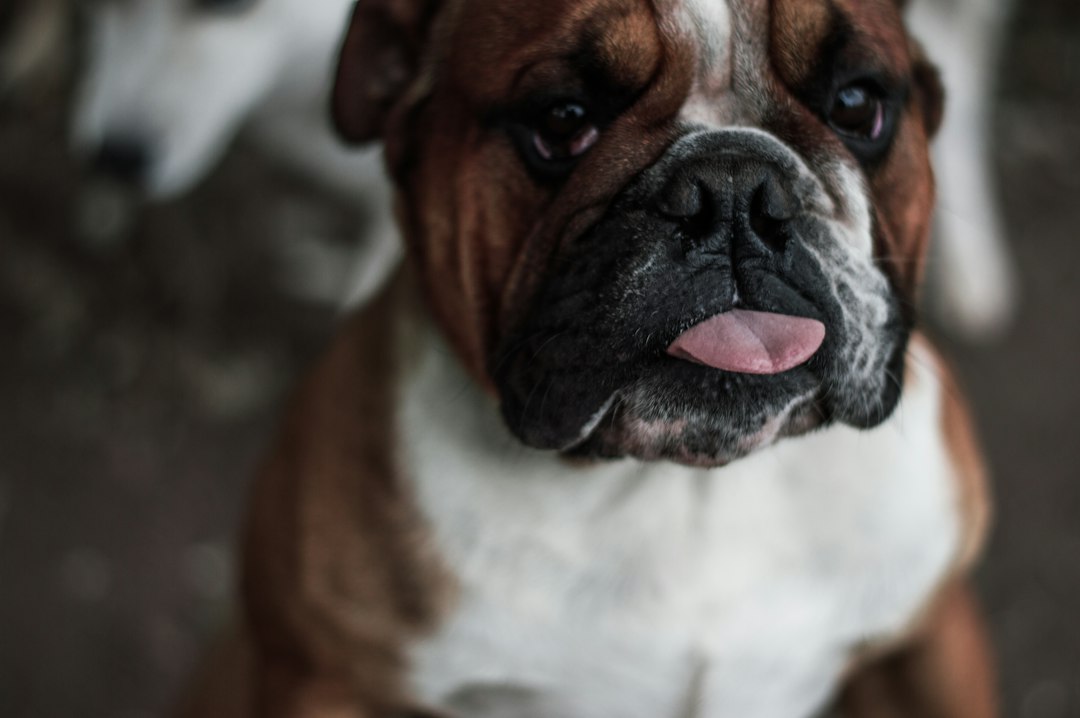
Photo by Camilo Fierro on Unsplash
Boxers carry a meaningful risk of degenerative myelopathy, and the breed’s own anatomy adds a layer of complexity that owners need to understand before the first signs appear.
What Does DM Actually Look Like in a Boxer?
The earliest signs of DM in Boxers are easy to miss or mistake for normal aging — a slight stumble on the stairs, a back foot that drags just enough to scuff the nails, or a tendency to cross the hind legs when standing still. These signs appear because DM attacks the white matter of the spinal cord, gradually disrupting the nerve signals that coordinate hind-limb movement. The disease typically begins in the thoracolumbar (mid-to-lower-back) region and progresses upward over time.
As the DM stages timeline explains, the early ambulatory stages can last many months before a dog loses the ability to walk. For Boxers, this window is often characterized by asymmetry: one hind leg typically appears weaker first before both are affected equally. Owners sometimes describe their Boxer as “drunk in the back end” — a vivid description of the wobbly, uncoordinated gait that becomes increasingly obvious.
What DM does not cause, and this distinction matters enormously, is pain. Boxers with DM generally remain engaged, food-motivated, and emotionally bright even as their hind limbs fail. The absence of pain does not mean the disease is benign — it means your dog is counting on you to read the physical signs that they cannot communicate through distress.
- Scuffing or wearing of nails on back feet (one side often before both)
- Crossing of hind legs when standing or turning
- Wobbliness that worsens with fatigue or on uneven ground
- Difficulty rising from a lying position
- Stumbling or knuckling on rear paws
How Common Is the SOD1 Mutation in Boxers?
The SOD1 mutation — the genetic variant strongly associated with DM risk — is present in the Boxer population at a meaningful frequency. The Orthopedic Foundation for Animals maintains a breed-specific database of SOD1 test results, and Boxers appear among the breeds for which testing is recommended. Dogs can be At Risk (two copies of the mutation), Carriers (one copy), or Clear (no copies). Being At Risk does not guarantee DM will develop, but it significantly increases the likelihood, particularly in older dogs.
For breeders, this information is critical. Pairing two At Risk or Carrier dogs without considering SOD1 status concentrates the mutation in future generations. For pet owners, testing is still useful: a positive result means you’re watching for the right signs, rather than dismissing early wobbliness as “just getting older.”
The test is a cheek swab, usually available through your veterinarian or directly through an OFA-approved laboratory. It is inexpensive relative to the cost of diagnosing and managing DM once signs appear, and results are permanent — you test once.
Why Does Being Brachycephalic Change DM Care?
Boxers are a brachycephalic breed, meaning their skull shape produces a shorter, flatter muzzle than a German Shepherd or Labrador. This matters for DM care because physical therapy and exercise are central to extending the ambulatory phase — and Boxers cannot exercise as hard or as long as longer-muzzled breeds before they overheat.
A Boxer’s compressed airway makes it harder to pant efficiently, which is a dog’s primary cooling mechanism. During a hydrotherapy session or a land-based exercise routine, a DM Boxer will heat up faster and need more recovery time than, say, a Corgi doing the same routine. Many rehab therapists experienced with brachycephalic dogs recommend shorter, more frequent sessions rather than longer ones, especially during warmer months.
Practical adjustments for Boxer owners:
- Session length: Keep land exercise sessions to 10–15 minutes maximum in warm weather; watch for open-mouth panting, slowing pace, or reluctance to continue.
- Timing: Early morning or evening sessions avoid midday heat. Climate-controlled indoor rehab facilities are especially valuable.
- Hydrotherapy: An underwater treadmill or pool session is often better tolerated than land exercise in warm weather, since water helps regulate body temperature. The article on hydrotherapy for DM dogs covers what to look for in a rehab facility.
- Signs of overheating: Excessive drooling, blue-tinged gums, extreme panting, or collapse require immediate cooling and emergency veterinary attention.
- Stop exercise immediately if your Boxer is panting heavily, drooling excessively, or slowing down sharply
- Blue or pale gums are an emergency — cool the dog with wet towels and go to the vet
- Never exercise a DM Boxer in direct sun above 75°F without very close monitoring
- Short-nosed dogs can overheat in minutes, not hours
What Do Boxer Owners Report About Progression?
From what I’ve heard consistently in the disabled dog community, Boxer owners describe a progression that often feels gradual for months before a more noticeable decline. The early ambulatory stage — when the dog is still walking but wobbling — can stretch across many months with active physical therapy. What tends to accelerate the apparent progression is muscle loss from reduced activity, which is why keeping a DM Boxer moving matters so much.
Many Boxer owners note that their dog’s front-end strength remains strong well into mid-stage DM, which is actually an advantage when fitting a rear-support wheelchair. Boxers tend to take well to rear-support carts once properly fitted, in part because their chest and front legs are muscular and capable of bearing significant weight. Timing the wheelchair introduction correctly, before the dog is completely non-ambulatory, makes the transition easier. The wheelchair timing guide for DM dogs covers the five signs that suggest it’s time.
One thing worth knowing: late-stage DM can eventually affect the front limbs and, in its final stages, reach the brainstem, affecting swallowing and breathing. This is not unique to Boxers, but it is worth understanding so you’re not caught off guard. The article on bulbar signs in DM explains what to watch for.
- Consistent, low-intensity physical therapy — even 10-minute sessions daily add up
- Non-slip flooring throughout the home to reduce falls
- A well-fitted rear-support harness or sling for assisted walks
- Paw boots or ToeGrips (Dr. Buzby’s) to help knuckling paws grip instead of dragging
- Weight management — extra pounds accelerate hind-limb fatigue significantly
Why Does Testing Matter for Breeding Decisions?
If you breed Boxers, SOD1 testing is not optional from an ethical standpoint. Breeding two At Risk dogs produces a litter in which every puppy carries at least one copy of the mutation. Breeding a Carrier to a Clear dog produces a litter where approximately half the puppies will be Carriers and half Clear — no At Risk puppies. Breeding two Clear dogs produces no At Risk offspring.
As outlined in the article on screening before breeding, responsible breeders now include SOD1 results alongside hip and heart clearances as part of a full health-testing protocol. Prospective Boxer puppy buyers should ask to see the SOD1 results for both parents — a breeder who doesn’t test has simply chosen not to know.
It’s worth being clear about what testing does not tell you: a Clear result means a dog has no copies of the SOD1 mutation, not that DM is impossible. The mutation accounts for a large share of DM cases, but the disease is not fully explained by SOD1 alone. A Clear dog can, rarely, still develop DM-like signs from other causes.
- Breeder cannot provide SOD1 test results for both parents
- Breeder dismisses SOD1 testing as unnecessary or too expensive
- Both parents are listed as At Risk or Carrier without a plan to minimize mutation frequency
- No documentation of heart, hip, or thyroid clearances (Boxers have several breed-specific health concerns beyond DM)
Related Reading
- DM Stages in Dogs: Timeline, Symptoms & What to Expect
- When to Get a Wheelchair for a DM Dog: 5 Signs to Watch
- Early Signs of DM That Owners Often Miss
Frequently Asked Questions
At what age does degenerative myelopathy typically start in Boxers?
Most Boxers with DM begin showing signs between 8 and 11 years of age, though some present earlier or later. The first signs are often subtle — scuffing of the back nails, mild wobbliness, or a slight cross-legged stance when standing still.
Should I get my Boxer SOD1 tested even if they seem healthy?
Yes, particularly if you’re involved in breeding decisions. A clear result reduces — but does not eliminate — DM risk, since other genetic and environmental factors are involved. For a pet-only Boxer, testing gives you useful early-warning context and helps you watch for the right signs before they become impossible to miss.
Does a Boxer’s flat face affect DM care differently than other breeds?
It can, yes. Brachycephalic Boxers don’t regulate body heat as efficiently as longer-muzzled breeds, which means exercise sessions must be shorter and cooler. Hydrotherapy and indoor rehab are especially valuable for keeping a DM Boxer active without overheating.
How fast does DM typically progress in Boxers?
Progression varies widely, but many Boxer owners and rehab vets describe a pattern of gradual rear-end weakness over many months before mobility aids become necessary. Consistent physical therapy is widely believed to help extend the ambulatory phase, though it does not stop the underlying disease.
If you’re reading this because your Boxer just got a DM diagnosis or because you’re watching those first suspicious wobbles and hoping you’re wrong — I want you to know that the months ahead, while hard, are manageable. Boxers are tenacious, joyful dogs, and many of them adapt to rear support, wheelchairs, and modified exercise with a brightness that will stop your heart. You won’t get through this without some hard days, but you won’t be alone in it either.
This guide is based on real experience and should be used alongside professional veterinary care. Always consult your veterinarian before starting any new treatment or making changes to your dog’s care plan.